

SpaceX Launches: A Comprehensive Guide to Investment Opportunities and Passive Income Strategies
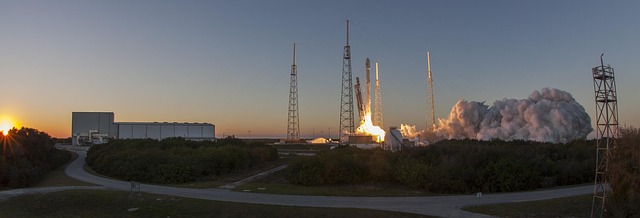
The roar of rocket engines and the brilliant plume of exhaust trailing into the stratosphere have become iconic symbols of our modern space age. SpaceX, founded by Elon Musk in 2002, has fundamentally transformed the aerospace industry through its revolutionary approach to rocket launches, reusability, and cost reduction. But beyond the spectacular visuals and technological achievements lies a complex ecosystem of investment opportunities and passive income strategies that savvy investors are beginning to explore.
This comprehensive guide will examine how SpaceX launches are creating new financial opportunities, explore various investment vehicles in the space economy, and provide practical strategies for generating passive income from this burgeoning industry.
Understanding SpaceX’s Business Model and Market Impact
Before diving into investment strategies, it’s crucial to understand how SpaceX generates revenue and why its launch capabilities matter to investors.
The Revenue Streams of SpaceX
SpaceX has developed multiple revenue streams that make it an attractive company in the aerospace sector. The primary income source comes from launch services, where the company provides satellite deployment for commercial customers, government agencies like NASA, and international space organizations. Each Falcon 9 launch generates approximately $60-70 million in revenue, while Falcon Heavy launches command premium prices exceeding $150 million.
The Starlink satellite internet constellation represents another significant revenue opportunity. With thousands of satellites already in orbit and plans for tens of thousands more, Starlink aims to provide global broadband coverage, particularly in underserved rural areas. This service creates recurring monthly subscription revenue, transforming SpaceX from purely a launch services company into a telecommunications provider with passive income characteristics.
NASA contracts for crew and cargo missions to the International Space Station provide stable, long-term revenue. The Commercial Crew Program and Commercial Resupply Services contracts are worth billions of dollars over multiple years, offering predictable cash flow that investors value highly.
The Reusability Revolution
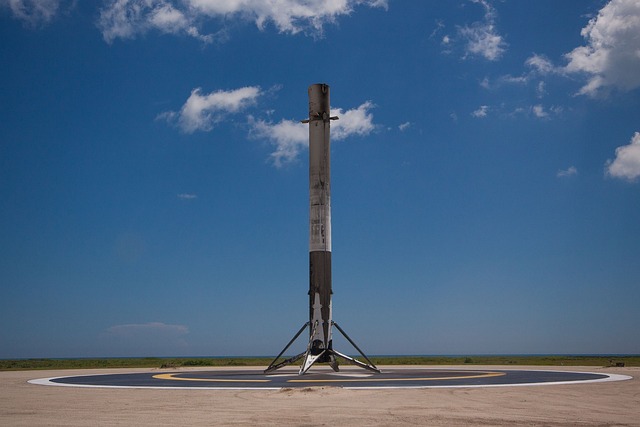
SpaceX’s most significant innovation is rocket reusability. Traditional aerospace companies treated rockets as expendable, with each launch requiring a completely new vehicle. SpaceX’s ability to land and reuse Falcon 9 first stages has dramatically reduced launch costs, creating a competitive moat that translates directly into higher profit margins.
This cost advantage allows SpaceX to undercut competitors while maintaining healthy margins, a combination that drives company valuation and creates opportunities for investors to benefit from the company’s growth trajectory.
Direct Investment Opportunities in SpaceX

While SpaceX remains a private company, several pathways exist for investors to gain exposure to its growth.
Private Equity and Secondary Markets
SpaceX periodically conducts private funding rounds, though these are typically reserved for institutional investors, venture capital firms, and accredited investors with substantial capital. The company’s valuation has soared past $180 billion in recent funding rounds, making it one of the most valuable private companies globally.
For individual investors who meet accredited investor requirements, secondary markets like EquityZen, Forge Global, and SharesPost occasionally offer shares from employees or early investors looking to liquidate positions. These platforms allow qualified investors to purchase SpaceX shares before any potential public offering.
However, investing through secondary markets comes with significant considerations. Shares are illiquid, meaning you cannot easily sell them. Valuations can be difficult to assess without public financial disclosures, and minimum investment requirements often range from $100,000 to $250,000 or more.
Awaiting an IPO or Direct Listing
Elon Musk has stated that SpaceX will likely remain private until Starlink achieves predictable profitability and cash flow. Once that milestone is reached, the company might pursue an initial public offering (IPO) or direct listing, potentially even spinning off Starlink as a separate public entity.
Investors interested in SpaceX should monitor news about Starlink’s subscriber growth, revenue milestones, and any announcements regarding public market debuts. Being prepared with research and capital allocation strategies will position you to act quickly when opportunities arise.
Space-Focused ETFs and Mutual Funds
While you cannot invest directly in SpaceX through traditional public markets, several exchange-traded funds (ETFs) provide exposure to the broader space economy. These funds invest in publicly traded aerospace and defense companies that benefit from the expanding launch market.
The Procure Space ETF (UFO) focuses exclusively on space-related companies, including satellite manufacturers, launch service providers, and space infrastructure companies. ARK Space Exploration & Innovation ETF (ARKX) takes a broader approach, investing in companies enabling space exploration and innovation.
These ETFs offer diversified exposure to the space industry, reducing risk compared to investing in a single company. While they don’t provide direct SpaceX exposure, many holdings benefit from the increased launch cadence and reduced costs that SpaceX has catalyzed.
Indirect Investment Strategies Leveraging SpaceX’s Ecosystem
SpaceX’s success creates ripple effects throughout the aerospace and technology sectors, generating investment opportunities in companies that supply, compete with, or benefit from SpaceX’s activities.
Satellite Communication Companies
SpaceX’s Starlink competes with and disrupts traditional satellite internet providers, but it also validates the market for space-based communications. Companies like Iridium Communications (IRDM) and Globalstar (GSAT) offer investment opportunities in established satellite communication networks.
Additionally, SpaceX launches satellites for numerous commercial customers. Companies like Planet Labs, which operates Earth-imaging satellites, and other satellite operators rely on affordable launch services. As SpaceX reduces launch costs, these companies become more profitable, potentially offering attractive investment returns.
Aerospace Suppliers and Manufacturing
SpaceX doesn’t manufacture every component in-house. The company relies on specialized suppliers for materials, electronics, propulsion components, and more. Identifying publicly traded suppliers in SpaceX’s supply chain can provide indirect exposure to the company’s growth.
Companies specializing in advanced materials, precision manufacturing, avionics, and aerospace-grade electronics may see increased demand as SpaceX scales production. Research into aerospace supply chains can reveal these opportunities.
Ground Station and Infrastructure Companies
Starlink requires extensive ground infrastructure, including gateway stations, user terminals, and networking equipment. Companies that manufacture satellite dishes, telecommunications equipment, or provide related services may benefit from Starlink’s expansion.
Furthermore, as space launches increase, companies providing launch support services, ground operations, and spaceport infrastructure could see growing demand.
Passive Income Strategies in the Space Economy
Beyond direct equity investments, the space industry offers opportunities to generate passive income through various mechanisms.
Dividend-Paying Aerospace Stocks
While SpaceX itself doesn’t pay dividends as a private growth company, established aerospace and defense contractors do. Companies like Lockheed Martin (LMT), Northrop Grumman (NOC), and Boeing (BA) have significant space divisions and pay regular dividends.
These companies compete with and sometimes partner with SpaceX. They offer the stability of mature businesses with government contracts while providing exposure to space industry growth. Dividend yields typically range from 2% to 4%, offering passive income while maintaining potential for capital appreciation.
Real Estate Investment Trusts (REITs) Focused on Infrastructure
As the space industry expands, demand for specialized facilities increases. Data center REITs may benefit from the computing infrastructure needed to process satellite data. Industrial REITs with properties near spaceports or aerospace manufacturing hubs could see appreciation.
While this is a more tangential play on space industry growth, real estate investment trusts offer passive income through required dividend distributions while potentially benefiting from aerospace sector expansion.
Options Strategies on Space-Related Securities
For sophisticated investors, selling covered calls or cash-secured puts on space-related stocks can generate passive income. This strategy works best with established aerospace companies that have liquid options markets.
For example, if you own shares of a space ETF or aerospace stock, you can sell covered call options, collecting premiums while maintaining your position. This generates regular income in addition to any dividends the underlying security pays.
Peer-to-Peer Lending and Crowdfunding for Space Startups
Alternative investment platforms occasionally offer opportunities to lend to or invest in space startups. While riskier than traditional investments, these platforms can provide higher potential returns and interest income.
Platforms like SeedInvest, StartEngine, and Republic have featured space-related companies seeking funding. Investors can participate in equity crowdfunding or revenue-sharing agreements that provide ongoing passive income as companies grow.
Practical Investment Strategies and Portfolio Allocation
Building a space-focused investment portfolio requires balancing potential returns against risks specific to this emerging industry.
Diversification Within the Space Sector
Rather than concentrating capital in a single investment, diversify across multiple space industry segments. A balanced space portfolio might include:
– **Launch services exposure** through private shares or secondary markets (5-10% of space allocation)
– **Space ETFs** providing broad sector exposure (30-40%)
– **Established aerospace companies** offering stability and dividends (30-40%)
– **Satellite and communications companies** benefiting from reduced launch costs (10-20%)
– **Speculative investments** in space startups or emerging technologies (5-10%)
This approach balances growth potential with risk management, ensuring that volatility in any single area doesn’t devastate your overall portfolio.
Dollar-Cost Averaging for Long-Term Positions
The space industry experiences significant volatility based on launch successes, regulatory developments, and technological breakthroughs. Dollar-cost averaging—investing fixed amounts at regular intervals—helps smooth out price fluctuations and reduces the risk of poorly timed large investments.
For example, rather than investing $12,000 in a space ETF immediately, consider investing $1,000 monthly for twelve months. This strategy ensures you purchase shares at various price points, potentially lowering your average cost basis.
Tax-Advantaged Accounts for Space Investments
Holding space investments in tax-advantaged accounts like Individual Retirement Accounts (IRAs) or 401(k)s provides significant benefits. Growth in these accounts is tax-deferred or tax-free (in the case of Roth accounts), allowing your space portfolio to compound more efficiently.
For long-term space industry believers, maximizing contributions to tax-advantaged accounts and allocating a portion to space investments can substantially increase after-tax returns over decades.
Monitoring Regulatory and Policy Developments
Space industry investments are particularly sensitive to government policy. NASA budgets, Federal Communications Commission (FCC) decisions on satellite constellations, and international space treaties all impact company valuations.
Successful space investors stay informed about policy developments. Subscribe to industry publications like SpaceNews, follow regulatory filings, and monitor congressional committee discussions on space funding. This information provides early signals about opportunities and risks.
Risk Management in Space Industry Investing
Every investment carries risks, but the space industry presents unique challenges that investors must understand and mitigate.
Technological Risk
Rocket launches remain complex and dangerous. A catastrophic failure can destroy valuable payloads, damage reputation, and trigger regulatory investigations. SpaceX has experienced failures, though its track record has improved dramatically with experience.
Diversification across multiple companies and technologies reduces exposure to any single failure. Investing in companies with proven track records and redundant capabilities provides additional protection.
Regulatory and Political Risk
Government regulations heavily influence the space industry. Changes in export controls, spectrum allocation, environmental reviews, or orbital debris policies can significantly impact operations and profitability.
International tensions also affect space investments. Restrictions on launching foreign satellites, competition from state-sponsored space programs, or geopolitical conflicts involving space assets create unpredictable risks.
Staying informed about regulatory developments and maintaining geographic diversification in your space portfolio can mitigate these risks.
Market Timing and Valuation Risk
Private space companies often command premium valuations based on future potential rather than current profitability. SpaceX’s valuation exceeds that of many established aerospace companies despite lower current revenues.
Investing at inflated valuations can lead to poor returns even if the company succeeds. Conduct thorough due diligence, compare valuation metrics to historical norms and comparable companies, and be patient waiting for reasonable entry points.
Liquidity Risk in Private Investments
Private space company shares cannot be easily sold. Secondary markets have limited buyers, and transactions may take months to complete. This illiquidity means capital is locked up for extended periods.
Only allocate capital to private space investments that you can afford to leave untouched for 5-10 years or longer. Maintain sufficient liquid assets in your overall portfolio to handle emergencies without forced sales of illiquid holdings.
Future Trends and Emerging Opportunities
The space industry is evolving rapidly, creating new investment opportunities for forward-thinking investors.
Space Tourism and Commercial Spaceflight
SpaceX’s Starship, designed for deep space missions and eventually Mars colonization, also enables space tourism. While currently limited to ultra-high-net-worth individuals, costs may decline over time, creating a substantial market.
Virgin Galactic and Blue Origin also pursue space tourism, offering investment opportunities as this market develops. Companies providing supporting services—training facilities, space hotels, or tourism packages—represent additional emerging opportunities.
Asteroid Mining and Space Resources
Though still largely theoretical, asteroid mining offers extraordinary potential. Asteroids contain valuable minerals, rare earth elements, and water that could support space infrastructure.
Companies researching and developing asteroid mining technologies may offer high-risk, high-reward investment opportunities in coming years. While commercial viability remains distant, early investors in successful ventures could realize tremendous returns.
Mars Missions and Deep Space Exploration
SpaceX’s ultimate goal is making humanity multi-planetary through Mars colonization. While this vision is decades from realization, the infrastructure required—habitats, life support systems, transportation, power generation—will create enormous markets.
Companies developing technologies for extreme environments, closed-loop life support, or advanced propulsion systems may become valuable as deep space ambitions become reality.
Satellite Data and Earth Observation
The proliferation of Earth-observation satellites creates vast amounts of data with commercial applications. Agriculture, insurance, urban planning, climate science, and numerous other industries utilize satellite imagery and data.
Companies that collect, process, and sell satellite data represent growing investment opportunities. As launch costs decline and satellite capabilities improve, this market expands rapidly.
Practical Tips for Getting Started
For investors new to the space sector, here are actionable steps to begin building a space-focused portfolio.
Educate Yourself Thoroughly
Before investing, develop a solid understanding of space industry fundamentals. Read industry publications, follow space companies and analysts on social media, and study historical space industry investments to understand what drives success.
Books like “The Space Barons” by Christian Davenport and “Rocket Billionaires” by Tim Fernholz provide excellent context on the modern space industry. NASA and ESA websites offer free educational resources about space technology and economics.
Start Small and Scale Gradually
Begin with modest allocations to space investments, perhaps 5% of your overall portfolio. As you gain knowledge and confidence, gradually increase exposure if the sector aligns with your investment thesis and risk tolerance.
This approach limits potential losses while you learn and allows you to develop conviction through experience.
Network with Other Space Investors
Join investment clubs, online forums, or social media groups focused on space industry investing. Platforms like Reddit’s r/SpaceInvesting or specialized Discord servers connect investors sharing information, analysis, and opportunities.
Networking provides access to diverse perspectives, identifies investment opportunities you might miss independently, and helps you learn from others’ successes and mistakes.
Consider Professional Guidance
If your financial situation is complex or you’re uncomfortable making space investment decisions independently, consult with a financial advisor who understands emerging industries. While many traditional advisors lack space sector expertise, specialists focusing on technology and innovation investments can provide valuable guidance.
Ensure any advisor you work with understands your goals, risk tolerance, and the unique characteristics of space industry investments.
Conclusion
SpaceX launches represent far more than spectacular demonstrations of engineering prowess—they symbolize a fundamental transformation of the space industry from government-dominated exploration to commercial viability and profit potential. This transformation creates unprecedented investment opportunities and passive income strategies for those willing to research, understand risks, and position themselves strategically.
While SpaceX remains private and largely inaccessible to average investors, the ecosystem it has created and catalyzed offers numerous pathways to participate in space industry growth. From space-focused ETFs and established aerospace dividend payers to satellite communications companies and emerging space startups, investors have options across the risk-reward spectrum.
The key to successful space industry investing lies in education, diversification, and patience. This is a long-term opportunity with significant growth potential but also meaningful risks. Those who approach space investments with realistic expectations, proper due diligence, and disciplined risk management position themselves to benefit as humanity’s relationship with space evolves from occasional exploration to permanent presence and commercial utilization.
As SpaceX continues launching rockets with increasing frequency and decreasing cost, the ripple effects throughout the economy will create winners and losers. By understanding the trends, monitoring developments, and maintaining a diversified, thoughtfully constructed portfolio, investors can potentially generate substantial returns and passive income from one of the most exciting and transformative industries of the 21st century.
The stars are no longer merely destinations for dreamers—they represent tangible economic opportunities for informed investors willing to embrace the future of humanity’s expansion beyond Earth.