

NASA Artemis II Launch Pad: Strategic Investment Opportunities in the Next Era of Space Exploration
The countdown has begun for humanity’s return to lunar orbit. NASA’s Artemis II mission represents not just a giant leap for space exploration, but a significant catalyst for economic transformation and investment opportunities across multiple sectors. As the first crewed mission beyond low Earth orbit since Apollo 17 in 1972, Artemis II is creating unprecedented opportunities for investors seeking to capitalize on the burgeoning space economy while building passive income streams through strategic portfolio diversification.
Understanding the Artemis II Mission Infrastructure
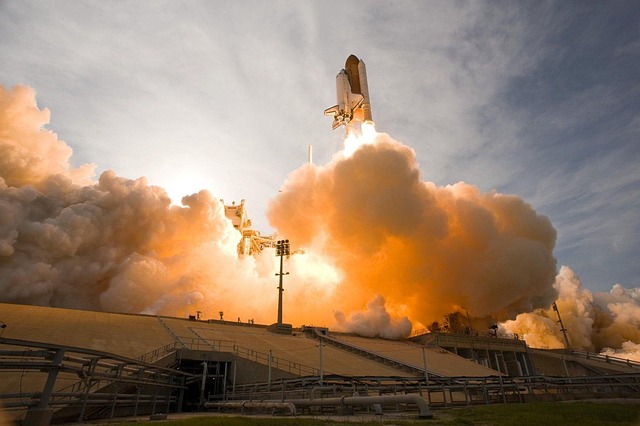
The Artemis II launch pad, officially designated as Launch Complex 39B (LC-39B) at Kennedy Space Center in Florida, has undergone extensive modernization to support NASA’s ambitious lunar exploration program. This infrastructure investment—totaling billions of dollars—represents more than just a launchpad; it’s the foundation of a sustainable lunar economy that will generate returns for decades to come.
The Technical Foundation
Launch Complex 39B was originally built for the Apollo program and later modified for the Space Shuttle program. The recent upgrades for Artemis have transformed it into a state-of-the-art facility capable of launching the Space Launch System (SLS), the most powerful rocket ever built. The pad now features:
– Advanced mobile launcher systems with multiple umbilical connections
– Enhanced propellant storage and delivery systems
– Upgraded communications infrastructure
– Modern safety and environmental monitoring systems
– Automated launch control capabilities
These improvements represent a microcosm of the broader investment thesis surrounding space infrastructure: governments and private entities are committing substantial capital to build the foundation for sustained commercial activity beyond Earth.
The Investment Landscape: Direct and Indirect Opportunities

The Artemis program and its associated infrastructure create investment opportunities across multiple tiers, from direct aerospace contractors to ancillary service providers and technology companies that enable space operations.
Tier 1: Prime Contractors and Major Aerospace Companies
The most obvious investment opportunities lie with the primary contractors building the Artemis systems:
**Boeing** serves as the prime contractor for the Space Launch System core stage, representing a multi-billion dollar contract that extends through multiple Artemis missions. While Boeing is a diversified aerospace giant, its SLS work provides steady revenue streams and demonstrates technical capabilities that translate to other government and commercial contracts.
**Lockheed Martin** builds the Orion crew capsule, the spacecraft that will carry astronauts around the Moon. This contract not only generates direct revenue but positions Lockheed Martin as a key player in human spaceflight for the foreseeable future. The company’s involvement in Artemis enhances its competitive position for future commercial space station contracts and deep space missions.
**Northrop Grumman** manufactures the solid rocket boosters that provide additional thrust during launch. These boosters represent mature technology with high margins and minimal development risk, creating predictable revenue streams that appeal to income-focused investors.
**Aerojet Rocketdyne** (now part of L3Harris Technologies after acquisition) produces the RS-25 engines that power the SLS core stage. Engine production represents high-value, specialized manufacturing with significant barriers to entry, creating a defensible market position.
Tier 2: Critical Infrastructure and Support Services
Beyond the primary spacecraft manufacturers, numerous companies provide essential infrastructure and services:
**Jacobs Engineering** holds major contracts for ground systems operations and maintenance at Kennedy Space Center. These service contracts often feature multi-year terms with built-in escalation clauses, creating stable cash flows ideal for dividend-focused investment strategies.
**AECOM** provides engineering and construction services for launch infrastructure modifications. As launch cadence increases across the space industry, demand for specialized aerospace construction expertise will grow accordingly.
Companies specializing in cryogenic systems, propellant handling, communications infrastructure, and environmental monitoring all benefit from the sustained activity that Artemis generates at Kennedy Space Center and related facilities.
Tier 3: Technology Enablers and Supply Chain
The complexity of lunar missions requires cutting-edge technology across numerous domains:
**Advanced materials**: Companies producing lightweight composites, radiation-resistant materials, and thermal protection systems see increased demand. While many materials suppliers are privately held or divisions of larger conglomerates, investors can gain exposure through materials science-focused ETFs or by researching public companies with significant aerospace materials divisions.
**Semiconductor and electronics**: Space-qualified electronics require extreme reliability and radiation hardening. Companies like Microchip Technology, Texas Instruments, and others with aerospace divisions benefit from this specialized demand, which commands premium pricing and creates high switching costs.
**Software and simulation**: The Artemis program relies heavily on advanced simulation, modeling, and flight software. Companies providing these capabilities often have subscription-based revenue models that generate recurring income—an attractive feature for passive income investors.
Building Passive Income Strategies Around Space Infrastructure
The space economy’s growth trajectory creates multiple pathways for generating passive income, each with different risk-return profiles and capital requirements.
Dividend Strategies with Aerospace Majors
Large aerospace contractors typically pay consistent dividends, having established themselves as mature companies with predictable government revenue streams. An income-focused investor might construct a portfolio weighted toward these dividend-paying aerospace giants:
**Strategy**: Allocate capital to a diversified basket of prime contractors and major suppliers, focusing on companies with:
– Dividend yields of 2-4%
– Consistent dividend growth histories
– Payout ratios under 60% (indicating sustainability)
– Multiple revenue streams beyond just space programs
This approach provides quarterly income while maintaining exposure to the growth potential of the expanding space economy. The key is recognizing that these companies won’t deliver explosive growth but offer stability and income—think of them as the “utility stocks” of the space sector.
Real Estate and Infrastructure Investment Trusts
The physical infrastructure supporting space operations represents another passive income opportunity. While specialized space-focused REITs are still emerging, investors can gain exposure through:
**Industrial REITs** that own properties near major aerospace hubs like Cape Canaveral, Houston, and Huntsville. These facilities house contractors, suppliers, and support services that benefit from proximity to NASA centers and launch facilities.
**Data center REITs** may benefit as space operations increasingly rely on ground-based computing infrastructure for telemetry processing, mission control, and data storage. The massive data streams generated by modern spacecraft create ongoing demand for computing resources.
**Specialized aerospace real estate funds** are beginning to emerge, focusing on facilities that support space operations. These funds typically target institutional investors but may become accessible to retail investors as the sector matures.
Options Strategies for Enhanced Income
For investors comfortable with derivatives, covered call strategies on aerospace holdings can generate additional income:
**Covered calls**: Holding shares of established aerospace companies while selling out-of-the-money call options generates premium income. This strategy works particularly well with large-cap aerospace stocks that trade with moderate volatility. The premiums collected provide monthly or quarterly income while you maintain ownership of the underlying shares (unless the calls are exercised).
**Cash-secured puts**: Selling put options on aerospace stocks you’d be willing to own at lower prices generates premium income while potentially acquiring shares at a discount. This strategy works best during market pullbacks when put premiums increase due to elevated volatility.
**Considerations**: Options strategies require active management and understanding of derivatives risks. They work best as income enhancements rather than primary strategies, and they’re most suitable for investors with substantial portfolios who can absorb assignment if options are exercised.
Space-Focused ETFs and Mutual Funds
For investors seeking diversified exposure without individual stock selection, space-focused funds offer a passive approach:
**Space ETFs** like the Procure Space ETF (UFO) and the ARK Space Exploration & Innovation ETF (ARKX) provide exposure to companies across the space value chain. These funds handle rebalancing and diversification while charging management fees typically ranging from 0.5% to 0.75%.
**Advantages**: Instant diversification, professional management, and easy trading
**Disadvantages**: Management fees reduce returns, and fund construction may not align with your specific thesis about which space sectors will outperform
For passive income seekers, some space-focused funds distribute quarterly dividends, though yields are typically modest given the growth orientation of many holdings.
The Broader Economic Multiplier Effect

The Artemis launch pad and associated mission infrastructure generate economic benefits that extend far beyond the immediate contractors. Understanding these multiplier effects helps identify non-obvious investment opportunities.
Regional Economic Development
Kennedy Space Center and the surrounding Space Coast region experience significant economic benefits from launch operations:
**Hospitality and tourism**: Each launch attracts thousands of spectators, generating revenue for hotels, restaurants, and tourist attractions. Artemis II, as a crewed mission, will draw even larger crowds than typical satellite launches. Investors might consider hospitality REITs with Space Coast exposure or tourism-related businesses in the region.
**Workforce development**: The high-skill workforce required for space operations creates demand for housing, education, healthcare, and other services. Regional banks, utilities, and service providers benefit from this economic activity.
**Technology transfer**: Innovations developed for space applications often find terrestrial commercial applications, creating startup opportunities and licensing revenue streams. Universities and research institutions near space hubs become innovation centers, spawning companies that may offer early-stage investment opportunities.
Supply Chain Ripple Effects
The Artemis program’s complexity means components and services come from all 50 states, creating distributed economic benefits:
**Manufacturing resurgence**: Space hardware requires precision manufacturing that can’t be easily offshored, supporting domestic manufacturing employment and investment. Companies providing specialized manufacturing equipment and automation systems benefit from this trend.
**Advanced materials research**: The extreme environments of space drive materials science innovation. Companies developing new alloys, composites, and coatings for aerospace applications often find broader commercial markets, creating potential investment opportunities in materials technology.
**Testing and validation services**: Space-qualified components require extensive testing. Companies providing environmental testing, quality assurance, and certification services see steady demand as launch cadence increases across the industry.
Risk Considerations and Mitigation Strategies
No investment strategy is without risk, and the space sector presents unique challenges that investors must understand and manage.
Program Risk and Political Volatility
Space programs face political risks as administrations change and priorities shift. Artemis enjoys broad bipartisan support, but future budget constraints could impact program timelines:
**Mitigation**: Diversify across multiple contractors and avoid concentration in companies heavily dependent on a single program. Companies with diversified revenue streams across commercial, civil, and military space activities are more resilient to political shifts.
Technical Risk and Schedule Delays
Space systems are complex, and delays are common. The Artemis program has experienced multiple schedule slips, impacting contractor revenue recognition and market sentiment:
**Mitigation**: Focus on companies with established track records and mature technologies rather than speculative ventures. Pay attention to contract structures—cost-plus contracts shift risk to the government, while fixed-price contracts keep risk with the contractor.
Market Valuation Risk
Space-related stocks sometimes trade at premium valuations based on future growth expectations rather than current fundamentals:
**Mitigation**: Maintain discipline around valuation metrics. Use dollar-cost averaging to build positions over time rather than making large lump-sum investments. Consider a barbell strategy combining established aerospace companies (value/income) with smaller allocations to higher-growth space ventures (speculation).
Competition from Commercial Space
SpaceX and other commercial space companies are disrupting traditional aerospace business models, potentially threatening established contractors:
**Mitigation**: Recognize that government programs like Artemis often favor established contractors with proven track records, while commercial ventures are best suited for high-risk tolerance portions of your portfolio. The future likely involves both traditional aerospace and new commercial players, each serving different market segments.
Practical Implementation: A Sample Portfolio Approach
Translating strategy into action requires a concrete portfolio framework. Here’s a sample allocation for an investor seeking both income and growth exposure to the space economy with moderate risk tolerance:
Core Holdings (60% of space allocation)
– 20% Large-cap prime contractors (Boeing, Lockheed Martin, Northrop Grumman)
– 15% Diversified aerospace and defense companies with space divisions
– 15% Space-focused ETF for broad exposure
– 10% Aerospace supply chain companies and materials suppliers
Income-Generating Positions (25% of space allocation)
– 15% Dividend-focused aerospace companies
– 10% Infrastructure and service providers with government contracts
Growth/Speculative Positions (15% of space allocation)
– 10% Commercial space companies (SpaceX competitors, satellite operators)
– 5% Early-stage space technology companies or venture funds
**Important note**: This “space allocation” should itself be a portion of a well-diversified overall portfolio. Most financial advisors would suggest space/aerospace exposure representing 5-15% of total portfolio value, depending on risk tolerance and investment objectives.
Rebalancing and Management
**Quarterly review**: Monitor program developments, contract awards, and financial results. Rebalance if any position grows beyond its target allocation.
**Annual strategic review**: Reassess the space economy’s trajectory and adjust allocations based on evolving market conditions. As the industry matures, you might shift from growth-oriented positions toward income-generating holdings.
**Tax efficiency**: Hold dividend-paying aerospace stocks in tax-advantaged accounts when possible, as qualified dividends receive preferential tax treatment. Growth-oriented positions might be better suited for taxable accounts where you can harvest tax losses if needed.
Long-Term Thesis: The Sustainable Space Economy
The Artemis II launch pad represents more than a single mission’s starting point—it’s infrastructure for a sustainable lunar economy that NASA envisions lasting decades. Understanding this long-term vision is crucial for investment success.
The Artemis Program Roadmap
Artemis II (scheduled for 2026) will send astronauts around the Moon, testing systems and procedures. Artemis III (planned for 2027-2028) will land humans on the lunar surface for the first time since 1972. Subsequent missions will establish the Lunar Gateway space station and eventually create a sustained lunar presence.
This multi-decade program creates predictable demand for launch services, spacecraft systems, life support technology, and countless other capabilities. Unlike Apollo, which ended after six landing missions, Artemis is designed for sustainability.
Commercial Lunar Economy
NASA’s strategy explicitly includes commercial partnerships, creating opportunities for private companies to provide services and develop lunar resources:
**Lunar landers**: Companies like SpaceX, Blue Origin, and others are developing commercial lunar landers that could serve both NASA and private customers.
**Resource utilization**: Lunar ice deposits could be processed into rocket propellant, creating an entirely new industry. Companies developing resource extraction and processing technology may offer significant long-term opportunities.
**Communications and navigation**: Just as Earth has telecommunications infrastructure, the Moon will need similar systems. Companies providing these capabilities could generate recurring revenue from multiple customers.
**Power systems**: Lunar surface operations require robust power generation and storage. Solar panel manufacturers, battery companies, and nuclear power systems developers all have potential roles.
Mars and Beyond
Success with Artemis creates a template for Mars exploration and eventual settlement. Companies that establish themselves as reliable providers for lunar operations will be well-positioned for Martian missions in the 2030s and beyond.
This progression from Moon to Mars represents decades of sustained investment and development, creating long-term investment opportunities that extend far beyond any single mission or program.
Monitoring and Staying Informed
Successful space economy investing requires staying informed about program developments, technical milestones, and industry trends.
Key Information Sources
**NASA official channels**: NASA’s website and social media provide mission updates, contract announcements, and technical information. Pay particular attention to contract awards, which often signal shifting priorities and opportunities.
**Industry publications**: Aviation Week, SpaceNews, and similar outlets provide detailed coverage of space programs, contract competitions, and technical developments.
**Earnings calls and investor presentations**: Public aerospace companies discuss program status, contract backlogs, and outlook during quarterly earnings calls. These provide insights into business momentum and management expectations.
**Congressional hearings**: Space policy and funding decisions happen in Congress. Monitoring relevant committee hearings provides early warning of potential budget changes or program modifications.
**Trade shows and conferences**: Events like the Space Symposium and International Astronautical Congress are where major announcements often occur and where industry trends become visible.
Red Flags and Warning Signs
Certain developments should prompt portfolio reassessment:
**Budget cuts or program restructuring**: Significant changes to Artemis funding or scope could impact contractor revenue and timelines.
**Major technical failures**: While setbacks are common in space programs, catastrophic failures (especially involving crew safety) can trigger program reviews and delays.
**Competitive threats**: Commercial alternatives that offer significantly lower costs or better performance may displace traditional contractors over time.
**Valuation extremes**: If space-related stocks trade at multiples far exceeding historical norms without corresponding fundamental improvements, consider taking profits or rebalancing.
Conclusion: Positioning for the Next Era of Space Exploration
The Artemis II launch pad at Kennedy Space Center stands as a monument to human ambition and a gateway to unprecedented economic opportunities. For investors seeking to build wealth and generate passive income, the expanding space economy offers compelling prospects across multiple timeframes and risk profiles.
The key to successful space economy investing lies in understanding the distinction between hype and substance. Not every space company will succeed, and not every advancement will generate immediate investment returns. However, the fundamental trajectory is clear: humanity is expanding beyond low Earth orbit for the first time in over five decades, creating infrastructure and capabilities that will support decades of economic activity.
**For income-focused investors**, established aerospace contractors offer stability, dividends, and exposure to long-term space economy growth without excessive volatility.
**For growth-oriented investors**, the emerging commercial space sector and companies developing enabling technologies offer higher-risk, higher-return potential.
**For balanced investors**, a diversified approach combining core holdings in established companies with selective exposure to growth opportunities provides both income generation and appreciation potential.
As Artemis II prepares for launch, carrying astronauts around the Moon for the first time in over 50 years, we’re witnessing not just a space mission but an economic inflection point. The launch pad being prepared today will support missions throughout the coming decades, generating returns for investors who position themselves thoughtfully at the beginning of this new era.
The cosmos has always inspired humanity to dream. Now, those dreams are becoming investable realities, offering opportunities to build wealth while participating in one of the most ambitious endeavors in human history. The countdown has begun—for the mission, and for investors ready to capitalize on humanity’s return to deep space exploration.