

SpaceX: A Comprehensive Guide to Investment Opportunities and Passive Income Strategies
The aerospace industry has undergone a remarkable transformation over the past two decades, and no company has been more instrumental in this revolution than SpaceX. Founded by Elon Musk in 2002, Space Exploration Technologies Corp. (SpaceX) has fundamentally changed how we think about space travel, satellite deployment, and the commercialization of space. For investors seeking exposure to cutting-edge technology and long-term growth potential, understanding SpaceX’s business model, market position, and investment opportunities is crucial.
Understanding SpaceX’s Business Model
SpaceX operates multiple revenue streams that have evolved significantly since its inception. The company’s primary business segments include launch services, satellite internet (Starlink), NASA contracts, and future ventures like Starship development.
Launch Services: The Foundation
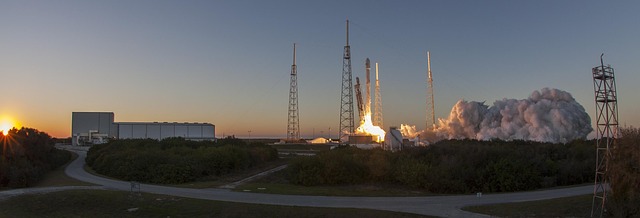
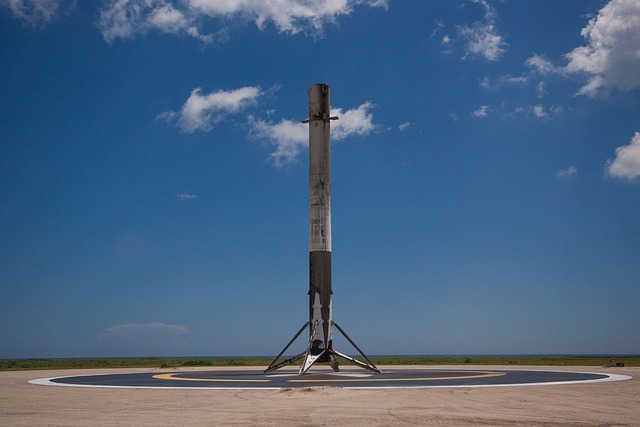
SpaceX’s Falcon 9 rocket has become the workhorse of the commercial space industry. The company’s ability to land and reuse rocket boosters has dramatically reduced the cost of accessing space, making it the preferred launch provider for commercial satellites, government payloads, and international space agencies. With launch costs ranging from $60 million to $90 million for a Falcon 9, compared to competitors charging $150 million or more, SpaceX has captured a dominant market share.
The Falcon Heavy, capable of lifting heavier payloads, serves specialized missions requiring greater capacity. These launch services generate predictable revenue through multi-year contracts with clients ranging from telecommunications companies to defense contractors.
Starlink: The Game-Changing Revenue Stream
Starlink represents SpaceX’s most ambitious commercial venture and potentially its most valuable asset. This satellite internet constellation aims to provide high-speed broadband access to underserved areas globally. With over 5,000 satellites already in orbit and plans to deploy tens of thousands more, Starlink has begun generating substantial recurring revenue.
The business model is straightforward: customers pay monthly subscription fees ($120/month for residential service in many markets) for satellite internet access. With hundreds of thousands of subscribers already and potential for millions more, Starlink could become a multi-billion dollar annual revenue generator. Industry analysts estimate Starlink could achieve $30-50 billion in annual revenue within the next decade, potentially exceeding SpaceX’s launch services revenue.
Government Contracts and NASA Partnerships
SpaceX maintains lucrative contracts with NASA and the U.S. Department of Defense. The Commercial Crew Program, which transports astronauts to the International Space Station, provides steady income. Additionally, SpaceX won a $2.9 billion contract to develop the lunar lander for NASA’s Artemis program, demonstrating the company’s expanding role in government space initiatives.
Investment Landscape: How to Gain Exposure to SpaceX

One of the most significant challenges for investors interested in SpaceX is that the company remains privately held. Unlike Tesla, Elon Musk’s other major venture, SpaceX shares do not trade on public stock exchanges. However, several investment pathways exist for those seeking exposure to this aerospace giant.
Private Market Access
Accredited investors can access SpaceX shares through private market platforms. Companies like Forge Global, EquityZen, and SharesPost facilitate secondary market transactions in pre-IPO companies. SpaceX shares have traded in these markets at valuations ranging from $100 billion to over $150 billion in recent years.
**Requirements and Considerations:**
– **Accredited Investor Status**: Generally requires $1 million net worth (excluding primary residence) or $200,000+ annual income
– **High Minimum Investments**: Often $100,000 or more
– **Illiquidity**: Shares cannot be easily sold; investments may be locked up for years
– **Limited Information**: Private companies disclose less financial information than public companies
– **Valuation Risk**: Private market valuations can be volatile and difficult to verify
Indirect Exposure Through Public Companies
For investors without access to private markets, several publicly traded companies provide indirect SpaceX exposure:
**Google/Alphabet (GOOGL, GOOG)**: Google invested $900 million in SpaceX in 2015, acquiring approximately 7.5% of the company. While this represents a small portion of Alphabet’s massive portfolio, it provides some exposure.
**Bank of America (BAC)**: Has invested in SpaceX through various funding rounds and maintains a position in the company.
**Fidelity Investments**: Through various funds, Fidelity holds SpaceX shares, though individual investors would need to research specific Fidelity funds with SpaceX exposure.
**Space-Focused ETFs**: While no ETF currently holds SpaceX shares directly, funds like the Procure Space ETF (UFO) and ARK Space Exploration & Innovation ETF (ARKX) invest in publicly traded aerospace and satellite companies that operate in SpaceX’s ecosystem.
Venture Capital and Private Equity Funds
Some venture capital and private equity funds specializing in late-stage technology companies include SpaceX in their portfolios. Investors can access these funds, though they typically require substantial minimum investments and long lock-up periods.
Investment Strategy Considerations
Timing and Valuation Analysis
SpaceX’s valuation has grown exponentially, from approximately $12 billion in 2015 to over $150 billion in recent private market transactions. This growth reflects both the company’s operational achievements and market enthusiasm for space technology.
When considering SpaceX investment timing, analyze these factors:
**Revenue Growth Trajectory**: Starlink’s subscriber growth and launch manifest backlog indicate revenue potential. Monitor quarterly updates on satellite deployments and service expansion.
**Competitive Positioning**: SpaceX maintains significant advantages in launch costs and reusability technology. New competitors like Blue Origin and Rocket Lab are years behind in capability and scale.
**Regulatory Environment**: Government space policy, satellite licensing, and international telecommunications regulations impact SpaceX’s growth potential.
**IPO Speculation**: Elon Musk has suggested that Starlink might eventually be spun off and taken public once revenue becomes more predictable. An IPO would create liquidity for existing investors and new entry points for public market investors.
Risk Assessment
No investment is without risk, and SpaceX presents several unique challenges:
**Technical Risks**: Rocket launches remain inherently dangerous. A catastrophic failure, especially involving crew, could impact customer confidence and contracts.
**Regulatory Challenges**: Starlink faces regulatory hurdles in various countries, and spectrum allocation remains contentious internationally.
**Capital Intensity**: SpaceX requires enormous ongoing capital investment for Starship development, satellite manufacturing, and infrastructure expansion.
**Leadership Concentration**: The company’s success is closely tied to Elon Musk’s vision and leadership. His involvement in multiple demanding ventures creates execution risk.
**Market Competition**: While SpaceX leads today, well-funded competitors could erode market share over time.
Passive Income Strategies Related to SpaceX Investment
While direct SpaceX investment doesn’t generate passive income through dividends (as a private company, it doesn’t pay them), investors can structure complementary strategies to build passive income around aerospace sector exposure.
Dividend-Paying Aerospace Stocks
Build a portfolio of established aerospace companies that pay dividends while providing thematic exposure to the space economy:
**Lockheed Martin (LMT)**: Yields approximately 2.5-3%, major defense contractor with space division. Provides stable dividend income while maintaining exposure to government space contracts that complement SpaceX’s commercial focus.
**Northrop Grumman (NOC)**: Yields around 2%, involved in satellite systems and space infrastructure. Offers quarterly dividend payments and benefits from increased space-related defense spending.
**Boeing (BA)**: While currently not paying dividends due to recent challenges, historically offered income and maintains significant space operations that could benefit from industry growth.
Covered Call Strategy on Space ETFs
For investors holding space-focused ETFs, implementing a covered call strategy can generate monthly income:
1. Purchase shares in ARKX or UFO
2. Sell out-of-the-money call options against the position
3. Collect option premiums as monthly income
4. Maintain upside participation if options expire worthless
This strategy works best in moderately volatile markets and can generate 0.5-2% monthly income depending on market conditions and strike price selection.
Real Estate Investment Trusts (REITs) Focused on Data Centers
Starlink’s infrastructure requires significant ground station and data center capacity. Investing in REITs that own data centers provides passive income through dividends while benefiting from increased demand driven by satellite internet expansion:
**Digital Realty Trust (DLR)**: Owns data centers globally, yields approximately 3-4%
**Equinix (EQIX)**: Premium data center provider, yields around 2%
Royalty and Streaming Companies in Satellite Technology
Similar to precious metals royalty companies, some specialized investment vehicles provide financing to technology companies in exchange for revenue shares or royalties. While less common in aerospace, this model is emerging in satellite technology and could provide passive income streams as the industry matures.
Building a Diversified Space Investment Portfolio
A comprehensive approach to investing in the space economy, including SpaceX exposure, should incorporate diversification across multiple segments:
Core Holdings (40-50% of space portfolio)
– SpaceX private shares (if accessible) or proxy investments through Alphabet
– Established aerospace prime contractors (Lockheed Martin, Northrop Grumman)
– Space-focused ETFs for broad industry exposure
Growth Positions (30-40%)
– Publicly traded satellite companies (Iridium Communications, Viasat)
– Launch competitors (Rocket Lab USA – RKLB)
– Space technology suppliers (Maxar Technologies, Redwire Corporation)
Income Generation (20-30%)
– Dividend-paying aerospace and defense stocks
– Data center REITs supporting space infrastructure
– Covered call positions on existing holdings
Practical Investment Tips
For Accredited Investors Seeking Direct SpaceX Exposure
**Due Diligence Process:**
1. **Verify Platform Legitimacy**: Only use established secondary market platforms with proven track records
2. **Understand Share Classes**: SpaceX has different share classes with varying rights; ensure you understand what you’re purchasing
3. **Review Pricing History**: Examine recent transaction prices to ensure fair valuation
4. **Consider Lock-up Periods**: Factor in how long capital will be committed
5. **Diversify Entry Points**: If possible, build positions over time rather than investing all at once
For Retail Investors Without Direct Access
**Building Proxy Exposure:**
1. **Research Alphabet’s Holdings**: Monitor Google’s SpaceX stake value through funding round announcements
2. **Track Space ETF Holdings**: Understand which publicly traded SpaceX partners and suppliers comprise space-focused funds
3. **Follow Industry News**: Stay informed about potential Starlink IPO timing and structure
4. **Consider Options Strategies**: Use long-term call options on Alphabet for leveraged exposure to potential SpaceX valuation increases
5. **Participate in Related IPOs**: When SpaceX competitors or suppliers go public, evaluate early investment opportunities
Tax Considerations
**Private Company Investments:**
– Qualified Small Business Stock (QSBS) exclusions may apply to early SpaceX shares held for 5+ years
– Capital gains treatment depends on holding period and share class
– Consult tax professionals regarding complex private equity structures
**Public Market Alternatives:**
– Traditional capital gains rules apply to ETFs and individual stocks
– Dividend income taxed at qualified dividend rates (typically 15-20%)
– Options strategies generate short-term or long-term gains depending on structure
Monitoring Your Investment
Key Performance Indicators to Track
**For SpaceX Specifically:**
– **Launch Cadence**: Number of successful launches per year (target: 100+ annually)
– **Starlink Subscribers**: Growth rate and average revenue per user
– **Rocket Reusability Metrics**: Number of times individual boosters fly
– **Starship Development**: Progress toward operational status
– **Contract Announcements**: New commercial and government agreements
**For Broader Space Portfolio:**
– **Industry Launch Demand**: Total global launch market size and growth
– **Satellite Deployment Trends**: Number of satellites launched industry-wide
– **Government Space Budgets**: NASA and Department of Defense funding levels
– **Competitive Landscape Changes**: New entrants and technology developments
Setting Realistic Expectations
SpaceX investment should be viewed through a long-term lens. The company is building infrastructure and capabilities that will take years to fully monetize. Reasonable expectations include:
**Time Horizon**: 5-10 years minimum for optimal returns
**Volatility**: Expect significant valuation fluctuations in private markets
**Liquidity Events**: Potential Starlink IPO or full company IPO as eventual exit opportunities
**Return Potential**: Given risk profile, targeting 15-25% annualized returns over long term is reasonable
Future Outlook and Emerging Opportunities
Starship: The Next Revenue Multiplier
SpaceX’s Starship program represents the company’s most ambitious project. This fully reusable super-heavy-lift launch system could reduce launch costs by another order of magnitude, potentially to under $10 million per launch for 100+ tons to orbit.
**Investment Implications:**
– Enables entirely new markets (space tourism, orbital manufacturing, lunar/Mars missions)
– Could make SpaceX the dominant launch provider for decades
– Creates opportunities for ancillary businesses and investment in space infrastructure
Mars Colonization and Deep Space Economy
While highly speculative, SpaceX’s stated mission of making humanity multi-planetary could create unprecedented investment opportunities in:
– Life support systems and habitat construction
– In-situ resource utilization (mining water and minerals on Mars)
– Transportation networks between Earth, Moon, and Mars
– Communications infrastructure for deep space
Low Earth Orbit Commercialization
As launch costs decrease, new industries emerge in low Earth orbit:
– **Manufacturing**: Producing materials impossible to create in Earth’s gravity
– **Pharmaceuticals**: Developing drugs in microgravity environments
– **Tourism**: Space hotels and orbital experiences
– **Research Facilities**: Private space stations for scientific research
Investors positioning early in companies enabling these industries could benefit from SpaceX’s cost reduction enabling market creation.
Conclusion
SpaceX represents one of the most compelling investment opportunities in modern technology, combining revolutionary innovation with massive market potential. While direct access remains limited to accredited investors, the multiple pathways to gaining exposure—through private markets, proxy investments, and thematic portfolios—provide options for investors at various wealth levels.
The key to successful SpaceX-related investing lies in understanding the company’s multifaceted business model, particularly the transformative potential of Starlink as a recurring revenue engine. By combining direct or indirect SpaceX exposure with dividend-paying aerospace stocks, space-focused ETFs, and complementary infrastructure investments, investors can build diversified portfolios that generate passive income while capturing the long-term growth potential of the commercializing space economy.
As with any high-growth technology investment, appropriate position sizing is crucial. SpaceX and space-related investments should typically represent 5-15% of a diversified portfolio, depending on risk tolerance and investment timeline. The extraordinary potential rewards come with commensurate risks, including technical challenges, regulatory hurdles, and market competition.
For patient investors willing to embrace volatility and maintain a long-term perspective, SpaceX and the broader space economy offer opportunities to participate in humanity’s expansion beyond Earth while potentially generating significant returns. Whether through eventual Starlink IPO participation, private market positions, or carefully constructed portfolios of public space companies, the path to investing in humanity’s spacefaring future has never been more accessible.
The next decade will likely prove pivotal for SpaceX and the space industry overall. By staying informed, monitoring key performance indicators, and maintaining disciplined investment strategies, investors can position themselves to benefit from what may be remembered as the beginning of humanity’s true space age.