
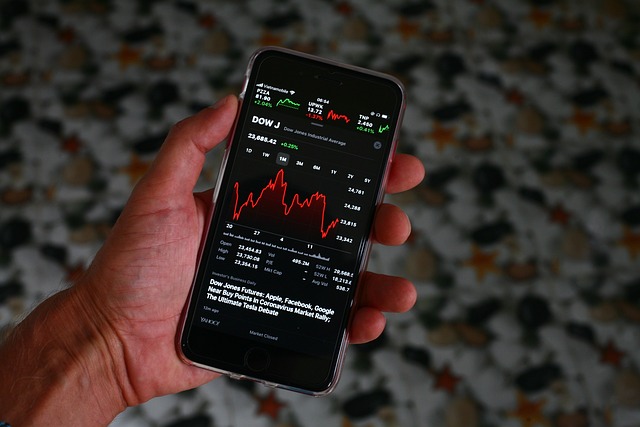
Dow Futures: A Comprehensive Guide to Investment and Passive Income Strategies
The world of financial derivatives can seem intimidating to newcomers, but understanding Dow futures is essential for anyone serious about building wealth through strategic investing. Dow futures, officially known as E-mini Dow futures, represent contracts based on the Dow Jones Industrial Average (DJIA), one of the most widely recognized stock market indices globally. This comprehensive guide will explore what Dow futures are, how they work, and most importantly, how you can leverage them to generate passive income and achieve your investment goals.
What Are Dow Futures?
Dow futures are financial contracts that obligate the buyer to purchase, or the seller to sell, the value of the Dow Jones Industrial Average at a predetermined future date and price. These futures contracts are traded on the Chicago Mercantile Exchange (CME) and serve multiple purposes for different types of market participants.
Understanding the Basics
The Dow Jones Industrial Average tracks 30 large, publicly-owned companies trading on the New York Stock Exchange (NYSE) and NASDAQ. When you trade Dow futures, you’re not buying the actual stocks that comprise the index. Instead, you’re entering into a contract that derives its value from the index’s performance.
The most commonly traded Dow futures contract is the E-mini Dow, which has a contract size of $5 multiplied by the DJIA value. For example, if the Dow is trading at 35,000, one E-mini contract would control $175,000 worth of the index. There’s also a Micro E-mini Dow contract, which is one-tenth the size of the E-mini, making it more accessible for smaller traders.
Why Dow Futures Matter
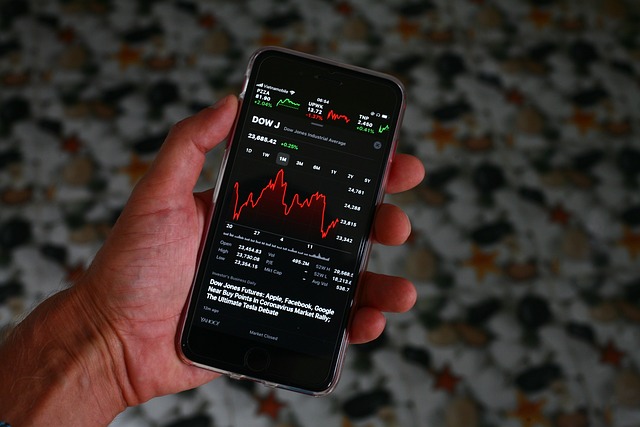
Dow futures serve as a leading indicator of market sentiment. Because futures markets trade nearly 24 hours a day, they often react to news and events before the stock market opens. This is why you’ll often hear financial news reporters discussing “Dow futures are up 200 points” before the market opens—it gives investors a preview of how the market might perform when trading begins.
Key Advantages of Trading Dow Futures
Leverage and Capital Efficiency
One of the most significant advantages of futures trading is leverage. With futures contracts, you only need to deposit a fraction of the contract’s total value as margin. This means you can control a large position with relatively little capital. However, it’s crucial to understand that leverage is a double-edged sword—it can amplify both gains and losses.
Extended Trading Hours
Unlike stocks, which trade during regular market hours (9:30 AM to 4:00 PM ET), Dow futures trade nearly 24 hours a day, five days a week. This extended trading window allows you to react to global news events and economic data releases that occur outside regular market hours.
Liquidity and Tight Spreads
Dow futures are among the most liquid derivatives in the world. High liquidity means you can enter and exit positions quickly without significantly impacting the price. The tight bid-ask spreads also reduce your trading costs.
Portfolio Hedging
Institutional investors and sophisticated traders use Dow futures to hedge their stock portfolios. If you hold a diversified portfolio of stocks and are concerned about short-term market volatility, you can sell Dow futures contracts to offset potential losses in your equity holdings.
Practical Strategies for Trading Dow Futures
Strategy 1: Trend Following
Trend following is one of the most straightforward strategies for futures traders. This approach involves identifying the market’s direction and trading in alignment with that trend.
**Implementation Steps:**
1. **Identify the Trend**: Use technical analysis tools like moving averages to determine whether the Dow is in an uptrend, downtrend, or trading sideways. A common approach is to use the 50-day and 200-day moving averages.
2. **Enter Positions**: When the shorter-term moving average crosses above the longer-term average (a “golden cross”), consider taking a long position. When it crosses below (a “death cross”), consider a short position.
3. **Set Stop Losses**: Always protect your capital with stop-loss orders. A common rule is to risk no more than 1-2% of your trading capital on any single trade.
4. **Take Profits Systematically**: Set profit targets based on technical levels or use trailing stops to lock in gains as the trend continues.
Strategy 2: Range Trading
When the Dow is trading sideways within a defined range, range trading strategies can be profitable. This approach involves buying at support levels and selling at resistance levels.
**Implementation Steps:**
1. **Identify the Range**: Determine clear support and resistance levels where the price has historically bounced.
2. **Buy Support, Sell Resistance**: Enter long positions near support and short positions near resistance.
3. **Use Oscillators**: Technical indicators like the Relative Strength Index (RSI) or Stochastic Oscillator can help identify overbought and oversold conditions within the range.
4. **Exit When the Range Breaks**: If the price breaks out of the established range with strong volume, exit your position and consider trading in the direction of the breakout.
Strategy 3: News-Based Trading
Economic reports, Federal Reserve announcements, and geopolitical events can cause significant moves in Dow futures. News-based trading involves positioning yourself ahead of or immediately after major announcements.
**Key Economic Indicators to Watch:**
– **Non-Farm Payrolls**: Released monthly, this report has a significant impact on market sentiment
– **Federal Reserve Interest Rate Decisions**: Changes in monetary policy directly affect equity markets
– **GDP Reports**: Quarterly economic growth data influences investor confidence
– **Corporate Earnings**: Major company earnings from Dow components can move the index
– **Consumer Confidence**: Retail spending drives economic growth
**Implementation Approach:**
1. **Maintain an Economic Calendar**: Track scheduled releases of important economic data
2. **Understand Market Expectations**: Know what analysts are forecasting before the release
3. **Be Prepared for Volatility**: Use wider stops during news events as volatility spikes
4. **Trade the Reaction**: Sometimes the best trades come after the initial knee-jerk reaction settles
Strategy 4: Spread Trading
Spread trading involves simultaneously taking opposite positions in related futures contracts. For Dow futures, you might trade the spread between different contract months or between the Dow and other indices like the S&P 500.
**Calendar Spread Example:**
Buy a longer-dated Dow futures contract while simultaneously selling a near-term contract. This strategy profits from differences in how the contracts react to time decay and market conditions.
**Inter-Market Spread Example:**
If you believe large-cap stocks (Dow) will outperform broader market stocks (S&P 500), you could go long Dow futures and short S&P 500 futures. This reduces your directional risk while allowing you to profit from relative performance.
Building Passive Income with Dow Futures
While futures trading is generally considered active rather than passive, there are approaches that can generate more consistent, income-like returns with less time involvement.
Systematic Trend Following Systems
Develop or purchase a systematic trading system that automatically generates buy and sell signals based on predetermined rules. Many successful futures traders use algorithmic approaches that remove emotion from trading decisions.
**Steps to Implement:**
1. **Backtest Your Strategy**: Use historical data to verify your system works across different market conditions
2. **Paper Trade First**: Test your system in real-time without risking capital
3. **Start Small**: When going live, begin with minimal position sizes
4. **Monitor and Adjust**: Review your system’s performance monthly and make refinements
Selling Premium Strategies
Options on Dow futures allow you to generate income by selling premium. This approach is more passive than directional trading and can provide consistent returns in range-bound markets.
**Covered Call Writing on Futures:**
If you’re long Dow futures, you can sell call options against your position to generate income. If the market stays below the strike price, you keep the premium.
**Cash-Secured Put Selling:**
Sell put options on Dow futures at strike prices where you’d be willing to buy. If the puts expire worthless, you keep the premium. If you’re assigned, you enter a long futures position at your desired price.
Managed Futures Accounts
For truly passive exposure to Dow futures strategies, consider managed futures accounts or Commodity Trading Advisor (CTA) funds. Professional traders manage these accounts using various strategies, and you receive a portion of the profits.
**Advantages:**
– Professional management
– Diversified strategies
– Hands-off approach
– Regulated industry
**Considerations:**
– Management fees (typically 2% annually)
– Performance fees (typically 20% of profits)
– Minimum investment requirements often $25,000 or more
Risk Management: The Foundation of Successful Futures Trading
No discussion of futures trading would be complete without emphasizing risk management. Leverage makes Dow futures potentially lucrative but also dangerous if not managed properly.
Position Sizing
Never risk more than 1-2% of your total trading capital on a single trade. If you have a $50,000 account, this means limiting your potential loss to $500-$1,000 per trade. Calculate your position size based on your stop-loss distance.
**Formula:**
“`
Position Size = (Account Size × Risk Percentage) ÷ (Entry Price – Stop Loss Price × Contract Multiplier)
“`
Stop-Loss Orders
Always use stop-loss orders to limit potential losses. Place stops at technically significant levels, not arbitrary points. Common stop-loss methods include:
– **Percentage stops**: Exit when the position moves against you by a set percentage
– **Volatility stops**: Use Average True Range (ATR) to set stops based on market volatility
– **Technical stops**: Place stops below support (for longs) or above resistance (for shorts)
Diversification
Don’t put all your capital into Dow futures. Diversify across different asset classes, timeframes, and strategies. This reduces the impact of any single losing trade or strategy drawdown.
Emotional Discipline
The psychological aspect of trading is often underestimated. Successful futures traders maintain discipline by:
– Following their trading plan without deviation
– Accepting losses as part of the business
– Avoiding revenge trading after losses
– Not over-leveraging after winning streaks
– Keeping detailed trading journals to learn from mistakes
Tax Advantages of Futures Trading
In the United States, futures contracts receive favorable tax treatment under Section 1256 of the IRS code. Gains and losses are taxed using a 60/40 split:
– 60% of gains are taxed as long-term capital gains (maximum 20% rate)
– 40% of gains are taxed as short-term capital gains (ordinary income rates)
This blended rate is advantageous for active traders compared to stock trading, where short-term trades are taxed entirely as ordinary income. Always consult with a tax professional familiar with futures trading to optimize your tax strategy.
Getting Started with Dow Futures Trading
Education and Preparation
Before risking real money, invest time in education:
1. **Read Books**: Study classics like “Trading for a Living” by Dr. Alexander Elder and “Market Wizards” by Jack Schwager
2. **Take Courses**: Many brokers offer free educational resources on futures trading
3. **Use Simulators**: Practice with paper trading accounts to test strategies without risk
4. **Study Technical Analysis**: Learn to read charts, identify patterns, and use indicators
Choosing a Broker
Select a futures broker based on:
– **Commission Structure**: Competitive per-contract fees
– **Platform Quality**: Reliable, fast execution with good charting tools
– **Margin Requirements**: Reasonable initial and maintenance margin levels
– **Customer Service**: Responsive support when you need help
– **Regulatory Standing**: Registered with the National Futures Association (NFA)
Starting Capital Requirements
While you can open a futures account with as little as $2,500-$5,000, starting with $10,000-$25,000 provides more comfortable cushion for managing risk and weathering drawdowns. With Micro E-mini Dow contracts requiring approximately $500 in margin, smaller traders can access the market without excessive leverage.
Developing Your Trading Plan
A comprehensive trading plan should include:
– **Goals**: Define what you want to achieve (income target, capital growth)
– **Strategies**: Specify which approaches you’ll use and when
– **Risk Parameters**: Set maximum daily, weekly, and monthly loss limits
– **Position Sizing Rules**: Determine how much you’ll risk per trade
– **Review Schedule**: Plan regular performance evaluations
Advanced Considerations for Long-Term Success
Continuous Learning
Markets evolve, and successful traders adapt. Commit to ongoing education through:
– Reading market analysis and research reports
– Reviewing your trading journal regularly
– Staying informed about economic and geopolitical developments
– Networking with other traders
– Attending webinars and conferences
Technology and Tools
Leverage technology to improve your trading:
– **Advanced Charting Software**: Platforms like TradingView, NinjaTrader, or Thinkorswim
– **Automated Alerts**: Set price alerts for key levels
– **Economic Calendar Apps**: Stay informed about scheduled news events
– **Risk Management Calculators**: Tools that help size positions correctly
Building Multiple Income Streams
Don’t rely solely on Dow futures for passive income. Consider complementary strategies:
– Dividend-paying stocks for steady cash flow
– Real estate investments for rental income
– Options strategies on your stock holdings
– Bonds or fixed-income securities for stability
Conclusion
Dow futures offer sophisticated investors a powerful tool for generating returns and building passive income streams. The combination of leverage, liquidity, extended trading hours, and favorable tax treatment makes them attractive for those willing to invest the time to learn proper techniques and risk management.
However, success in futures trading requires more than just understanding the mechanics. It demands discipline, emotional control, continuous education, and a systematic approach to risk management. The strategies outlined in this guide—from trend following and range trading to more passive approaches like systematic trading systems and managed accounts—provide multiple pathways to profit from Dow futures.
For those new to futures trading, the journey should begin with education and practice through paper trading. Start small, focus on preserving capital, and gradually build your skills and confidence. For experienced traders, Dow futures can become a core component of a diversified investment strategy that generates consistent returns across different market conditions.
Remember that no investment is without risk, and futures trading involves substantial risk of loss. Never invest money you cannot afford to lose, and always prioritize risk management over potential profits. With the right approach, patience, and discipline, Dow futures can become a valuable tool in your wealth-building arsenal, helping you achieve your financial goals and create lasting passive income streams.
Whether you’re seeking to hedge existing positions, generate trading income, or diversify your investment portfolio, Dow futures provide the flexibility and opportunity to accomplish your objectives. Take the time to master the fundamentals, develop a solid trading plan, and approach the markets with respect and discipline—your future financial success may depend on it.