

SpaceX Rocket Launch Schedule: What Investors Need to Know for Building Wealth and Passive Income in the Space Economy
The space industry is no longer the exclusive domain of government agencies and science fiction enthusiasts. With SpaceX leading the charge in commercial spaceflight, a new era of investment opportunities has emerged that savvy investors cannot afford to ignore. As SpaceX continues to ramp up its rocket launch schedule — with dozens of Falcon 9 missions, Starship test flights, and Starlink deployments planned throughout 2026 — the ripple effects across the broader economy are creating unprecedented pathways to passive income and long-term wealth accumulation.
Understanding SpaceX’s launch cadence and its implications for the space economy is essential for any investor looking to position themselves at the frontier of technological innovation. This comprehensive guide breaks down the current SpaceX launch schedule, explores the investment landscape surrounding commercial spaceflight, and provides actionable strategies for generating passive income from the booming space sector.
The Current SpaceX Launch Schedule: A Record-Breaking Pace
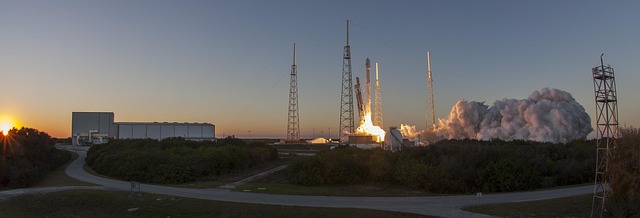
SpaceX has transformed rocket launches from rare, headline-grabbing events into routine commercial operations. In recent years, the company has steadily increased its launch cadence, and 2026 is shaping up to be another record-breaking year. The Falcon 9, the workhorse of SpaceX’s fleet, continues to dominate the global launch market with missions ranging from Starlink satellite deployments to commercial crew missions and national security payloads.
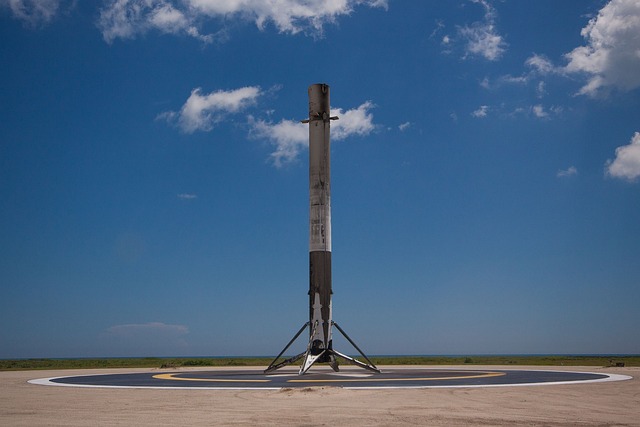
The Falcon 9’s reusability model has fundamentally disrupted the economics of space access. Each booster can now fly more than twenty times, dramatically reducing per-launch costs and enabling a launch frequency that was unimaginable a decade ago. This operational efficiency directly translates into revenue generation — not only for SpaceX but for the entire ecosystem of suppliers, service providers, and downstream industries that depend on affordable access to orbit.
Starlink Deployment Missions
A significant portion of SpaceX’s launch manifest is dedicated to building out the Starlink satellite constellation. With thousands of satellites already in orbit and thousands more planned, Starlink missions represent a consistent and predictable revenue driver. Each launch carries a batch of Starlink satellites, expanding coverage and capacity for the broadband internet service that now serves millions of subscribers across more than 70 countries.
For investors, the Starlink deployment schedule is particularly significant because it represents recurring, subscription-based revenue — the holy grail of passive income business models. Every satellite launched strengthens the network, improves service quality, and enables expansion into new markets including maritime, aviation, and government sectors.
Starship: The Game-Changing Heavy-Lift Vehicle
While Falcon 9 handles the bulk of SpaceX’s operational missions, the Starship program represents the company’s most ambitious and potentially transformative initiative. Starship is designed to be the most powerful rocket ever built, capable of carrying over 100 metric tons to low Earth orbit in a fully reusable configuration.
The Starship test flight schedule has accelerated considerably, with multiple orbital test flights completed and operational missions on the horizon. NASA’s Artemis program depends on a Starship variant for its Human Landing System, and commercial customers are already lining up for future Starship launches. The successful development of Starship could unlock entirely new markets — from point-to-point Earth transport to Mars colonization — each representing massive investment opportunities.
Why the SpaceX Launch Schedule Matters for Investors

The frequency and reliability of SpaceX’s launches serve as a barometer for the health of the entire commercial space industry. Each successful mission validates the technology, builds customer confidence, and expands the addressable market. Here is why investors should pay close attention to every launch on the manifest.
Validation of the Space Economy
Every SpaceX launch that goes according to plan reinforces the narrative that space is open for business. This validation effect extends far beyond SpaceX itself. It boosts investor confidence in the broader space sector, drives up valuations for publicly traded space companies, and attracts new capital into space-focused venture funds and ETFs.
Supply Chain Ripple Effects
A single Falcon 9 launch involves hundreds of suppliers and subcontractors. From specialized alloys and composite materials to guidance systems and ground support equipment, each mission generates economic activity across a vast supply chain. Companies that manufacture components for rockets, satellites, or ground infrastructure benefit directly from an accelerating launch schedule.
Data and Connectivity Revenue
Each Starlink launch adds capacity to a global broadband network that generates monthly recurring revenue from millions of subscribers. This is a textbook example of how infrastructure investment creates passive income streams. The more satellites in orbit, the better the service, the more subscribers join, and the more revenue flows.
Investment Strategies for the Space Economy
Now that we understand why SpaceX’s launch schedule matters, let us explore practical strategies for building wealth and generating passive income from the space sector.
Strategy 1: Space-Focused ETFs and Index Funds
For investors who want broad exposure to the space economy without picking individual stocks, space-themed exchange-traded funds offer an excellent starting point. Funds like the Procure Space ETF (UFO), ARK Space Exploration & Innovation ETF (ARKX), and the SPDR S&P Kensho Final Frontiers ETF (ROKT) provide diversified exposure to companies involved in satellite communications, rocket manufacturing, space exploration, and related technologies.
These ETFs typically hold a mix of pure-play space companies and diversified aerospace and defense firms that derive significant revenue from space activities. By investing in a space ETF, you gain exposure to the upside of the space economy while mitigating the risk associated with any single company.
**Practical tip:** Dollar-cost average into a space ETF by setting up automatic monthly investments. This approach smooths out volatility and builds your position over time. Even modest monthly contributions of $200 to $500 can compound significantly over a decade as the space economy grows.
Strategy 2: Invest in Starlink’s Ecosystem
While SpaceX itself remains a private company, there are several ways to gain indirect exposure to the Starlink opportunity. Companies that manufacture the user terminals, provide ground station infrastructure, or develop applications that run on the Starlink network represent investable proxies.
Additionally, watch for the potential Starlink IPO. Elon Musk has indicated that Starlink could be spun off as a separate publicly traded entity once its revenue and growth trajectory become predictable. Positioning yourself with a brokerage account that offers IPO access and maintaining liquidity for when this opportunity arises could be one of the most consequential investment decisions of the decade.
**Practical tip:** Set up a dedicated savings account or money market fund specifically for a Starlink IPO allocation. Having dry powder ready when the opportunity materializes puts you ahead of investors scrambling for shares on listing day.
Strategy 3: Satellite and Space Infrastructure Companies
The accelerating SpaceX launch schedule is a rising tide that lifts many boats. Publicly traded companies that build satellites, provide space situational awareness, or offer satellite-based services stand to benefit enormously. Consider companies like Iridium Communications, Viasat, Planet Labs, and Rocket Lab for direct exposure to the commercial space sector.
Iridium, for example, operates a constellation of 66 low-Earth orbit satellites and generates steady recurring revenue from its global communications network. Planet Labs captures daily imagery of the entire Earth’s landmass, selling data and analytics to governments, agricultural companies, and financial institutions. These companies represent proven business models with growing revenue streams tied directly to space infrastructure.
**Practical tip:** Build a watchlist of 10 to 15 space-related stocks and study their quarterly earnings reports. Look for companies with increasing revenue, expanding customer bases, and strong competitive moats. Allocate a percentage of your portfolio — perhaps 5% to 15% depending on your risk tolerance — to this high-growth sector.
Strategy 4: Dividend-Paying Aerospace and Defense Stocks
For investors focused specifically on passive income, traditional aerospace and defense companies with space divisions offer attractive dividend yields combined with space economy exposure. Companies like Lockheed Martin, Northrop Grumman, RTX Corporation (formerly Raytheon), and Boeing all have significant space business units and pay regular dividends.
Lockheed Martin, for instance, builds the Orion spacecraft for NASA’s Artemis program, operates satellite systems, and provides launch services. The company has a strong track record of dividend growth, having increased its dividend for over 20 consecutive years. Northrop Grumman builds the solid rocket boosters for NASA’s Space Launch System and operates the Cygnus spacecraft for International Space Station resupply missions.
**Practical tip:** Use the dividend reinvestment plan (DRIP) offered by most brokerages to automatically reinvest dividends into additional shares. This compounding effect accelerates wealth building over time. A portfolio of aerospace dividend stocks yielding 2% to 3% with 8% to 10% annual dividend growth can produce a meaningful passive income stream within a decade.
Strategy 5: Real Estate Near Spaceports
One often-overlooked passive income strategy tied to the space economy is investing in real estate near active spaceports. As SpaceX increases its launch cadence from facilities in Cape Canaveral, Florida, and Boca Chica, Texas, the surrounding areas experience economic growth driven by an influx of aerospace workers, tourists, and support businesses.
Property values near Kennedy Space Center and the SpaceX Starbase facility in South Texas have seen significant appreciation. Rental properties in these areas benefit from strong demand driven by the thousands of SpaceX employees and contractors who need housing.
**Practical tip:** Research real estate investment trusts (REITs) with holdings near major spaceports, or consider direct property investment if you have the capital. Short-term rental platforms can maximize income from properties near launch sites, as space tourism and launch viewing attract visitors willing to pay premium rates for proximity to the action.
Strategy 6: Space-Adjacent Technology Companies
SpaceX’s launch operations depend on cutting-edge technologies that extend far beyond rocket science. Companies specializing in advanced materials, artificial intelligence, autonomous systems, precision manufacturing, and cybersecurity all play critical roles in enabling commercial spaceflight.
Investing in these space-adjacent technology companies provides diversified exposure to the space economy while also capturing value from their non-space business lines. For example, companies that develop radiation-hardened electronics serve both the space industry and the defense sector. Firms specializing in composite materials sell to aerospace, automotive, and renewable energy customers.
**Practical tip:** Identify the technology supply chain behind each SpaceX launch and map the publicly traded companies within it. This “picks and shovels” approach to space investing often provides better risk-adjusted returns than betting on any single space company.
Building a Passive Income Portfolio Around the Space Economy
Creating a diversified passive income portfolio centered on the space economy requires a systematic approach. Here is a practical framework for getting started.
Step 1: Establish Your Foundation
Begin with broad-market index funds that form the core of your portfolio. Allocate 60% to 70% of your investment capital to diversified, low-cost index funds tracking the S&P 500 or total stock market. This provides stability and ensures your financial foundation is not entirely dependent on the space sector’s performance.
Step 2: Add Space-Specific Allocations
Dedicate 15% to 25% of your portfolio to space-focused investments. Split this allocation among space ETFs, individual aerospace and defense dividend stocks, and space infrastructure companies. This gives you meaningful upside exposure while maintaining diversification.
Step 3: Create Income Streams
Within your space allocation, prioritize investments that generate regular cash flow. Dividend-paying aerospace stocks, REITs near spaceports, and bonds issued by major defense contractors all contribute to passive income generation. Set up automatic reinvestment until your income stream reaches your target level, then switch to cash distributions.
Step 4: Maintain a Growth Allocation
Reserve 5% to 10% of your portfolio for higher-risk, higher-reward space investments. This might include early-stage space companies, pre-IPO investment platforms that offer access to private space ventures, or concentrated positions in your highest-conviction space stock picks. This allocation is where you pursue outsized returns while your core portfolio generates steady income.
Step 5: Monitor and Rebalance
Review your portfolio quarterly and rebalance as needed. The space economy is evolving rapidly, and new investment opportunities emerge regularly. Stay informed about the SpaceX launch schedule, industry developments, and competitive dynamics. Adjust your allocations based on changing valuations, new IPOs, and shifts in the competitive landscape.
Risks to Consider
No investment strategy is without risk, and the space economy carries some unique challenges that investors should understand.
**Technology risk** remains significant. Rocket launches can fail, satellites can malfunction, and development programs can face delays. SpaceX’s track record is impressive, but the inherent complexity of spaceflight means setbacks are inevitable.
**Regulatory risk** is another factor. Government policies on spectrum allocation, orbital debris, launch licensing, and export controls can significantly impact space companies. Changes in political priorities or international treaties could alter the competitive landscape.
**Valuation risk** is particularly relevant in a sector driven by enthusiasm and long-term visions. Some space companies trade at premium valuations that assume years of flawless execution. Maintaining discipline around entry prices and position sizing helps manage this risk.
**Competition risk** is growing as new entrants like Blue Origin, Rocket Lab, and Relativity Space challenge SpaceX’s dominance. While competition generally benefits the industry by driving innovation and lowering costs, it can compress margins for individual companies.
The Long-Term Outlook
The trajectory of SpaceX’s launch schedule tells a compelling story about the future of the space economy. What was once a handful of launches per year has become a near-weekly cadence, and the trend shows no signs of slowing. Morgan Stanley estimates the global space economy could reach $1.8 trillion by 2035, up from approximately $630 billion today. Goldman Sachs, Bank of America, and other major financial institutions have published similarly optimistic projections.
For passive income investors, the space economy offers a rare combination of high growth potential and emerging cash flow opportunities. As Starlink scales its subscriber base, as satellite data analytics matures, and as new commercial space stations come online, the revenue streams flowing from space will only multiply.
SpaceX’s relentless launch cadence is the engine driving this transformation. Each mission that lifts off from Cape Canaveral or Boca Chica adds another building block to the orbital infrastructure that will underpin the space economy for decades to come.
Conclusion
SpaceX’s rocket launch schedule is far more than a calendar of engineering milestones — it is a roadmap for one of the most significant economic transformations of our lifetime. Every Falcon 9 booster that lands on a drone ship, every batch of Starlink satellites deployed into orbit, and every Starship test that pushes the boundaries of what is possible represents an investment opportunity for those paying attention.
Building passive income from the space economy does not require being a rocket scientist. It requires the same fundamental principles that drive all successful investing: diversification, discipline, patience, and a willingness to position yourself ahead of major trends. By combining space-focused ETFs, dividend-paying aerospace stocks, real estate near spaceports, and strategic growth investments, you can construct a portfolio that captures the upside of the space revolution while generating the steady income streams that build lasting wealth.
The launch window for space investing is open. The countdown has already begun. Whether you start with a modest allocation to a space ETF or build a comprehensive space-themed portfolio, the key is to take action now while the industry is still in its early growth phase. Those who invest today in the infrastructure and companies powering humanity’s expansion into space will be well-positioned to reap the rewards for years and decades to come.
Start small, stay consistent, and let the compounding power of the space economy work in your favor. The rockets are launching — make sure your portfolio is along for the ride.