

NASA Artemis Rocket Launch: How the New Space Race Creates Massive Investment and Passive Income Opportunities
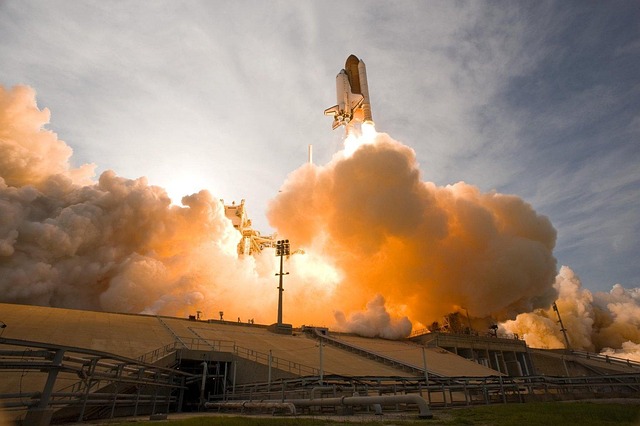
The roar of NASA’s Artemis rocket shaking the launchpad is more than a triumph of engineering. It signals the beginning of a multi-trillion-dollar economic expansion that stretches from low Earth orbit to the lunar surface and beyond. For investors who pay attention, the Artemis program represents one of the most compelling long-term wealth-building themes of this decade. This guide breaks down exactly how the Artemis mission works, why it matters for the global economy, and how you can position your portfolio to generate passive income from the new space race.
Understanding the Artemis Program and Its Economic Impact
NASA’s Artemis program is the agency’s flagship initiative to return humans to the Moon and establish a sustained presence there. Unlike the Apollo missions of the 1960s and 70s, Artemis is designed around commercial partnerships. NASA is not building everything in-house. Instead, it contracts with private companies for rockets, landers, spacesuits, habitats, and logistics. This public-private model is the single most important factor for investors to understand.
The Space Launch System (SLS), the core rocket behind Artemis, is the most powerful rocket NASA has ever built. Standing taller than the Statue of Liberty and producing 8.8 million pounds of thrust at liftoff, SLS is designed to carry the Orion spacecraft and its crew beyond low Earth orbit. The Artemis I mission successfully completed an uncrewed test flight around the Moon, and subsequent missions aim to land astronauts on the lunar south pole, where water ice deposits could fuel future deep-space exploration.
Why Artemis Matters for the Economy
The Artemis program’s total budget is projected to exceed $93 billion through the late 2020s. But that number only scratches the surface. Morgan Stanley estimates the global space economy will grow to over $1.8 trillion by 2035, up from roughly $469 billion in 2023. Artemis acts as a catalyst for this growth by driving demand across multiple sectors including aerospace manufacturing, advanced materials, telecommunications, robotics, and resource extraction.
Every dollar NASA spends on Artemis flows through a supply chain that includes thousands of companies across all 50 U.S. states. Major prime contractors like Boeing, Lockheed Martin, and Northrop Grumman receive billions in direct contracts. But the real opportunity for savvy investors lies in the hundreds of smaller companies and emerging players that supply critical components, software, and services.
The Investment Thesis: Why Space Is the Next Megatrend

Before diving into specific strategies, it is essential to understand why space investment deserves a place in your portfolio alongside traditional assets like real estate, index funds, and dividend stocks.
Structural Tailwinds
Three structural forces make space investment compelling for the next two decades. First, launch costs have plummeted. SpaceX’s reusable Falcon 9 rocket reduced the cost of putting a kilogram into orbit from roughly $54,500 on the Space Shuttle to under $2,700. This cost reduction unlocks entirely new business models in orbit, from satellite internet to space manufacturing.
Second, government spending is increasing. The U.S. Space Force budget, NASA’s exploration budget, and defense-related space spending are all trending upward. Bipartisan support for space programs means this spending is relatively recession-resistant compared to other discretionary categories.
Third, private capital is flooding into the sector. Venture capital investment in space companies exceeded $15 billion in recent years, funding everything from satellite constellations to in-space servicing companies. This private investment creates a pipeline of companies that will eventually go public, offering retail investors access to high-growth opportunities.
The Artemis Supply Chain as an Investment Map
Think of the Artemis program as a roadmap to the companies and sectors that will benefit most from the space economy’s growth. The supply chain includes rocket propulsion, avionics, life support systems, communications, power generation, thermal protection, and dozens of other specialized areas. Each of these represents a potential investment opportunity.
Practical Investment Strategies for the Space Economy
Now let us get into the actionable strategies you can use to build wealth and generate passive income from the Artemis-driven space boom.
Strategy 1: Aerospace and Defense ETFs for Broad Exposure
If you want diversified exposure to the space economy without picking individual stocks, exchange-traded funds are your best starting point. Several ETFs provide targeted access to space-related companies.
The Procure Space ETF (UFO) tracks the S-Network Space Index, which includes companies that derive at least 50% of their revenue from space-related activities. Holdings typically include satellite operators, launch providers, and ground equipment manufacturers. The ARK Space Exploration and Innovation ETF (ARKX) takes a broader approach, including companies involved in orbital aerospace, suborbital aerospace, enabling technologies, and aerospace beneficiaries.
For a more traditional approach, the iShares U.S. Aerospace and Defense ETF (ITA) provides exposure to major Artemis contractors like Boeing, Lockheed Martin, Northrop Grumman, and Raytheon Technologies. These companies pay dividends, making ITA a solid choice for passive income investors who want space exposure with regular cash flow.
**Practical tip:** Allocate 5-10% of your portfolio to space-themed ETFs. Use dollar-cost averaging to build your position over 6-12 months rather than investing a lump sum, as the sector can be volatile in the short term.
Strategy 2: Dividend-Paying Aerospace Giants
The major prime contractors for the Artemis program are some of the most reliable dividend payers in the market. These companies combine space exposure with diversified defense revenue streams, providing stability and income.
Lockheed Martin builds the Orion spacecraft, the crew capsule that sits atop the SLS rocket. The company has increased its dividend for over 20 consecutive years and currently offers a yield that consistently outpaces the S&P 500 average. Northrop Grumman manufactures the solid rocket boosters for SLS and is involved in the Gateway lunar orbiting station. The company has a strong dividend growth track record as well.
Boeing, while more volatile due to its commercial aviation challenges, is deeply embedded in the Artemis program as the prime contractor for the SLS core stage. For investors with a longer time horizon and higher risk tolerance, Boeing represents a turnaround story with significant space upside.
**Practical tip:** Build a “space dividend ladder” by investing equal amounts in three to four aerospace dividend stocks. Reinvest dividends automatically through a DRIP program to compound your returns. Over a 10-20 year horizon, this approach can generate substantial passive income as these companies grow alongside the space economy.
Strategy 3: Small-Cap and Mid-Cap Space Pure Plays
For higher growth potential, look beyond the defense giants to companies that derive a larger percentage of their revenue from space activities. These companies carry more risk but offer greater upside if the space economy grows as projected.
Rocket Lab USA designs and launches small orbital rockets and is developing the Neutron medium-lift vehicle. The company also manufactures spacecraft components and has won contracts supporting various NASA missions. Aerojet Rocketdyne, now part of L3Harris Technologies, builds the RS-25 engines that power the SLS core stage and the RL10 engines for the upper stage.
Intuitive Machines made history by landing its Odysseus spacecraft on the Moon under NASA’s Commercial Lunar Payload Services program, a key component of the Artemis infrastructure. Redwire Corporation provides critical space infrastructure including solar arrays, sensors, and 3D printing capabilities for use in orbit.
**Practical tip:** Limit speculative small-cap space stocks to no more than 5% of your total portfolio. Use a “barbell” approach where 80% of your space allocation goes to stable dividend payers and ETFs, while 20% goes to high-growth smaller companies.
Strategy 4: Real Estate Investment Trusts Near Space Hubs
One of the most overlooked passive income strategies related to the space economy involves real estate. The areas surrounding major space facilities are experiencing significant economic growth as Artemis and commercial space activities ramp up.
The Space Coast of Florida, home to Kennedy Space Center and Cape Canaveral, has seen property values and rental demand surge as aerospace companies expand operations. Huntsville, Alabama, where NASA’s Marshall Space Flight Center manages the SLS program, is one of the fastest-growing metro areas in the Southeast. Houston, home to Johnson Space Center and the Artemis mission control, continues to benefit from sustained aerospace employment.
You can gain exposure to these growth areas through REITs that own industrial, office, or residential properties in these regions. Alternatively, direct real estate investment in space hub cities can generate rental income while benefiting from property appreciation driven by aerospace job growth.
**Practical tip:** Research REITs with significant property holdings in Florida’s Brevard County, Alabama’s Madison County, or the Houston metro area. Look for REITs focused on industrial and logistics properties, as these benefit most from aerospace manufacturing expansion.
Strategy 5: Government Contract Revenue Streams
Understanding how NASA contracts work can give you an edge in identifying companies poised for revenue growth. NASA uses several contract types, including cost-plus contracts where the contractor is reimbursed for costs plus a fee, and fixed-price contracts where the contractor delivers a product for a set price.
The shift toward fixed-price contracts under the Commercial Lunar Payload Services and Human Landing System programs benefits efficient companies that can deliver on budget. SpaceX’s fixed-price HLS contract for the Artemis lunar lander, valued at $2.89 billion initially, exemplifies this trend. While SpaceX is not publicly traded, its success validates the fixed-price model and benefits its publicly traded suppliers.
Track NASA contract awards through the USAspending.gov database and NASA’s procurement announcements. When a smaller company wins a significant Artemis-related contract, it often signals revenue visibility for years ahead, as these programs have long timelines.
**Practical tip:** Set up alerts for NASA contract announcements. When a publicly traded company wins a new Artemis-related contract, research the contract value and timeline before considering an investment. Multi-year contracts provide the kind of revenue predictability that supports dividend payments and share price appreciation.
Building a Passive Income Portfolio Around Artemis

Let us put these strategies together into a cohesive passive income portfolio designed to benefit from the Artemis program and the broader space economy.
The Core Allocation (60%)
Dedicate the majority of your space-themed allocation to stable, income-producing assets. This includes aerospace and defense ETFs like ITA for broad exposure and dividend income, individual dividend stocks from major Artemis contractors like Lockheed Martin and Northrop Grumman, and broad market index funds that include significant aerospace holdings.
This core allocation provides quarterly dividend income that you can reinvest for compounding or use as passive cash flow. The defense revenue diversification of these companies provides downside protection even if specific space programs face delays.
The Growth Allocation (25%)
Allocate a quarter of your space portfolio to growth-oriented investments. This includes space-focused ETFs like UFO or ARKX, mid-cap companies with significant space revenue exposure, and companies winning new Artemis and commercial space contracts.
This allocation aims for capital appreciation rather than current income. As these companies grow, many will initiate or increase dividend payments, converting your growth allocation into future passive income.
The Speculative Allocation (10%)
Reserve a small portion for higher-risk, higher-reward opportunities. This includes small-cap space pure plays, newly public space companies via IPOs or SPACs, and space-adjacent technology companies in areas like advanced materials, AI for space applications, or quantum communications.
The Real Asset Allocation (5%)
Finally, allocate a small portion to real assets that benefit from space economy growth. This includes REITs in space hub regions, direct real estate investment near aerospace facilities, or commodity exposure tied to materials critical for space manufacturing such as titanium, rare earth elements, and advanced composites.
Risk Management for Space Investors
No investment strategy is complete without understanding the risks. The space sector carries several unique risks that require careful management.
Program Delays and Cancellations
The Artemis program has already experienced significant schedule delays and cost overruns. The SLS program was years behind schedule and billions over budget before its first launch. Future missions could face similar challenges. Mitigate this risk by investing in companies with diversified revenue streams that do not depend entirely on a single NASA program.
Technology Risk
Space is inherently risky from a technology standpoint. Rockets can fail, spacecraft can malfunction, and ambitious timelines often slip. Diversification across multiple companies and subsectors helps manage this risk.
Political Risk
Space funding depends on political support. While Artemis currently enjoys bipartisan backing, future administrations could shift priorities. Investing in companies that serve both government and commercial space customers reduces dependence on any single funding source.
Valuation Risk
Excitement about the space economy can drive valuations to unsustainable levels. Be disciplined about entry prices and avoid chasing momentum. Use dollar-cost averaging to smooth out your purchase prices over time.
**Practical tip:** Set a maximum loss threshold for your speculative allocation. If any single speculative position declines by more than 30%, reassess your thesis before adding more capital. Never let a speculative space stock become a disproportionately large part of your portfolio simply because you are emotionally attached to the space narrative.
The Long-Term Vision: From Artemis to a Lunar Economy
The Artemis program is not just about planting flags on the Moon. It is the foundation for a permanent lunar economy that could generate trillions in value over the coming decades. Water ice at the lunar south pole can be split into hydrogen and oxygen for rocket fuel, creating an in-space refueling infrastructure. Lunar regolith contains valuable minerals including helium-3, a potential fuel for future fusion reactors. The low gravity environment enables manufacturing processes impossible on Earth.
Investors who position themselves now, while the lunar economy is still in its infrastructure phase, stand to benefit enormously as these possibilities become reality. Think of it as investing in railroad stocks before the transcontinental railroad was completed, or buying internet stocks in the early 1990s before the commercial web explosion.
Conclusion
The NASA Artemis rocket launch represents far more than a scientific milestone. It is the starting gun for a new economic frontier that will create generational wealth for investors who understand the opportunity and position themselves accordingly. By combining stable dividend-paying aerospace stocks, diversified space ETFs, selective growth investments in pure-play space companies, and real asset exposure in space hub regions, you can build a portfolio that generates passive income today while capturing the explosive growth potential of the space economy.
Start with broad diversification through ETFs, add proven dividend payers for income, and allocate a small portion to higher-growth opportunities as you build conviction. The most important step is simply getting started. The Artemis program has a timeline stretching well into the 2030s and beyond, giving patient investors a long runway to compound their returns as humanity’s reach extends further into the solar system.
The rockets are launching. The contracts are flowing. The question is not whether the space economy will grow, but whether your portfolio is positioned to grow with it.