

NASA Artemis II Astronauts: What the Return to the Moon Means for Your Investment Portfolio and Passive Income Strategy
The space race is back, and this time, it is not just about national pride — it is about money. NASA’s Artemis II mission, set to carry astronauts around the Moon for the first time in over half a century, represents a seismic shift in the aerospace and defense sector. For savvy investors and passive income seekers, the Artemis program is not just a headline — it is a roadmap to potentially lucrative financial opportunities.
In this comprehensive guide, we will break down who the Artemis II astronauts are, why this mission matters from an economic perspective, and most importantly, how you can position your portfolio to benefit from the new era of space exploration and the trillion-dollar space economy that is rapidly taking shape.
Meet the Artemis II Crew: The Faces of a New Space Era
The Artemis II mission features a historic four-person crew that will venture farther from Earth than any human has traveled since the Apollo era. The crew includes Commander Reid Wiseman, a U.S. Navy test pilot and veteran NASA astronaut who previously served aboard the International Space Station. Joining him is Pilot Victor Glover, a decorated Navy aviator who made history as part of SpaceX Crew-1 and who will become the first person of color to fly to the Moon.
Mission Specialist Christina Koch brings an extraordinary resume to the crew. She holds the record for the longest single spaceflight by a woman at 328 days aboard the ISS and participated in the first all-female spacewalk. The fourth crew member is Mission Specialist Jeremy Hansen, a Canadian Space Agency astronaut and former fighter pilot, marking the first time a non-American will fly on a lunar mission.
This crew is not just making history — they are opening the doors to a massive economic expansion in space-related industries. Understanding who they are and what they represent helps investors grasp the magnitude of what the Artemis program signals for markets.
The Artemis Program: Understanding the Economic Scale

Before diving into investment strategies, it is essential to understand the sheer scope of the Artemis program. NASA’s budget for Artemis extends well beyond Artemis II, with plans for a sustained lunar presence, the Lunar Gateway space station, and eventually crewed missions to Mars. The total investment from the U.S. government alone is projected to exceed $93 billion through 2025, with continued spending for decades to come.
Government Spending Creates Private Sector Opportunities
The Artemis program is fundamentally different from the Apollo program in one critical way: the private sector is deeply integrated into every phase of the mission. NASA has shifted from building everything in-house to contracting with commercial partners. This means that every dollar of government spending flows through publicly traded companies and their supply chains, creating tangible investment opportunities.
Boeing and Lockheed Martin jointly operate the United Launch Alliance and are deeply involved in the Space Launch System (SLS) rocket that will carry the Artemis II crew. Northrop Grumman builds the solid rocket boosters. Lockheed Martin is the prime contractor for the Orion spacecraft that will house the astronauts during their lunar flyby. These are not speculative startups — they are established defense contractors with proven revenue streams, dividend histories, and deep government relationships.
The Space Economy Is Projected to Reach $1.8 Trillion by 2035
According to multiple analyst reports, the global space economy is on track to grow from approximately $546 billion in 2024 to over $1.8 trillion by 2035. The Artemis program is a major catalyst for this growth, as it drives innovation in propulsion, life support systems, communications, and materials science — all of which have commercial applications far beyond space travel.
Investment Strategies Tied to the Artemis II Mission
Now let us get into the practical investment strategies that can help you benefit from the Artemis-driven space economy.
Strategy 1: Invest in Prime Aerospace and Defense Contractors
The most direct way to invest in the Artemis program is through the companies building the hardware. Here are the key players:
**Lockheed Martin (LMT)** is the prime contractor for the Orion capsule. The company has a consistent dividend history spanning decades, currently yielding around 2.5 to 3 percent annually. This makes it not only a growth play on space exploration but also a reliable passive income generator. Lockheed Martin has increased its dividend for over 20 consecutive years, qualifying it as a Dividend Aristocrat.
**Boeing (BA)** is a major partner in the SLS rocket program. While Boeing has faced well-publicized challenges in its commercial aviation division, its defense and space segment remains robust with consistent government contract revenue. As Boeing recovers and stabilizes, early positioning could yield significant capital appreciation.
**Northrop Grumman (NOC)** supplies the SLS solid rocket boosters and is also building key components for the Lunar Gateway. The company offers a dividend yield of approximately 1.5 percent and has a strong track record of contract wins across both defense and space.
**RTX Corporation (RTX),** formerly Raytheon Technologies, provides numerous subsystems for space missions including advanced communications and sensor technology. With a dividend yield near 2.5 percent and extensive involvement in both military and space programs, RTX offers a balanced approach to space-adjacent investing.
Strategy 2: Bet on the Commercial Space Revolution
The Artemis program is designed to create a sustainable commercial space ecosystem. This benefits companies like SpaceX (currently private, but accessible through certain funds), Blue Origin (also private), and publicly traded companies that support commercial space operations.
**Rocket Lab USA (RKLB)** is a publicly traded small-launch vehicle company that has rapidly expanded into spacecraft manufacturing and components. While it does not yet pay dividends, its growth trajectory in satellite deployment and space systems makes it a compelling long-term capital appreciation play.
**Intuitive Machines (LUNR)** made history with the first commercial lunar landing in 2024 and has multiple NASA contracts for lunar payload delivery under the Commercial Lunar Payload Services program. This is a higher-risk, higher-reward investment directly tied to the Artemis ecosystem.
**Redwire Corporation (RDW)** specializes in space infrastructure and manufacturing, including 3D printing technology for use in space. As the Artemis program drives demand for in-space manufacturing capabilities, Redwire stands to benefit significantly.
Strategy 3: Space-Focused ETFs for Diversified Exposure
For investors who prefer diversification and passive income through a single investment vehicle, several exchange-traded funds offer broad exposure to the space economy:
**ARK Space Exploration & Innovation ETF (ARKX)** provides exposure to companies involved in orbital aerospace, suborbital aerospace, and enabling technologies. While this is a growth-focused ETF, it offers a convenient way to gain diversified space exposure without picking individual stocks.
**Procure Space ETF (UFO)** specifically tracks companies that derive significant revenue from space-related activities. This includes satellite operators, launch providers, and ground equipment manufacturers.
**iShares U.S. Aerospace & Defense ETF (ITA)** provides broader exposure to the aerospace and defense sector, capturing both the space-specific and traditional defense spending that often accompanies programs like Artemis.
The advantage of ETFs is that they provide built-in diversification, reducing the risk that any single company’s challenges will devastate your portfolio. For passive income seekers, ETFs like ITA also distribute dividends from their underlying holdings.
Building Passive Income Streams Around the Space Economy

The Artemis II mission is not just a one-time event — it is the beginning of a sustained multi-decade investment by governments and private companies in space infrastructure. Here is how to build passive income around this trend.
Dividend Growth Investing in Aerospace
The core strategy for generating passive income from the space economy is dividend growth investing. Companies like Lockheed Martin, Northrop Grumman, and RTX have long histories of increasing their dividends year after year. By investing in these companies and reinvesting dividends through a DRIP (Dividend Reinvestment Plan), you can compound your returns over time.
For example, if you invest $10,000 in Lockheed Martin at a 2.7 percent yield and the company continues its historical pattern of 8 to 10 percent annual dividend increases, your yield on cost would exceed 5 percent within seven years and could approach 10 percent within 15 years — all without adding any additional capital.
Real Estate Investment in Space Corridor Communities
The Artemis program creates jobs and drives economic growth in specific geographic areas. Huntsville, Alabama (home to NASA’s Marshall Space Flight Center), the Space Coast of Florida (Kennedy Space Center), Houston, Texas (Johnson Space Center), and Denver, Colorado (Lockheed Martin’s space division headquarters) are all experiencing population growth and rising property values tied to space industry expansion.
Investing in real estate in these space corridor communities — either directly through rental properties or through REITs focused on these regions — can generate passive rental income while also benefiting from property value appreciation driven by the expanding space workforce.
Bonds and Fixed Income from Aerospace Companies
For more conservative investors seeking steady passive income, corporate bonds issued by major aerospace contractors offer an alternative. Companies like Lockheed Martin and Northrop Grumman regularly issue investment-grade bonds that provide predictable interest payments. These bonds are backed by companies with long-term government contracts, making them relatively lower-risk compared to bonds from companies in more cyclical industries.
The Ripple Effect: Adjacent Industries That Benefit from Artemis
The investment opportunity extends far beyond companies directly involved in building rockets and spacecraft. The Artemis program creates ripple effects across multiple industries.
Advanced Materials and Manufacturing
Lunar missions require cutting-edge materials that can withstand extreme temperatures, radiation, and the vacuum of space. Companies specializing in advanced composites, titanium alloys, and additive manufacturing (3D printing) stand to benefit. **Hexcel Corporation (HXL)** and **Howmet Aerospace (HWM)** are examples of materials companies with significant aerospace exposure.
Telecommunications and Satellite Infrastructure
Sustained lunar operations require robust communications infrastructure. **Viasat (VSAT)** and **Iridium Communications (IRDM)** are involved in building the communications backbone that will support not only lunar missions but the broader expansion of space-based internet and data services. Iridium notably pays a dividend, adding a passive income component.
Artificial Intelligence and Robotics
AI and robotics play increasingly critical roles in space exploration, from autonomous navigation systems to robotic construction on the lunar surface. Companies at the intersection of AI and aerospace, including major defense contractors that are investing heavily in autonomous systems, represent another avenue for investors looking to capitalize on Artemis-driven technological development.
Rare Earth Minerals and Lunar Resources
One of the long-term goals of the Artemis program is to establish the infrastructure for lunar resource utilization. The Moon contains helium-3, water ice, and various minerals that could become valuable commodities. While direct lunar mining is still years away, companies involved in terrestrial rare earth mining and processing, such as **MP Materials (MP)**, could benefit from increased attention to resource extraction technologies.
Practical Tips for Investing in the Space Economy
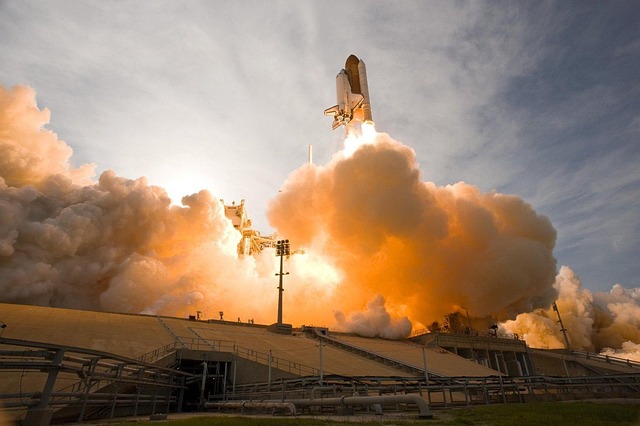
Here are actionable steps you can take today to position your portfolio for the Artemis-driven space economy:
**Start with what you know.** If you are new to space investing, begin with established aerospace and defense companies that pay dividends. These offer a balance of growth potential and income generation while you learn more about the sector.
**Dollar-cost average into positions.** Rather than investing a lump sum, spread your purchases over time. Space sector stocks can be volatile around mission milestones, and dollar-cost averaging helps smooth out your entry price.
**Allocate no more than 10 to 15 percent of your portfolio to space-specific investments.** While the space economy is growing rapidly, it is still important to maintain a diversified portfolio across multiple sectors and asset classes.
**Stay informed about NASA contract awards.** NASA regularly announces new contracts through its procurement website. These announcements can move stock prices and provide early signals about which companies are gaining or losing market share in the space sector.
**Think in decades, not months.** The Artemis program is a multi-decade initiative. The biggest returns will likely go to patient investors who hold through short-term volatility and benefit from the long-term growth of the space economy.
**Consider tax-advantaged accounts.** Holding dividend-paying aerospace stocks in a Roth IRA can maximize your passive income by eliminating taxes on qualified dividends and long-term capital gains.
Risk Factors to Consider
No investment thesis is complete without acknowledging the risks. Space missions can experience delays — Artemis II itself has been rescheduled multiple times. Budget cuts or political changes could reduce NASA funding. Technical failures, while rare, can significantly impact contractor stock prices.
Additionally, many of the pure-play space companies are still in early growth stages and may not generate profits for several years. The key is balancing high-growth space investments with stable, dividend-paying aerospace companies to manage risk while maintaining upside exposure.
International competition from China’s space program and the European Space Agency could also shift the dynamics of the space economy, potentially benefiting or challenging U.S.-based companies depending on how competition evolves.
Conclusion
The Artemis II mission, with its historic crew of Reid Wiseman, Victor Glover, Christina Koch, and Jeremy Hansen, represents far more than a technological achievement. It is the opening chapter of a new economic era — one where space is not just a frontier for exploration but a frontier for wealth creation.
For investors and passive income seekers, the message is clear: the space economy is real, it is growing, and it offers tangible opportunities across multiple asset classes. Whether you choose to invest in dividend-paying aerospace giants like Lockheed Martin and Northrop Grumman, high-growth commercial space companies like Rocket Lab and Intuitive Machines, diversified space ETFs, or even real estate in space corridor communities, the Artemis program provides a compelling long-term investment thesis.
The astronauts of Artemis II are flying to the Moon. Your portfolio can ride along — not in a spacecraft, but through strategic, informed investment decisions that position you to benefit from humanity’s next great adventure. The key is to start now, think long-term, diversify intelligently, and let the compounding power of time and the expanding space economy work in your favor. The new space age is not just about what happens in orbit — it is about what happens in your bank account.