

Reading Your Way to Wealth: How Books Can Build Your Investment and Passive Income Empire
In an era dominated by TikTok finance gurus and 60-second “get rich quick” videos, the humble practice of reading remains the single most underrated wealth-building activity available to anyone with a library card. Warren Buffett famously spends roughly 80% of his day reading, and Charlie Munger once quipped, “In my whole life, I have known no wise people who didn’t read all the time — none, zero.” This blog post explores how deliberate, strategic reading can transform your financial future, with a particular focus on building sustainable investment portfolios and generating passive income streams.
Why Reading Is the Ultimate Compound Investment
Reading works on the same principle that makes investing so powerful: compounding. Each book you read layers new frameworks, vocabulary, and mental models on top of what you already know. Over a decade, a reader who consumes 25 high-quality books per year will have absorbed 250 books’ worth of accumulated wisdom. Compare that to someone who reads zero books in the same period, and the intellectual gap becomes a canyon.
The Knowledge Compound Curve
Just like a dollar invested at 8% doubles every nine years, knowledge reinforces itself. Read one book on index funds, and you understand diversification. Read five, and you grasp the nuances of expense ratios, tax-loss harvesting, and dividend reinvestment. Read twenty, and you begin to form your own investment philosophy grounded in evidence rather than hype.
The most successful investors in history — Buffett, Munger, Ray Dalio, Howard Marks, Peter Lynch — are all voracious readers. They did not gain their edge through proprietary algorithms or insider tips; they gained it by reading annual reports, economic histories, biographies of industrialists, and the timeless classics of finance.
Building Your Financial Reading Library

Before jumping into specific strategies, you need a curated reading list. Not all financial books are created equal, and the sheer volume of available material can paralyze even motivated learners.
Foundational Books on Investment
Start with the canon. These books are referenced so frequently in financial literature that reading them gives you a shared vocabulary with every serious investor:
– **The Intelligent Investor** by Benjamin Graham — The bible of value investing, still relevant after 75 years.
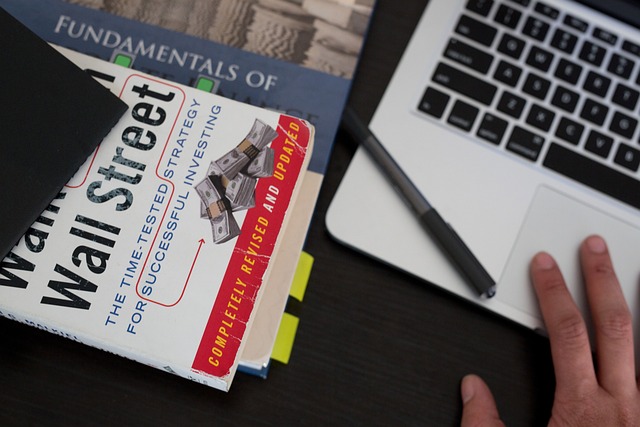
– **A Random Walk Down Wall Street** by Burton Malkiel — A powerful case for index investing backed by decades of data.
– **The Little Book of Common Sense Investing** by John C. Bogle — The founder of Vanguard explains why low-cost index funds beat active management.
– **One Up On Wall Street** by Peter Lynch — Teaches you how to spot winning companies in your everyday life.
– **Common Stocks and Uncommon Profits** by Philip Fisher — The qualitative counterpart to Graham’s quantitative approach.
Books on Passive Income
Passive income requires a different mental model than traditional investing. These books shift your perspective from trading time for money to building systems that generate cash flow:
– **Rich Dad Poor Dad** by Robert Kiyosaki — Controversial but foundational for understanding the asset vs. liability distinction.
– **The Millionaire Real Estate Investor** by Gary Keller — A practical playbook for building a rental portfolio.
– **The Simple Path to Wealth** by JL Collins — Shows how index funds combined with frugality lead to financial independence.
– **Your Money or Your Life** by Vicki Robin — Reframes money as “life energy” and introduces the FIRE (Financial Independence, Retire Early) mindset.
– **The 4-Hour Workweek** by Tim Ferriss — While dated in places, still the best introduction to lifestyle design and automated businesses.
Behavioral and Psychological Classics
Investing is 90% psychology. The following books will save you more money than any stock tip ever could:
– **The Psychology of Money** by Morgan Housel — Timeless essays on how emotions shape financial decisions.
– **Thinking, Fast and Slow** by Daniel Kahneman — The cognitive biases that wreck portfolios.
– **Fooled by Randomness** by Nassim Taleb — Why skill and luck are often indistinguishable in markets.
– **Misbehaving** by Richard Thaler — A playful tour through behavioral economics.
Practical Reading Strategies for Investors
Reading itself is a skill that compounds. Here’s how to extract maximum value from every book.
The Three-Pass Method
**First pass (skim):** Read the table of contents, introduction, conclusion, and the first paragraph of each chapter. This takes 30 minutes and tells you whether the book deserves your time.
**Second pass (deep read):** Read cover to cover with a highlighter or note-taking app. Mark passages that challenge your assumptions, introduce new vocabulary, or propose testable strategies.
**Third pass (synthesis):** Two weeks after finishing, revisit your highlights and write a one-page summary in your own words. This forced synthesis cements the ideas in long-term memory.
The 25/5 Rule
Build a “must-read” list of 25 books. Once committed, ignore all other financial content until you’ve read them. This concept, attributed to Buffett, prevents the scattered attention that plagues modern learners. The five books are your immediate queue; the other twenty wait their turn.
Read Primary Sources
For every popular book about Buffett, there are free shareholder letters going back decades. For every book summarizing Ray Dalio, there’s his Principles available online. Primary sources are denser but contain the original thinking before it was watered down by commentary.
Translating Reading into Investment Action
Reading without action is entertainment. Here’s how to operationalize what you learn.
Build an Investment Policy Statement
After your first 10 investment books, draft a one-page document that states:
1. Your financial goals and timeline
2. Your target asset allocation (e.g., 70% stocks / 20% bonds / 10% alternatives)
3. Your rebalancing rules (e.g., once per year, or when any asset drifts 5%)
4. What you will NOT do (e.g., no individual stock picking, no leverage, no market timing)
This document becomes your guardrail during panics and manias. When markets crash 30%, you reread it instead of selling. When crypto rallies 500%, you reread it instead of chasing.
Automate Everything You Read About
Every time a book describes a successful strategy, ask: “Can I automate this?” Dollar-cost averaging into index funds? Automate it with recurring transfers. Dividend reinvestment? Turn on DRIP. Tax-loss harvesting? Use a robo-advisor that does it automatically. The goal is to remove human discretion from execution, because your reading self is smarter than your Tuesday-afternoon self.
Track One Metric, Not Twenty
Choose a single number that represents your financial health — net worth, savings rate, or years to financial independence — and update it monthly. Reading tends to inspire dozens of new metrics; resist. One metric, tracked ruthlessly, produces more wealth than a dashboard of twenty.
Passive Income Strategies Worth Reading About
While index funds are the core of most portfolios, passive income streams diversify your cash flow and accelerate financial freedom. Reading deeply about each stream before committing capital is essential.
Dividend Growth Investing
A portfolio of dividend aristocrats — companies that have raised dividends for 25+ consecutive years — can generate reliable, growing income. Books like **The Single Best Investment** by Lowell Miller and **The Little Book of Big Dividends** by Charles Carlson provide frameworks for evaluating dividend sustainability. The key insight from these books: chasing high yields is usually a trap, while chasing dividend growth is where real wealth compounds.
Real Estate and REITs
Direct real estate ownership requires active management, but publicly traded REITs (Real Estate Investment Trusts) offer real estate exposure without toilets, tenants, or termites. Read **The Intelligent REIT Investor** by Stephanie Krewson-Kelly before buying any REIT. For direct real estate, **The Book on Rental Property Investing** by Brandon Turner remains the genre-defining practical guide.
Index Fund Income
A simple 3-fund portfolio (total US stock, total international stock, total bond market) can generate 2–3% in dividends and interest annually — meaningful passive income at scale. A $500,000 portfolio at a 2.5% yield produces $12,500 per year without selling a share. Read Bogle’s books to understand why this boring approach beats almost every exotic alternative.
Creator Economy Royalties
Books, courses, music, and software can generate royalties for decades. Authors like Tim Ferriss and Nathan Barry have written extensively about “sellable expertise.” Reading about this model helps you evaluate whether your own knowledge has marketable, scalable form.
Common Pitfalls Reading Can Help You Avoid

Every investor eventually encounters these traps. Well-read investors sidestep them; uneducated investors pay the tuition.
The Recency Bias Trap
After reading market history books, you realize every decade has its “obvious” winners that later collapsed: Nifty Fifty in the 60s, Japanese stocks in the 80s, dot-com in the 90s, real estate in the 2000s, meme stocks in the 2020s. Reading history immunizes you against the “this time is different” delusion.
The Fees Trap
A 1% annual fee sounds small until you read Bogle and realize it can consume 30% of your lifetime returns. Reading turns abstract percentages into concrete dollars lost.
The Complexity Trap
Wall Street profits from complexity; individual investors profit from simplicity. Every structured product, hedge fund, and exotic ETF you skip is alpha in your pocket. Reading the classics reinforces that boring beats clever.
Building a Lifelong Reading Habit
All of this assumes you actually read. Most people don’t, or they start and quit. Here’s how to make it stick.
The 20-Minute Rule
Read for 20 minutes every morning before checking your phone. This is roughly 15 pages, or about 25 books per year. Over 30 years, that’s 750 books. You will be in the top 0.1% of informed humans by a comfortable margin.
Paper vs. Digital vs. Audio
Studies suggest paper improves retention for complex material, while audio works for narrative books during commutes. Use each medium for its strengths. Don’t feel guilty about audiobooks — Buffett listens to earnings calls, which is essentially the same thing.
The Reading Journal
Keep a simple notebook where you record, for each book, three things: the main thesis, the single most useful idea, and one action you’ll take. This transforms passive consumption into active learning and gives you a searchable archive of your intellectual journey.
Join a Reading Community
Book clubs, online forums like Bogleheads, or even a single reading partner dramatically increase completion rates. Discussing a book forces deeper engagement than solo reading and exposes you to interpretations you missed.
Conclusion
Wealth is not built through a single brilliant trade or a viral side hustle — it is built by accumulating knowledge, applying it patiently, and avoiding catastrophic mistakes. Reading is the highest-leverage activity available for achieving all three. A $20 book written by a billionaire is perhaps the most undervalued asset in the modern economy, yet most people will never read it.
Your investment and passive income strategies should not be cobbled together from fragmented social media content. They should be rooted in the accumulated wisdom of centuries of financial thinkers, pressure-tested by your own reading, refined by behavioral self-awareness, and executed through automated systems that outlast your motivation.
Start tonight. Pick one book from the lists above — just one — and commit to 20 minutes before bed. In a month you’ll finish it. In a year you’ll have read twelve. In a decade you’ll have changed not only your bank account but your entire relationship with money, time, and freedom.
Books are the seeds. Portfolios are the harvest. And the richest soil you will ever cultivate is the space between your ears — a soil that only reading can fertilize. Read deeply, invest patiently, and let compounding do the rest.