
NASA vs Roscosmos: Spacewalk 64 Mission Analysis
Space exploration has captivated humanity for decades, and at the forefront of this endeavor are two pioneering space agencies: NASA (National Aeronautics and Space Administration) and Roscosmos, Russia’s space corporation. Understanding the dynamics between these organizations, particularly during critical operations like spacewalks, provides fascinating insights into international cooperation, technological advancement, and the challenges of working in the hostile environment of space. Spacewalk 64 represents a significant milestone in ongoing space station operations, showcasing both the collaborative spirit and competitive nature of modern space exploration.
Understanding the Basics
Spacewalks, officially known as Extravehicular Activities (EVAs), are among the most dangerous and critical operations performed by astronauts and cosmonauts aboard the International Space Station (ISS). These activities involve crew members exiting the pressurized environment of the space station to perform maintenance, repairs, scientific experiments, or installation of new equipment in the vacuum of space. The complexity of these operations cannot be overstated – astronauts must work in bulky spacesuits that restrict movement, deal with extreme temperature fluctuations ranging from -250°F to +250°F, and maintain constant vigilance against the ever-present dangers of micrometeorite impacts and equipment failures.
NASA and Roscosmos have developed distinct approaches to conducting spacewalks, each refined over decades of experience. NASA typically uses the Extravehicular Mobility Unit (EMU), a self-contained spacesuit that allows astronauts to work for up to 8 hours outside the station. Roscosmos employs the Orlan spacesuit, which features a unique rear-entry design that makes it faster to don and doff compared to NASA’s suits. Both agencies have logged thousands of hours of EVA experience, with each spacewalk meticulously planned months in advance. The coordination required is extraordinary – ground control teams must monitor every aspect of the operation, from oxygen levels and battery power to the precise positioning of tools and equipment. Communication between crew members, station personnel, and ground control happens continuously, ensuring that any anomalies can be addressed immediately. Understanding these fundamentals is essential for appreciating the magnitude of achievement represented by missions like Spacewalk 64.
Key Methods
Step 1: Pre-Mission Planning and Preparation
The preparation for a spacewalk like Mission 64 begins months before the actual event, involving extensive collaboration between NASA and Roscosmos teams. Mission planners must first identify the objectives – whether it’s installing new solar arrays, repairing damaged equipment, or conducting scientific experiments. Once objectives are established, engineers create detailed procedures that account for every possible scenario. Astronauts and cosmonauts undergo rigorous training in specialized facilities, including NASA’s Neutral Buoyancy Laboratory – a massive pool containing 6.2 million gallons of water where full-scale mockups of the ISS allow crew members to practice their tasks in simulated weightlessness. Roscosmos employs similar training facilities in Star City, Russia. During these training sessions, crew members practice using specialized tools designed for the unique challenges of working in a vacuum while wearing pressurized gloves. They rehearse emergency procedures, learn to conserve energy while working in the restrictive suits, and develop the muscle memory necessary to perform complex tasks efficiently. Equipment checks are conducted repeatedly, with every tool, tether, and component of the spacesuit inspected multiple times to ensure functionality. The suits themselves undergo pressurization tests, and backup systems are verified. Mission controllers run through simulations, preparing for nominal operations as well as potential emergencies that could arise during the actual spacewalk.
Step 2: Execution and Real-Time Operations
Step 3: Post-Mission Analysis and Documentation
Practical Tips
**Tip 1: Understanding Spacesuit Technology** – For those fascinated by spacewalk operations, developing a deep understanding of spacesuit technology is essential. Modern spacesuits are essentially miniature spacecraft, providing life support, thermal regulation, radiation protection, and mobility. NASA’s EMU suit weighs approximately 280 pounds on Earth and costs around $12 million to produce, while Roscosmos’s Orlan suit has different design philosophies prioritizing faster donning procedures. Study the history of spacesuit development, from the early Mercury suits to today’s advanced systems, and you’ll gain appreciation for the engineering challenges involved in keeping humans alive in space’s hostile environment.
**Tip 3: Appreciate International Cooperation** – The collaboration between NASA and Roscosmos on ISS operations, including spacewalks, represents one of humanity’s greatest achievements in international cooperation. Despite geopolitical tensions on Earth, these agencies work seamlessly together in space. Understanding this cooperation provides valuable lessons about what humans can accomplish when working toward common goals. Research the history of the ISS partnership, including contributions from other international partners like ESA, JAXA, and CSA, to gain perspective on how complex multinational projects can succeed through shared vision and mutual respect.
**Tip 5: Recognize the Human Element** – Behind every successful spacewalk are not just the astronauts and cosmonauts performing the EVA, but hundreds of support personnel working tirelessly on the ground. Flight controllers, engineers, medical specialists, communications experts, and many others contribute their expertise to ensure mission success. Understanding the human systems and teamwork involved provides a more complete picture of space exploration as a collaborative human endeavor rather than just a technological achievement.
Important Considerations
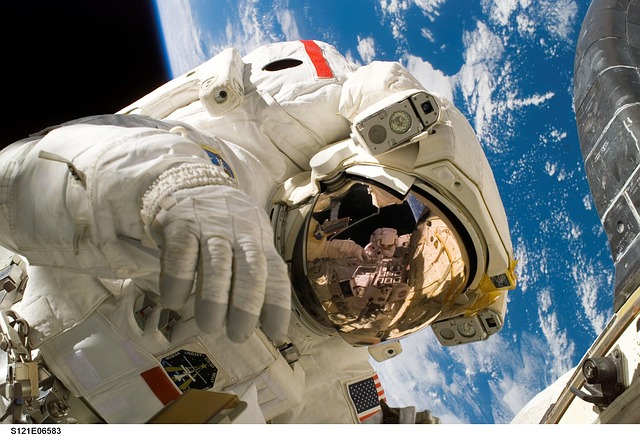
While spacewalks like Mission 64 appear routine to the public, they remain among the most dangerous activities humans undertake. The vacuum of space is unforgiving – a punctured suit could prove fatal within minutes. Micrometeorites, though tiny, travel at speeds that give them explosive impact energy. Space debris from decades of orbital operations poses collision risks that must be constantly monitored. Radiation exposure is significantly higher outside the ISS’s protective hull, with crew members receiving more radiation during a single spacewalk than most people experience in a year on Earth’s surface. Temperature extremes test both equipment and human endurance, with the sun-facing side of objects reaching temperatures high enough to boil water while shadowed areas plunge to hundreds of degrees below freezing. Equipment failures, though rare due to extensive testing, can occur – tethers can snag, tools can malfunction, and spacesuit systems can experience anomalies. The psychological demands are also significant, as crew members must maintain focus and composure while performing complex tasks in an environment where mistakes can have catastrophic consequences. Both NASA and Roscosmos maintain extensive contingency plans for emergency scenarios, including procedures for rapid return to the airlock if a crew member’s suit develops problems. Understanding these risks and the measures taken to mitigate them provides sobering perspective on the courage and professionalism of those who venture outside the space station.