

Astronauts Stuck in Space: Understanding the Crisis, Costs, and Investment Implications
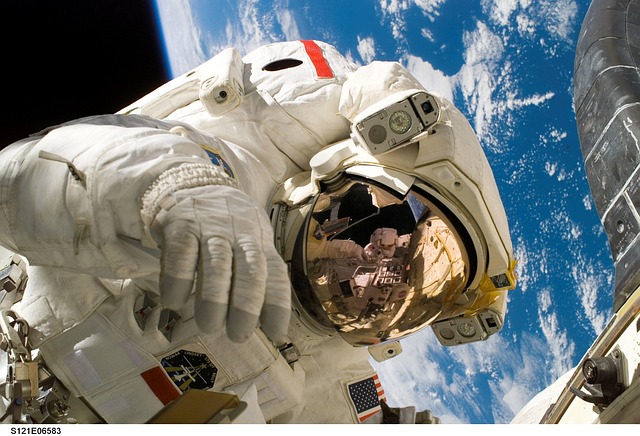
The phrase “stuck in space” conjures images of science fiction disaster scenarios, but for several astronauts throughout history, this has been a very real predicament. When astronauts become stranded in orbit—whether due to technical failures, geopolitical tensions, or unforeseen complications—the consequences ripple far beyond the individuals involved. These situations impact space agencies, government budgets, aerospace contractors, and ultimately, investment opportunities in the rapidly growing space economy.
In this comprehensive analysis, we’ll explore notable cases of astronauts being stuck in space, examine the financial implications of such events, and discuss how investors can position themselves to benefit from—or protect against—risks in the commercial space industry. We’ll also look at passive income strategies related to aerospace and space technology investments.
Historical Cases of Astronauts Stranded in Space
The Mir Space Station Extended Missions
One of the most dramatic examples occurred during the collapse of the Soviet Union in 1991. Cosmonaut Sergei Krikalev launched to the Mir space station in May 1991 as a Soviet citizen. While he was in orbit, the Soviet Union dissolved, and his home country—Kazakhstan—became independent. Due to budget shortfalls and political chaos, Krikalev remained in space for 311 days, far longer than originally planned. He became known as “the last Soviet citizen” as he literally watched his country cease to exist from orbit.
From an economic perspective, this situation highlighted the vulnerability of space programs to geopolitical instability. The extended mission cost millions in additional supplies, life support, and operational expenses—money that the newly formed Russian space agency could barely afford.
The 2022-2023 Soyuz Coolant Leak Incident
More recently, in December 2022, a Soyuz spacecraft docked to the International Space Station (ISS) suffered a significant coolant leak. This spacecraft was supposed to return cosmonauts Sergey Prokopyev and Dmitri Petelin, along with NASA astronaut Frank Rubio, to Earth. Russian space agency Roscosmos determined the damaged craft was unsafe for crew return.
The solution required launching an empty replacement Soyuz, extending the crew’s stay from six months to over a year. Frank Rubio ended up spending 371 days in space—an American record—when he finally returned in September 2023. The financial cost of this incident included the emergency Soyuz launch, extended consumables for three crew members, and rescheduling impacts across the entire ISS program.
The Boeing Starliner Extended Mission (2024)
In June 2024, NASA astronauts Butch Wilmore and Suni Williams launched aboard Boeing’s Starliner spacecraft for what was supposed to be an 8-day test mission to the ISS. However, helium leaks and thruster problems raised serious safety concerns about using Starliner to return the crew to Earth.
After months of analysis, NASA made the decision to leave Starliner docked without crew and bring Wilmore and Williams home on a SpaceX Crew Dragon instead—but not until February 2025. Their 8-day mission became an 8-month ordeal, representing a significant setback for Boeing’s commercial crew program and highlighting the competitive dynamics between traditional aerospace contractors and newer players like SpaceX.
The Financial Impact of Space Strandings

Direct Costs
When astronauts remain in space longer than planned, the direct costs accumulate quickly:
**Consumables and Supplies**: The ISS requires approximately 30,000 pounds of supplies annually for a crew of six. Each additional crew member per month costs roughly $150,000-200,000 in food, water, oxygen, and other consumables.
**Launch Costs**: Emergency or replacement launches represent the most significant expense. A Soyuz rescue mission costs approximately $80-90 million. A SpaceX Crew Dragon launch costs around $55 million per seat when accounting for NASA’s commercial crew contracts.
**Extended Operations**: Keeping mission control staffed, maintaining communication networks, and managing the extended mission all add incremental costs—typically $2-5 million per month for a major mission extension.
**Spacecraft Replacement**: When a spacecraft becomes unusable, as with the damaged Soyuz in 2022, the hardware loss represents $150-200 million, though some costs may be covered by insurance.
Indirect Costs and Opportunity Costs
Beyond direct expenses, space strandings create cascading economic effects:
**Schedule Disruption**: The ISS operates on a carefully orchestrated schedule. Extending one crew’s stay pushes back subsequent missions, delays research programs, and can cost commercial customers millions in postponed experiments.
**Market Confidence**: For publicly traded aerospace companies, high-profile failures impact stock prices. After the Starliner issues became public, Boeing’s stock faced additional pressure, and the company’s space division became a liability affecting overall market capitalization.
**Insurance Premiums**: Space insurance is a specialized market. Major incidents lead to industry-wide premium increases, affecting all future missions.
**Program Delays**: Boeing has invested over $1.5 billion beyond its original fixed-price NASA contract on Starliner development, largely due to technical setbacks including the extended 2024 mission.
Investment Opportunities in the Space Economy
Despite—or perhaps because of—the risks illustrated by stranded astronauts, the space economy represents one of the most compelling long-term investment themes of the 21st century. Morgan Stanley estimates the global space economy could generate revenue of over $1 trillion by 2040, up from approximately $350 billion in 2020.
Direct Space Company Investments
**SpaceX (Private)**: While not publicly traded, SpaceX represents the gold standard in commercial space reliability. The company’s success in bringing home stranded astronauts while Boeing struggled has cemented its dominant market position. Accredited investors can sometimes access SpaceX shares through secondary markets, with valuations around $180-210 billion as of 2024.
**Rocket Lab (RKLB)**: This New Zealand-based company has demonstrated consistent launch capability with its Electron rocket and is developing a larger Neutron rocket. Trading publicly via SPAC merger, Rocket Lab offers accessible exposure to the small-launch market. The stock has volatility but provides pure-play space access investment.
**Virgin Galactic (SPCE)**: Focused on space tourism rather than astronaut transport, Virgin Galactic has faced its own challenges with delays and technical issues. However, as the commercial spaceflight market matures, companies that survive the development phase could see substantial returns.
**Satellite and Communication Companies**: Companies like Iridium Communications (IRDM) and GlobalStar provide more stable investment opportunities with existing revenue from satellite communication networks, offering quarterly dividends while maintaining space economy exposure.
Aerospace Prime Contractors
**Boeing (BA)**: Despite Starliner’s challenges, Boeing remains a massive aerospace conglomerate with diversified revenue across commercial aircraft, defense, and space. The company’s space setbacks are balanced against its commercial airplane recovery and defense contracts. For long-term investors, Boeing at depressed valuations may represent opportunity, especially if Starliner eventually achieves certification.
**Lockheed Martin (LMT)**: A major NASA contractor and United Launch Alliance partner, Lockheed offers stable defense revenue with steady dividends (yielding around 2.5-3%) while providing space economy exposure through satellite and deep-space probe contracts.
**Northrop Grumman (NOC)**: This defense contractor provides solid space exposure through its space systems division, which builds spacecraft, satellites, and missile systems. The company offers relatively stable dividends and benefits from consistent government spending.
Space Infrastructure and Technology
**Maxar Technologies**: Now part of private equity after acquisition, Maxar’s previous public run demonstrated the potential of Earth observation and satellite imagery businesses. Similar companies in this space include Planet Labs (PL), which provides daily Earth imaging and has commercial and government customers.
**Redwire Space (RDW)**: This company focuses on space infrastructure, providing components, systems, and services for spacecraft and space stations. As the industry scales, infrastructure providers could see substantial growth.
**Velo3D (VLD)**: Additive manufacturing (3D printing) for aerospace applications represents a critical enabling technology. Velo3D provides advanced 3D printing systems used by space companies, offering indirect space economy exposure.
Passive Income Strategies in Space Investments
Building passive income from space-related investments requires balancing the sector’s growth potential against its inherent volatility and risk. Here are several strategies:
Dividend-Focused Aerospace Portfolio
Traditional aerospace and defense contractors provide more stable dividend income than pure-play space companies:
**Strategy**: Allocate capital to established aerospace companies with space divisions:
– Lockheed Martin (LMT): ~2.5-3% dividend yield
– Northrop Grumman (NOC): ~2-2.5% dividend yield
– L3Harris Technologies (LHX): ~2-2.5% dividend yield
– Raytheon Technologies (RTX): ~2-2.5% dividend yield
**Implementation**: Build a portfolio of $100,000 across these four companies equally ($25,000 each). At an average 2.5% yield, this generates approximately $2,500 annually in passive dividend income while providing diversified aerospace exposure including space programs.
**Advantages**: Established companies with government contracts provide stability. Defense spending remains relatively consistent regardless of economic cycles. Space divisions benefit from increased NASA and commercial activity.
**Risks**: These are large-cap companies with limited high-growth potential. Space divisions represent smaller portions of overall revenue, so you’re not getting pure space exposure.
Covered Call Strategy on Space Stocks
For investors comfortable with options, selling covered calls on space-related stocks can generate monthly income:
**Strategy**: Purchase 100 shares of a space stock and sell monthly out-of-the-money call options against the position.
**Example**: Purchase 100 shares of Rocket Lab at $10 per share ($1,000 investment). Sell a monthly call option at $11 strike price, collecting a $50 premium. If the stock stays below $11, you keep the premium and your shares. Repeat monthly for consistent income.
**Annual Income Potential**: If you collect an average of $40-60 per month ($480-720 annually) on a $1,000 position, that’s a 48-72% annualized return from options premium alone. Of course, this caps upside if the stock rises significantly.
**Advantages**: Generates consistent monthly cash flow. Works well in sideways or moderately bullish markets. Reduces cost basis over time.
**Risks**: Misses significant upside if stock rallies strongly. Requires options trading approval and understanding. Space stocks can be volatile, potentially forcing you to sell shares at inopportune times.
Space ETF Dividend Reinvestment
Exchange-traded funds focused on aerospace and space allow diversified exposure with reinvestment strategies:
**Relevant ETFs**:
– ARK Space Exploration & Innovation ETF (ARKX)
– Procure Space ETF (UFO)
– iShares U.S. Aerospace & Defense ETF (ITA)
**Strategy**: Invest a lump sum or set up monthly automatic investments into a space-focused ETF. Enable dividend reinvestment to automatically purchase additional shares with any distributions.
**Example**: Invest $10,000 in the Procure Space ETF with automatic monthly contributions of $500. Enable DRIP (dividend reinvestment plan). Over 10 years with average 8% annual returns and reinvested dividends, this could grow to approximately $95,000-110,000.
**Advantages**: Instant diversification across multiple space companies. Professional management. Lower risk than individual stock picking. Automatic reinvestment compounds returns.
**Risks**: Management fees (typically 0.45-0.75% annually). Less control over individual holdings. Space ETFs often include tangential companies, diluting pure space exposure.
Build a Space REIT and IP Portfolio
This advanced strategy involves investing in real estate and intellectual property related to space industry infrastructure:
**Real Estate**: Aerospace manufacturing facilities, launch site support infrastructure, and properties near space industry hubs (e.g., Cape Canaveral area, Houston, Mojave) may appreciate as the industry grows. This is indirect but could provide rental income and appreciation.
**Intellectual Property**: More sophisticated investors might explore royalty streams from space-related patents, though this typically requires significant capital and industry expertise.
**Space Tourism Investments**: As Virgin Galactic and Blue Origin develop space tourism, ancillary businesses (training facilities, specialized equipment, tourism packages) may create investment opportunities.
Risk Management for Space Investors
The stranded astronaut scenarios illustrate critical risks in space investment:
Technical Risk Mitigation
**Diversification**: Never concentrate portfolio exclusively in space stocks. Maintain exposure across sectors to balance high-risk space investments.
**Stage Diversification**: Balance investments between established contractors (lower risk, lower return) and emerging space companies (higher risk, higher potential return).
**Example Allocation**:
– 40% established aerospace/defense with dividends
– 30% proven commercial space leaders (SpaceX if accessible, Rocket Lab)
– 20% space infrastructure and enabling technologies
– 10% speculative early-stage companies or space SPACs
Monitoring Key Indicators
Successful space investors monitor specific indicators:
**Launch Success Rates**: Companies with consistent launch success deserve premium valuations. A single catastrophic failure can devastate a space company’s prospects.
**Contract Awards**: NASA, Space Force, and commercial contract announcements drive stock movement and indicate competitive positioning.
**Development Milestones**: For development-stage companies, hitting technical milestones (engine tests, orbital attempts, docking procedures) provides confidence in eventual commercial success.
**Burn Rate**: Many space companies operate at losses while developing technology. Monitor quarterly reports to ensure adequate runway before profitability or next funding round.
Insurance and Hedging
**Portfolio Hedging**: Consider protective puts on individual space holdings if concerned about near-term volatility around key events (launch attempts, earnings, contract decisions).
**Correlation Benefits**: Space stocks often have low correlation with broader market indices, providing natural portfolio diversification. During the stranded astronaut incidents, most space stocks showed limited impact, as the market distinguished between affected companies and the broader sector.
The Future: What Stranded Astronauts Teach Investors

Each incident of astronauts being stuck in space provides valuable lessons for investors in the space economy:
Reliability is Premium
The Starliner situation demonstrated that aerospace customers—especially NASA—prioritize safety and reliability above cost savings. SpaceX’s ability to serve as backup for Boeing’s failures has cemented its market-leading position. For investors, this means established players with proven track records justify premium valuations.
Companies with perfect or near-perfect launch records deserve investor confidence. Conversely, companies experiencing repeated technical failures face steep recovery paths. Boeing’s space division has struggled to regain credibility after Starliner issues, impacting contract opportunities and future revenue.
Redundancy Has Value
NASA’s decision to maintain multiple commercial crew providers—despite SpaceX’s clear superiority—illustrates that redundancy has value in critical systems. This means the market can support multiple competitors, even if one is technically superior. For investors, this suggests that “second place” companies in space sectors aren’t necessarily doomed if they can achieve acceptable reliability thresholds.
Long Development Cycles Require Patient Capital
The space industry operates on longer timelines than typical tech investments. Rockets take 5-10 years to develop. Satellite constellations require years to deploy. Profitability often remains distant for even well-funded ventures.
Successful space investors need patience and long time horizons. This sector isn’t conducive to day trading or short-term speculation. The most successful space investment approach involves identifying quality companies and holding through development phases, much like early Amazon or Tesla investors who endured years of losses before explosive growth.
Government Remains the Foundation
Despite excitement about commercial space, government contracts remain foundational to the industry. NASA, Space Force, NRO, and international space agencies provide stable revenue that enables companies to develop technologies eventually commercialized.
This means space investors must monitor political winds. Changes in presidential administrations, congressional priorities, and NASA budgets significantly impact space company prospects. The sector has bipartisan support currently, but investors should remain aware that government funding isn’t guaranteed indefinitely.
Practical Action Steps for Aspiring Space Investors
For Conservative Investors Seeking Passive Income
1. **Allocate 5-10% of portfolio** to established aerospace companies with space divisions (Lockheed, Northrop, Raytheon)
2. **Enable dividend reinvestment** to compound returns automatically
3. **Rebalance annually** to maintain target allocation as positions grow
4. **Monitor quarterly earnings** for space division performance metrics
5. **Expected returns**: 6-8% annually with 2-3% dividend yield
For Growth-Oriented Investors
1. **Research emerging space companies** quarterly to identify new opportunities
2. **Allocate 10-20% of growth portfolio** to space sector (higher risk tolerance required)
3. **Split allocation** between established commercial space (Rocket Lab, Planet Labs) and earlier-stage companies
4. **Set trailing stop losses** at 20-25% to protect against catastrophic company-specific failures
5. **Expected returns**: Highly variable, potentially 15-30% annually with significant volatility
For Active Income Seekers
1. **Build foundational positions** in 2-3 space stocks with moderate volatility
2. **Learn covered call strategies** and begin selling monthly options against positions
3. **Target 3-5% monthly income** from option premiums (36-60% annualized on allocated capital)
4. **Reinvest premium income** into additional shares to compound position growth
5. **Expected returns**: 20-40% annualized from premium collection, with capped upside on underlying shares
For Sophisticated Investors
1. **Access private space companies** through secondary markets or venture funds if accredited investor status allows
2. **Consider space-focused VC funds** like Space Capital, Seraphim Space, or Boost VC for diversified startup exposure
3. **Monitor SPAC opportunities** for space companies going public, though exercise caution given recent SPAC performance
4. **Explore international space markets** including Chinese space contractors and European satellite companies
5. **Expected returns**: Highly variable, potential for 100%+ returns on successful investments, but high failure rate
Conclusion: Balancing Risk and Opportunity
The dramatic stories of astronauts stranded in space—from Krikalev watching the Soviet Union collapse from orbit to Wilmore and Williams extending an 8-day mission to 8 months—serve as powerful reminders that space remains a challenging, risky frontier. Yet these same challenges create opportunities for informed investors willing to navigate the sector’s complexities.
The space economy stands at an inflection point. Launch costs have declined by an order of magnitude over the past decade. Satellite technology has miniaturized and become far more capable. Commercial demand for space services—from telecommunications to Earth observation to space tourism—continues growing rapidly. Government space budgets are increasing as geopolitical competition extends beyond Earth.
For investors seeking exposure to this transformative industry while generating passive income, the path forward requires:
**Education**: Understanding space industry fundamentals, key players, technologies, and market dynamics separates successful investors from those chasing hype.
**Diversification**: Given the technical risks illustrated by stranded astronauts and failed missions, concentration in single space stocks invites disaster. Spread risk across multiple companies, stages of development, and sub-sectors.
**Patience**: Space company development timelines measure in years or decades, not quarters. Those with long-term perspectives will benefit most from the industry’s growth trajectory.
**Active Monitoring**: While building passive income streams, space investors cannot be entirely passive. Monitoring launches, contract awards, and technical milestones enables informed decisions about when to hold, add, or reduce positions.
**Risk-Appropriate Allocation**: Space should represent the “growth” or even “speculative” portion of a diversified portfolio. Conservative investors might allocate just 5-10% to aerospace including space exposure. More aggressive investors comfortable with volatility might reach 20-30% in space-focused investments.
The astronauts who find themselves stuck in space demonstrate both the challenges and incredible capabilities of human spaceflight. They survive months beyond planned mission durations, adapting to unexpected circumstances hundreds of miles above Earth. Similarly, investors in the space economy must demonstrate adaptability, resilience, and long-term thinking.
Those who approach space investment with appropriate caution, thorough research, and realistic expectations about both risks and timeframes position themselves to benefit from humanity’s expansion into the final frontier—while generating passive income streams that can compound over decades as space transitions from government monopoly to thriving commercial ecosystem.
The next time you read about astronauts stranded in space, look beyond the human drama to the investment implications. Which companies are solving the problems? Which are creating them? Who are the reliable partners NASA and commercial customers turn to when missions become critical? These questions guide successful space investment strategies, turning orbital challenges into terrestrial profits.