

Complete Guide to Foreign Exchange and Currency Trading Economics
**Complete** understanding of foreign exchange (forex) and currency trading economics is an important subject that many people are interested in learning about. The global forex market represents the largest and most liquid financial market in the world, with daily trading volumes exceeding $7.5 trillion. Understanding the economics behind foreign exchange is essential for anyone looking to participate in international trade, investment, or currency speculation. This comprehensive guide will explore the fundamental principles, mechanisms, and economic factors that drive currency values and exchange rates in the global marketplace.
Understanding the Basics

Foreign exchange refers to the process of converting one currency into another for various purposes, including commerce, trading, and tourism. The forex market operates 24 hours a day, five days a week, across major financial centers worldwide including London, New York, Tokyo, Singapore, and Hong Kong. Unlike stock markets, there is no centralized exchange for forex trading – instead, it operates through an electronic network of banks, brokers, and individual traders.
Exchange rates can be quoted in two ways: direct quotation (the domestic currency price of one unit of foreign currency) and indirect quotation (the foreign currency price of one unit of domestic currency). Understanding these quotations is crucial for calculating transaction costs and profits in international trade and investment. The bid-ask spread represents the difference between the price at which you can buy and sell a currency, and this spread constitutes the primary cost of forex transactions for retail traders.
Key Methods
Step 1: Fundamental Analysis of Currency Values
Fundamental analysis in forex economics involves examining the underlying economic factors that influence currency values. This method requires traders and investors to monitor key economic indicators such as Gross Domestic Product (GDP), employment figures, consumer price indices, and central bank policies. The GDP growth rate indicates the overall health of an economy – stronger economic growth typically leads to currency appreciation as it attracts foreign investment and increases demand for the domestic currency.
Interest rate differentials between countries play a crucial role in currency valuation. When a central bank raises interest rates, it typically attracts foreign capital seeking higher returns, increasing demand for that currency. This relationship is captured in the interest rate parity theory, which suggests that the difference in interest rates between two countries equals the expected change in exchange rates between their currencies. Traders must carefully monitor central bank communications, monetary policy decisions, and forward guidance to anticipate interest rate changes.

Inflation rates significantly impact purchasing power and currency values. Countries with consistently lower inflation rates tend to see their currency values appreciate relative to currencies of countries with higher inflation. This relationship reflects the fact that lower inflation preserves the purchasing power of a currency over time, making it more attractive to hold and invest in.
Step 2: Technical Analysis and Chart Patterns
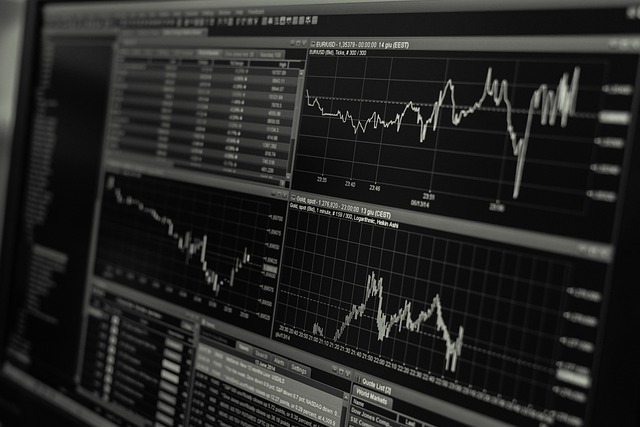
Technical analysis represents the second major method for understanding and predicting currency movements in forex markets. This approach involves studying historical price data, chart patterns, and statistical indicators to identify trends and potential trading opportunities. Technical analysts believe that all relevant economic information is already reflected in currency prices, and that price movements follow identifiable patterns that tend to repeat over time.

Chart patterns such as head and shoulders, double tops and bottoms, triangles, and flags provide visual representations of market psychology and potential trend reversals or continuations. Support and resistance levels represent price points where currencies have historically had difficulty moving below or above, respectively. These levels often become self-fulfilling prophecies as traders place orders around them. Successful technical analysis requires combining multiple indicators and timeframes to confirm signals and reduce false positives.
Step 3: Risk Management and Position Sizing
Effective risk management represents the third critical method for success in foreign exchange economics. Even with accurate analysis of currency movements, poor risk management can lead to significant losses. Professional traders typically risk only 1-2% of their trading capital on any single trade, ensuring that a series of losses won’t deplete their account substantially. This conservative approach allows traders to survive inevitable losing streaks and remain in the market long enough for their edge to materialize.

Diversification across currency pairs and time horizons helps reduce overall portfolio risk. Correlations between currency pairs should be considered – for example, EUR/USD and GBP/USD often move in similar directions, so holding positions in both may not provide true diversification. Implementing stop-loss orders protects against catastrophic losses by automatically closing positions when they move against you by a predetermined amount.
Practical Tips
**Tip 1: Monitor Central Bank Communications Carefully** – Central banks like the Federal Reserve, European Central Bank, and Bank of Japan have enormous influence over currency values through their monetary policy decisions and forward guidance. Traders should regularly review central bank meeting minutes, press conferences, and speeches by key officials. Pay particular attention to changes in tone regarding inflation concerns, employment conditions, and future policy intentions. The forex market often experiences significant volatility immediately following major central bank announcements, creating both opportunities and risks. Understanding the nuances of central bank communication can provide advance warning of policy shifts that will impact currency values.
**Tip 3: Understand Currency Correlations and Cross-Rates** – Currency pairs don’t exist in isolation – they’re interconnected through complex relationships. Understanding these correlations improves trading decisions and risk management. For example, commodity currencies like the Australian and Canadian dollars often correlate with commodity prices, particularly for their major exports. The US dollar index (DXY) provides insight into overall dollar strength across multiple currency pairs. Cross-rates between currencies that don’t involve the US dollar (like EUR/GBP) can offer unique trading opportunities. Monitoring multiple related markets simultaneously provides context for individual currency pair movements and helps identify when price action in one pair seems anomalous compared to related instruments.
**Tip 4: Develop and Maintain a Trading Journal** – Systematic record-keeping of all trades, including entry and exit points, reasons for taking the trade, market conditions, emotional state, and outcomes, provides invaluable feedback for improving your forex trading over time. Many traders discover patterns in their performance – perhaps they’re more successful with certain currency pairs, during specific market conditions, or at particular times of day. A detailed trading journal helps identify these patterns and reveals both strengths to leverage and weaknesses to address. Review your journal regularly to ensure you’re following your trading plan consistently and learning from both successful and unsuccessful trades.
Important Considerations
Several critical considerations can make the difference between success and failure in foreign exchange trading and understanding currency economics. First, recognize that forex trading is extraordinarily competitive – you’re competing against sophisticated institutional traders, hedge funds, and algorithms with vast resources and information advantages. Retail traders must be realistic about their edge and capabilities in this environment. Most retail forex traders lose money, particularly in their first year of trading. Approach forex trading as a serious business requiring substantial education, practice, and capital rather than as a get-rich-quick scheme.
Regulatory considerations vary significantly by jurisdiction. Ensure you’re trading with properly regulated brokers that offer client fund protection and operate transparently. In the United States, forex brokers must be registered with the Commodity Futures Trading Commission (CFTC) and be members of the National Futures Association (NFA). Different countries have different leverage limits – US regulations cap leverage at 50:1 for major currency pairs, while some offshore brokers offer leverage of 500:1 or higher. Higher leverage increases risk substantially and should be approached with extreme caution.
Beware of scams and unrealistic promises in the forex industry. No strategy wins 100% of the time, and any service promising guaranteed profits or minimal risk should be viewed with extreme skepticism. Similarly, be cautious of “signal services” that claim to provide profitable trade recommendations – their incentives are often misaligned with yours, as they profit from subscriptions rather than trading success. The most reliable path to forex competence involves personal education, practice, and experience rather than following others’ recommendations blindly.
Conclusion
The methods outlined in this guide – fundamental analysis, technical analysis, and rigorous risk management – provide a framework for approaching forex markets systematically rather than speculatively. By monitoring economic indicators, central bank policies, and technical chart patterns, traders can identify high-probability opportunities while managing downside risk through appropriate position sizing and diversification. Remember that consistent profitability in forex trading typically develops over months or years rather than days or weeks.
For those interested in foreign exchange economics from an academic or business perspective rather than active trading, understanding currency dynamics remains valuable for international business planning, investment portfolio management, and economic policy analysis. Exchange rate movements affect corporate profits, investment returns, and economic competitiveness at both micro and macro levels. Whether your interest is practical trading or broader economic understanding, the principles covered in this guide provide a foundation for deeper exploration of this fascinating and globally significant market. Continue your education through reputable sources, maintain healthy skepticism toward unrealistic claims, and approach the forex market with both enthusiasm and respect for its complexity and risks.