
Dow Jones Futures Today: Ray Dalio’s Stock Market Analysis
The Dow Jones Industrial Average stands as one of the most closely watched barometers of American economic health and market sentiment. For investors, traders, and economic analysts worldwide, understanding Dow movements and futures trading represents a critical skill in navigating today’s complex financial landscape. This comprehensive guide explores the intricacies of Dow Jones futures, incorporating insights from legendary investor Ray Dalio’s market analysis framework.
Understanding the Basics
The Dow Jones Industrial Average, commonly referred to as “the Dow,” is a price-weighted index comprising 30 of the largest and most influential publicly-traded companies in the United States. Unlike market-cap weighted indices, the Dow gives greater influence to higher-priced stocks, making it unique among major market indicators. Companies like Apple, Microsoft, Boeing, and Goldman Sachs form the backbone of this prestigious index, representing diverse sectors from technology to healthcare, finance to consumer goods.
Dow futures are financial contracts that allow investors to speculate on or hedge against the future direction of the Dow Jones Industrial Average. These derivative instruments trade nearly 24 hours a day, providing continuous price discovery even when the underlying stock market is closed. Understanding futures is essential because they often serve as leading indicators, offering glimpses into market sentiment before regular trading hours begin.
Ray Dalio, founder of Bridgewater Associates, has long emphasized the importance of understanding economic cycles and their impact on market indices like the Dow. His “Principles” approach to investing stresses the need to comprehend how debt cycles, productivity growth, and central bank policies interact to drive market movements. When analyzing Dow futures today, savvy investors apply Dalio’s framework by examining credit conditions, inflation trends, and monetary policy signals that influence the 30 constituent companies.
The mechanics of Dow futures trading involve contracts standardized by the Chicago Mercantile Exchange (CME). Each E-mini Dow futures contract represents $5 multiplied by the Dow Jones Industrial Average index value. For instance, if the Dow is trading at 34,000, one contract controls $170,000 in notional value. This leverage allows traders to gain significant market exposure with relatively modest capital, though it equally amplifies both profits and losses.
Key Methods
Step 1: Analyzing Pre-Market Futures Signals
Before the opening bell rings on Wall Street, Dow futures provide critical insights into market direction and investor sentiment. Professional traders begin their day by examining overnight futures movements, which reflect global developments, economic data releases, and corporate earnings announcements from international markets. The key is understanding that futures prices represent the collective expectations of thousands of market participants worldwide.
To effectively analyze pre-market signals, start by comparing current Dow futures levels to the previous day’s closing value. A significant positive gap suggests bullish sentiment, often driven by favorable news such as strong corporate earnings, positive economic indicators, or accommodative central bank commentary. Conversely, negative futures indicate bearish positioning, potentially triggered by geopolitical tensions, disappointing economic data, or corporate warnings.
Ray Dalio’s approach emphasizes context over isolated data points. Rather than simply noting whether futures are up or down, examine the underlying catalysts. Are futures rising because of genuine economic strength, or merely because of short-term liquidity injections? This distinction matters enormously for sustainable investment strategies. Cross-reference futures movements with bond yields, currency markets, and commodity prices to build a comprehensive market picture before making trading decisions.
Step 2: Implementing Risk Management Strategies
Futures trading demands rigorous risk management because leverage magnifies both gains and losses. The first principle is never risking more capital than you can afford to lose entirely. Many experienced traders limit their risk to 1-2% of total portfolio value on any single futures position. This conservative approach ensures that even a string of losses won’t devastate your trading account.
Stop-loss orders represent essential tools for managing Dow futures risk. These automatic orders close your position when prices move against you by a predetermined amount, limiting potential losses. For example, if you enter a long Dow futures position at 34,000, you might place a stop-loss at 33,850, capping your maximum loss at 150 index points. The discipline to honor stop-losses separates successful traders from those who blow up their accounts.
Position sizing constitutes another critical risk management element. Rather than committing your entire margin to a single trade, diversify across multiple positions or reserve substantial capital for adding to winning positions. Ray Dalio’s “All Weather Portfolio” concept applies here—structure your futures exposure to perform reasonably well across various economic environments rather than betting everything on a single scenario.
Step 3: Integrating Fundamental and Technical Analysis
Successful Dow futures trading combines fundamental economic analysis with technical chart patterns. On the fundamental side, monitor key economic indicators that drive Dow component companies: GDP growth rates, employment figures, consumer spending data, manufacturing indices, and inflation metrics. These macroeconomic variables directly impact corporate earnings and, consequently, stock prices within the Dow.
Ray Dalio’s framework emphasizes understanding where we stand in the long-term debt cycle. Are debt levels expanding or contracting? How are central banks responding? Currently, factors like Federal Reserve interest rate policies, inflation trends, and global supply chain dynamics play outsized roles in determining Dow direction. Traders who understand these fundamental forces position themselves advantageously.
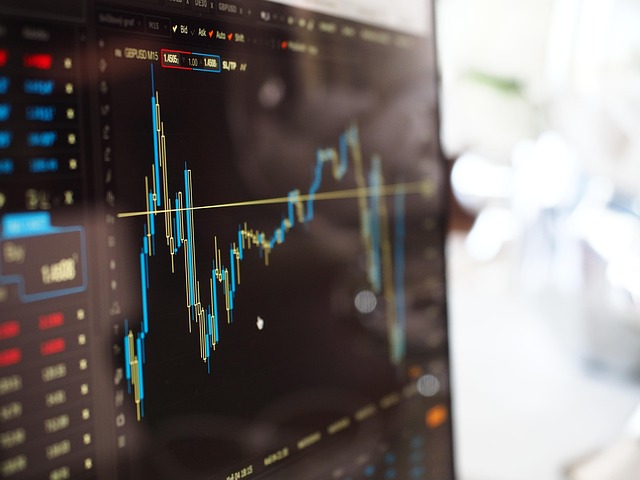
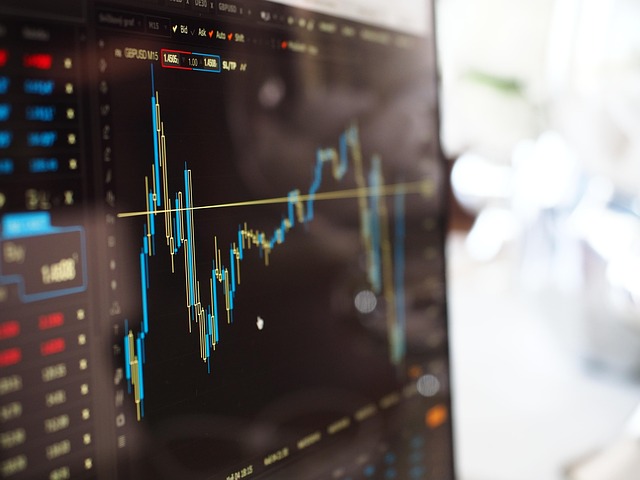
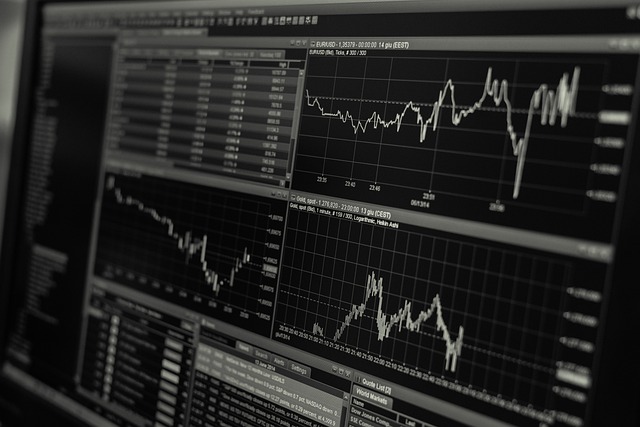
Technical analysis complements fundamentals by identifying optimal entry and exit points. Study Dow futures charts across multiple timeframes—daily, hourly, and even 15-minute intervals for active traders. Key technical levels include support and resistance zones, moving averages (particularly the 50-day and 200-day), trend lines, and momentum indicators like the Relative Strength Index (RSI). When fundamental analysis suggests a bullish outlook and technical indicators confirm the trend, conviction in your trading position increases substantially.
Practical Tips
**Tip 1: Master the Pre-Market Routine**
Develop a systematic pre-market analysis routine that you execute every trading day without exception. Begin by reviewing overnight developments in Asian and European markets, as these often set the tone for U.S. trading. Check major futures contracts—not just Dow futures but also S&P 500 and Nasdaq futures—to gauge broad market sentiment. Review the economic calendar for scheduled data releases and monitor financial news sources for unexpected developments. This disciplined approach ensures you’re never caught off-guard by market-moving events and positions you to capitalize on opportunities that less-prepared traders miss.
**Tip 2: Understand Correlation Patterns**
**Tip 3: Leverage Economic Calendar Strategically**
**Tip 4: Study Historical Volatility Patterns**
Dow futures exhibit predictable volatility patterns across different times and market conditions. Typically, volatility spikes during market opens, major economic releases, and periods of geopolitical uncertainty. Conversely, volatility often diminishes during mid-day trading and holiday periods. Understanding these patterns allows you to adjust position sizes appropriately—taking larger positions during calm periods and reducing exposure when volatility threatens to trigger stop-losses prematurely. Historical volatility analysis also helps in setting realistic profit targets and stop-loss levels that account for normal market noise rather than being triggered by routine fluctuations.
**Tip 5: Maintain a Trading Journal**
Systematic improvement in futures trading requires rigorous record-keeping and self-analysis. Maintain a detailed trading journal documenting every position: entry and exit points, rationale for the trade, emotional state, market conditions, and eventual outcome. Review this journal weekly to identify patterns in your successful and unsuccessful trades. Perhaps you perform better with trend-following strategies than counter-trend plays, or maybe your morning trades outperform afternoon positions. These insights, accumulated over months and years, become your personalized trading edge that no book or course can provide. Ray Dalio’s emphasis on radical transparency applies perfectly here—be brutally honest about your mistakes to learn from them.
Important Considerations
Trading Dow futures involves substantial risks that every participant must understand and respect. The leverage inherent in futures contracts means that small adverse price movements can result in losses exceeding your initial margin deposit. Margin calls can force you to deposit additional funds or face automatic position liquidation at unfavorable prices. Never trade with money you cannot afford to lose, and always maintain adequate capital reserves beyond your margin requirements.
Market gaps represent another significant risk factor. Because news breaks 24/7 while individual traders sleep, Dow futures can gap significantly higher or lower overnight, potentially blowing through your stop-loss levels. Weekend gaps pose particular danger, as two full days of news accumulation can create enormous Monday opening gaps. Sophisticated traders either close positions before weekends or use options strategies to hedge against gap risk.
The tax treatment of futures trading differs from stock trading in the United States. Futures contracts receive 60/40 tax treatment under Section 1256, meaning 60% of gains are taxed as long-term capital gains and 40% as short-term, regardless of holding period. This generally results in lower tax liability compared to short-term stock trading, but the rules are complex. Consult with a qualified tax professional who understands futures markets to optimize your tax strategy and ensure compliance.
Emotional discipline separates successful futures traders from the majority who lose money. The leverage and volatility inherent in Dow futures can trigger powerful psychological responses—euphoria during winning streaks and panic during drawdowns. Ray Dalio’s principles emphasize the importance of systematic, rules-based decision-making rather than emotional reactions. Develop your trading plan during calm periods, then execute it mechanically regardless of momentary feelings.
Conclusion
Dow Jones futures trading offers sophisticated investors powerful tools for profiting from market movements, hedging portfolio risk, and gaining leveraged exposure to America’s leading companies. Success in this challenging arena requires combining multiple skill sets: fundamental economic analysis, technical chart reading, rigorous risk management, and psychological discipline. Ray Dalio’s analytical framework provides valuable guidance, emphasizing the importance of understanding economic cycles, maintaining diversification, and approaching markets with radical open-mindedness.
The path to futures trading proficiency is a marathon, not a sprint. Begin with thorough education, paper trading to test strategies without risking capital, and then gradual position sizing as you gain experience and confidence. Study the great investors and traders, but ultimately develop an approach aligned with your personality, risk tolerance, and time availability. The markets will always be there, offering new opportunities—there’s no need to rush or risk more than you can afford.
Remember that even the most successful traders experience losing periods. What distinguishes them is superior risk management that ensures they survive drawdowns and remain positioned to capitalize when conditions become favorable. Approach Dow futures trading as a serious business requiring continuous learning, adaptation, and improvement. With dedication, discipline, and the right analytical framework, you can navigate these markets successfully and build lasting wealth over time.