

GCSE Physics – National Grid
GCSE Physics is an important subject that many students find challenging, particularly when it comes to understanding the National Grid system. The National Grid represents one of the most sophisticated electrical distribution networks in the world, and mastering its concepts is crucial for exam success.
Understanding the Basics

The National Grid is the high-voltage electric power transmission network that connects power stations to local distribution networks throughout Great Britain. This massive infrastructure operates at voltages of 275kV and 400kV, stepping down electricity through a series of transformers to eventually reach our homes at 230V.
The system works on the principle of electromagnetic induction, discovered by Michael Faraday. Power stations generate electricity using various methods – coal, gas, nuclear, wind, or solar – and this electricity must be transmitted efficiently across vast distances. The key insight is that transmitting at high voltages significantly reduces power losses during transmission.
When electricity travels through cables, it encounters resistance, which causes energy to be lost as heat according to the formula P = I²R. By increasing voltage and correspondingly decreasing current for the same power output (P = VI), we dramatically reduce these losses. This is why the National Grid operates at such high voltages – it’s far more efficient than transmitting at lower voltages.

The Grid’s sophisticated control systems constantly balance supply and demand, managing frequency at exactly 50Hz. This requires real-time coordination between multiple power sources and the ability to quickly respond to changes in electricity demand throughout the day.
Key Methods
Step 1: Power Generation and Initial Transmission
Power stations generate electricity at relatively low voltages, typically around 25kV. The first critical step involves step-up transformers that increase this voltage to transmission levels of 275kV or 400kV. These transformers work on the principle of electromagnetic induction, using primary and secondary coils with different numbers of turns.
The relationship between primary and secondary voltages follows the transformer equation: Vp/Vs = Np/Ns, where V represents voltage and N represents the number of turns in each coil. Step-up transformers have more turns in the secondary coil, resulting in higher output voltage but lower current.
This high-voltage electricity then travels through the supergrid – massive transmission lines supported by pylons that you see crossing the countryside. These lines are made of aluminum conductors with steel cores for strength, and they’re designed to minimize resistance while withstanding weather conditions and thermal expansion.
Step 2: Regional Distribution Networks
At regional substations, the first stage of voltage reduction occurs through step-down transformers that reduce transmission voltages to 132kV or 33kV. These regional networks distribute electricity to major industrial users and feed into local distribution networks that serve towns and cities.
The substations are strategically located to ensure reliable supply and include sophisticated switching equipment that can isolate sections for maintenance or reroute power during emergencies. Modern substations use computer-controlled systems to monitor power flows and automatically adjust to changing conditions.
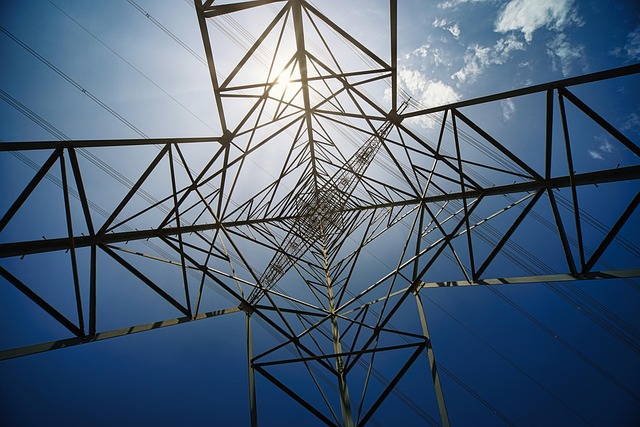
Grid supply points mark the boundary between transmission and distribution networks. Here, electricity companies take responsibility for delivering power to end users through their local networks, which operate at progressively lower voltages as they branch out to serve different types of customers.
Step 3: Local Distribution and Final Delivery
Local distribution networks receive power at 33kV or 11kV and use additional transformers to step down to voltages suitable for different users. Large industrial customers might receive power at 11kV, while residential areas typically receive 400V three-phase supply that’s further reduced to 230V for individual homes.
The final transformation usually occurs in local substations or pole-mounted transformers that serve specific neighborhoods. These transformers must be carefully sized to handle peak demand periods while maintaining voltage stability throughout their service area.
Smart grid technologies are increasingly being integrated into distribution networks, allowing for better monitoring, automatic fault detection, and the integration of renewable energy sources. This includes smart meters that provide real-time usage data and can help balance supply and demand more effectively.
Practical Tips
**Tip 1: Master Transformer Calculations** – Practice using the transformer equations extensively. Remember that Vp/Vs = Np/Ns = Is/Ip for ideal transformers. Work through numerous examples calculating voltages, currents, and turns ratios. Understanding that power input equals power output (ignoring losses) helps you check your calculations. Always identify which side is primary and which is secondary before starting calculations.
**Tip 2: Understand Power Loss Concepts** – Focus on why high voltage transmission reduces losses. Use P = I²R to calculate power losses at different transmission voltages. Practice problems that compare power losses when the same power is transmitted at different voltages. Remember that doubling the voltage quarters the current, which reduces power losses by a factor of 16.
**Tip 3: Learn the Voltage Levels** – Memorize the key voltage levels: 400kV and 275kV for supergrid transmission, 132kV and 33kV for regional distribution, 11kV for local distribution, and 230V for domestic supply. Understanding this voltage hierarchy helps you analyze any National Grid question systematically.
**Tip 4: Study Grid Stability** – Understand how the Grid maintains 50Hz frequency and why this matters. Learn about base load and peak demand, and how different power sources contribute to grid stability. Nuclear and coal provide steady base load, while gas turbines and pumped storage help meet peak demand quickly.
**Tip 5: Connect Physics to Real Life** – Visit local substations and observe transmission lines to reinforce your understanding. Notice how voltage levels are clearly marked and how transformer sizes relate to the areas they serve. Understanding the physical infrastructure helps make the physics concepts more concrete and memorable.
Important Considerations
Safety is paramount when studying National Grid systems, and exam questions often focus on the dangers of high-voltage electricity. High voltages can cause fatal electric shocks even without direct contact – electricity can arc across significant air gaps at transmission voltages. This is why transmission lines are mounted high on pylons with substantial clearance from the ground and why substations are securely fenced with warning signs.
Environmental considerations also feature prominently in GCSE questions. Transmission lines create electromagnetic fields, though research suggests these are not harmful at normal exposure levels. Visual impact is significant, which is why new lines often generate public opposition. Underground cables avoid visual pollution but cost much more and are harder to maintain.
Reliability and redundancy are built into the Grid through multiple transmission paths and interconnections with European networks. When one line fails, power can be rerouted through alternative paths. This resilience is tested by severe weather events, which can damage lines and cause widespread outages.
Economic factors drive many Grid decisions. The massive capital investment required for transmission infrastructure must be balanced against the need for reliable electricity supply. Regulatory frameworks ensure that transmission companies invest appropriately while keeping costs reasonable for consumers.
Conclusion
The National Grid represents a remarkable achievement in electrical engineering, efficiently distributing electricity across vast distances while maintaining the stability and reliability that modern society depends upon. For GCSE Physics students, understanding the Grid provides an excellent real-world application of fundamental electrical principles including electromagnetic induction, power calculations, and transformer operation.
Success in National Grid questions requires mastering both the underlying physics concepts and understanding how they’re applied in this complex system. Focus on transformer calculations, power transmission efficiency, and the reasons behind the voltage hierarchy. Remember that the Grid must constantly balance supply and demand while maintaining safety and reliability standards.