

SpaceX Rocket Launch: How the New Space Economy Is Creating Unprecedented Investment and Passive Income Opportunities
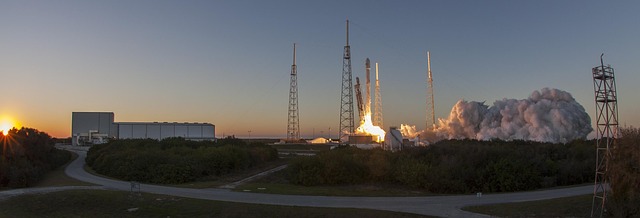
The rumble of a SpaceX Falcon 9 rocket lifting off from Cape Canaveral is more than a spectacle of engineering brilliance. It represents the dawn of a multi-trillion-dollar space economy that is rapidly reshaping how investors think about portfolio construction, passive income, and long-term wealth building. Every successful launch, every Starlink satellite deployed into orbit, and every milestone achieved by SpaceX sends a clear signal: the commercial space industry is no longer science fiction — it is a tangible, investable frontier.
In this comprehensive guide, we will explore how SpaceX rocket launches connect to real investment opportunities, break down the strategies you can use to gain exposure to the space economy, and provide practical tips for building passive income streams tied to this explosive growth sector.
The SpaceX Effect: Why Rocket Launches Matter to Investors
SpaceX, founded by Elon Musk in 2002, has fundamentally disrupted the aerospace industry. By developing reusable rocket technology, the company slashed the cost of launching payloads into orbit by as much as 90 percent compared to traditional launch providers. This cost reduction is not merely a technical achievement — it has unlocked entirely new business models and revenue streams across dozens of industries.
Each SpaceX rocket launch serves multiple purposes. A single Falcon 9 mission might deploy a batch of Starlink broadband satellites, carry a commercial payload for a telecommunications company, and demonstrate technologies that will eventually support missions to Mars. The cumulative effect of over 300 successful launches has been the creation of a robust ecosystem where satellite internet, space tourism, national defense, and scientific research all converge.
For investors, this convergence means opportunity. The global space economy was valued at approximately $546 billion in 2024 and is projected to surpass $1.8 trillion by 2035 according to multiple industry analyses. SpaceX sits at the center of this growth, but the ripple effects extend far beyond a single company.
The Reusability Revolution and Its Financial Implications
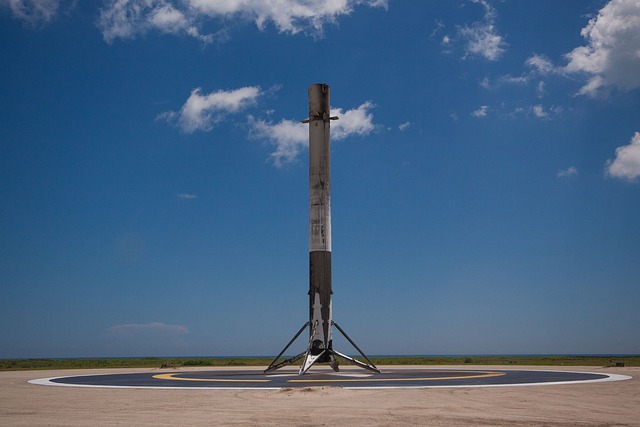
The ability to land and refly a Falcon 9 booster — something SpaceX has now done hundreds of times — is arguably the most important financial innovation in aerospace history. Reusability transforms rockets from disposable expenses into durable capital assets. This shift mirrors what happened in commercial aviation when airlines stopped treating aircraft as single-use vehicles.
The financial implication is straightforward: lower launch costs mean higher margins, more frequent launches, and a dramatically expanded addressable market. Companies that previously could not afford to put satellites in orbit now can. This democratization of space access has created a boom in small satellite companies, Earth observation startups, and space-based data services — all of which represent investable opportunities.
How to Invest in the Space Economy Surrounding SpaceX

While SpaceX itself remains a private company, there are numerous strategies for gaining exposure to its growth trajectory and the broader space economy it has catalyzed.
Direct Private Market Access
SpaceX occasionally raises capital through private funding rounds, and shares trade on secondary markets. For accredited investors, platforms that facilitate pre-IPO share transactions can provide direct exposure. However, this approach carries significant risks including illiquidity, high minimum investments, and limited financial disclosure. SpaceX was last valued at approximately $350 billion in late 2024, making it one of the most valuable private companies in the world.
If you qualify as an accredited investor and have a long time horizon, allocating a small percentage of your portfolio to SpaceX secondary shares can provide outsized returns if the company eventually goes public. A potential Starlink IPO, which Musk has discussed publicly, could serve as a major liquidity event.
Space-Focused ETFs and Index Funds
For most investors, exchange-traded funds offer the most practical way to invest in the space economy. Several ETFs track companies involved in satellite technology, rocket manufacturing, space exploration, and related services. These funds provide instant diversification across dozens of space-related companies, reducing the risk associated with any single stock.
The advantage of ETF investing for passive income is clear: you gain broad exposure to the space economy’s growth while benefiting from professional portfolio management and daily liquidity. Many space ETFs include companies that pay dividends, providing a recurring income stream on top of capital appreciation potential.
Investing in SpaceX Suppliers and Partners
A proven strategy in investing is to identify the companies that supply picks and shovels to a gold rush rather than mining for gold directly. SpaceX relies on a vast network of suppliers, subcontractors, and technology partners. Companies that manufacture specialized alloys for rocket engines, produce avionics systems, supply composite materials, or provide ground support equipment all benefit from increased launch frequency.
Many of these suppliers are publicly traded and offer dividend payments, making them attractive for passive income portfolios. As SpaceX continues to ramp up its launch cadence — the company aims for over 150 launches per year — demand for these components and services will only grow.
Passive Income Strategies Linked to the Space Economy
Building passive income requires identifying assets and strategies that generate recurring cash flow with minimal ongoing effort. The space economy offers several compelling avenues.
Dividend Stocks in Aerospace and Defense
Established aerospace and defense companies represent the most straightforward path to passive income in the space sector. Companies like Lockheed Martin, Northrop Grumman, RTX Corporation, and L3Harris Technologies have long histories of paying and increasing dividends. These companies are deeply involved in space programs, satellite systems, and national security space initiatives that benefit from the same trends driving SpaceX’s growth.
A portfolio of aerospace dividend stocks yielding between 1.5 and 3 percent can provide meaningful passive income while offering exposure to long-term space economy growth. Reinvesting dividends through a DRIP (Dividend Reinvestment Plan) can accelerate wealth accumulation through compounding.
Satellite Communications and Infrastructure REITs
The explosion of satellite launches driven by SpaceX and competitors has created enormous demand for ground infrastructure. Companies that own and operate satellite ground stations, data centers serving space-based data, and communications towers form a critical link in the space economy value chain.
Some of these infrastructure companies are structured as Real Estate Investment Trusts (REITs), which are legally required to distribute at least 90 percent of taxable income to shareholders. This structure makes them powerful passive income generators. Tower and data infrastructure REITs often yield between 3 and 5 percent while also benefiting from secular growth in data demand driven by satellite constellations like Starlink.
Bond Investments in Space Companies
Several publicly traded space and defense companies issue corporate bonds that provide fixed income to investors. These bonds typically offer yields above Treasury rates while carrying investment-grade credit ratings. For conservative investors seeking passive income with lower volatility than stocks, a ladder of aerospace corporate bonds can provide predictable cash flow for years or decades.
Practical Tips for Building a Space Economy Portfolio
Tip 1: Start With What You Know and Expand Gradually
If you are new to space investing, begin with established aerospace companies you recognize. Add positions in space-focused ETFs for diversification. As your knowledge grows, consider allocating a small portion to higher-risk, higher-reward positions in pure-play space companies.
Tip 2: Use Dollar-Cost Averaging
The space sector can be volatile, especially around high-profile events like rocket launches, satellite deployment milestones, or regulatory decisions. Dollar-cost averaging — investing a fixed amount at regular intervals regardless of price — smooths out this volatility and removes the pressure of trying to time the market.
Tip 3: Reinvest All Dividends During the Accumulation Phase
If you are building wealth rather than drawing income, reinvest every dividend payment. The compounding effect over a decade or more can dramatically increase your total return. Many brokerage platforms offer automatic dividend reinvestment at no additional cost.
Tip 4: Monitor Launch Cadence as a Leading Indicator
SpaceX’s launch frequency is a useful barometer for the health of the entire commercial space industry. An increasing launch cadence signals growing demand for space services, which benefits the entire ecosystem. Track launches through publicly available databases and use this information to inform your investment timing and allocation decisions.
Tip 5: Diversify Across the Space Value Chain
Do not concentrate your entire space allocation in one segment. Spread investments across launch providers, satellite operators, ground infrastructure, data analytics companies, and component manufacturers. This diversification protects you if one segment underperforms while allowing you to capture growth wherever it occurs.
Tip 6: Keep an Eye on Regulatory Developments
Government policy significantly impacts the space industry. Spectrum allocation decisions, export control regulations, environmental reviews for launch sites, and government contract awards can all move stock prices. Following regulatory developments through industry publications and government agency announcements can give you an informational edge.
The Starlink Factor: A Game Changer for Space Investing
No discussion of SpaceX and investment would be complete without addressing Starlink, the satellite internet constellation that represents what may become the most valuable component of the SpaceX empire. With over 6,000 satellites in orbit and millions of subscribers worldwide, Starlink is generating billions in annual revenue and growing rapidly.
A potential Starlink IPO would be one of the most significant public offerings in history. For investors positioned in the broader space ecosystem, a Starlink IPO could serve as a catalyst that lifts the entire sector. Companies providing ground terminals, antenna technology, backhaul connectivity, and enterprise integration services for Starlink would all see increased investor attention and potentially higher valuations.
How to Prepare for a Potential Starlink IPO
Build positions in companies already partnering with or supplying Starlink. Maintain cash reserves that you can deploy quickly if an IPO is announced. Consider setting up accounts on platforms that offer IPO access to retail investors. And most importantly, do your due diligence now so that you can act decisively when the opportunity arrives rather than scrambling to research at the last minute.
Risk Management in Space Investing
Every investment carries risk, and the space sector has unique considerations. Launch failures, while increasingly rare for SpaceX, can cause temporary stock declines across the sector. Regulatory changes can delay or cancel programs. Technological obsolescence can render satellites worthless before their planned end of life. And geopolitical tensions can disrupt international space cooperation and supply chains.
Manage these risks by maintaining position sizes appropriate to your overall portfolio, setting stop-loss orders on volatile positions, and ensuring that your space investments represent only one component of a well-diversified portfolio. A common guideline is to limit sector-specific exposure to no more than 10 to 15 percent of your total portfolio, though your personal risk tolerance and financial situation should guide this decision.
The Long-Term Outlook: Why Space Is a Generational Investment Theme
The space economy is not a short-term trade or a speculative bubble. It is a generational investment theme driven by fundamental technological and economic forces. The cost of accessing space continues to decline. The applications enabled by space-based infrastructure — from global broadband to precision agriculture to climate monitoring — continue to expand. And government and private investment in space capabilities continues to accelerate worldwide.
SpaceX rocket launches are the visible manifestation of this transformation. Each launch represents another step toward a future where space-based services are as integral to daily life as the internet is today. Investors who position themselves now to capture this growth — through dividend stocks, ETFs, private market access, or infrastructure investments — stand to benefit from one of the most powerful wealth-creation opportunities of the coming decades.
Conclusion
SpaceX rocket launches are far more than technological achievements. They are economic catalysts that are opening a vast new frontier for investors and passive income seekers. The space economy is projected to grow by trillions of dollars over the next decade, and the investment opportunities surrounding this growth are diverse, accessible, and compelling.
Whether you choose to invest through space-focused ETFs, dividend-paying aerospace stocks, infrastructure REITs, or corporate bonds, the key is to start building your position now. Use dollar-cost averaging to manage volatility, diversify across the space value chain, reinvest dividends to harness compounding, and stay informed about regulatory and technological developments.
The rockets are launching. The economy is expanding. The question is not whether the space investment opportunity is real — it is whether you will position yourself to benefit from it. Start small, stay disciplined, and think long-term. The returns from the space economy will reward patient investors who had the foresight to look up while the rest of the world was looking down.