

SpaceX Rocket Launch Today: Investment Opportunities in the New Space Economy
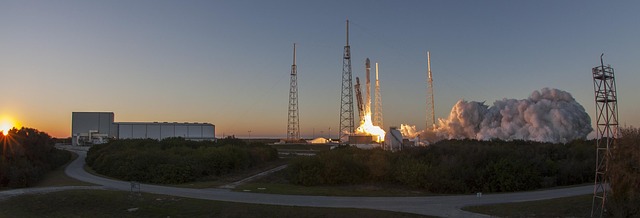
The rumble of rocket engines, the blinding flash of ignition, and the awe-inspiring sight of a spacecraft ascending into the heavens—SpaceX rocket launches have become a symbol of humanity’s relentless push toward the stars. But beyond the spectacle lies a trillion-dollar industry that savvy investors are positioning themselves to capitalize on. Today’s SpaceX launch represents more than technological achievement; it signals the maturation of the space economy and presents unprecedented opportunities for building wealth and generating passive income.
The SpaceX Revolution: Understanding the Company Behind Today’s Launch
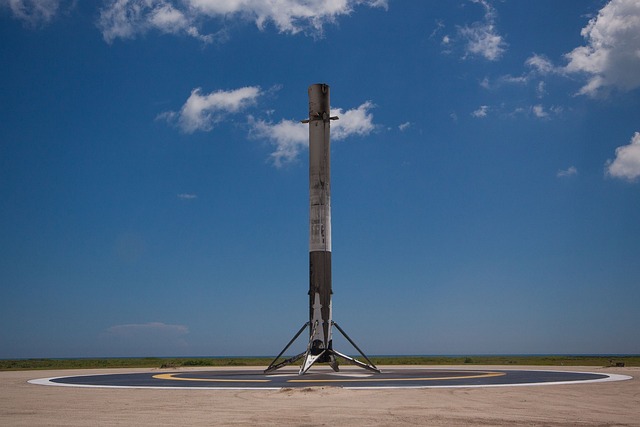
SpaceX, founded by Elon Musk in 2002, has fundamentally transformed the aerospace industry. What began as an audacious attempt to reduce space transportation costs has evolved into the world’s most prolific launch provider. The company’s reusable rocket technology—exemplified by the Falcon 9 and the massive Starship system—has slashed launch costs by an order of magnitude compared to traditional aerospace providers.
The Business Model That Changed Everything
Traditional aerospace companies operated on a cost-plus model, essentially charging governments whatever expenses they incurred plus a profit margin. SpaceX disrupted this paradigm by developing rockets with their own capital and offering fixed-price contracts. The result? Launch costs dropped from approximately $54,500 per kilogram to orbit with the Space Shuttle to roughly $2,720 per kilogram with Falcon 9—and potentially as low as $200 per kilogram with the fully reusable Starship system.
This cost reduction has catalyzed an entire industry. Satellite operators, research institutions, and emerging space companies that previously couldn’t afford access to orbit are now launching regularly. Each SpaceX launch today contributes to this expanding ecosystem, creating ripple effects throughout the economy.
The Investment Landscape: How to Profit from Space

While SpaceX itself remains a private company, the space economy offers numerous pathways for investors seeking exposure to this high-growth sector. Understanding these opportunities is essential for anyone looking to build wealth through space-related investments.
Direct Investment Approaches
#### Private Market Access
SpaceX has achieved valuations exceeding $200 billion in private markets. While direct investment typically requires accredited investor status and substantial capital, several pathways exist for gaining exposure:
**Secondary Market Platforms**: Companies like Forge Global, EquityZen, and Hiive facilitate the trading of pre-IPO shares. These platforms allow investors to purchase SpaceX stock from employees or early investors looking to liquidate their holdings. Minimum investments typically range from $10,000 to $100,000, depending on the platform and availability.
**Venture Capital Funds**: Some venture capital funds have invested in SpaceX and may be accessible to accredited investors. These funds provide diversified exposure to multiple high-growth companies, reducing single-company risk while maintaining space sector exposure.
**Special Purpose Vehicles (SPVs)**: Occasionally, investment firms create SPVs specifically to pool capital for SpaceX investments. These structures allow smaller investors to participate collectively in larger funding rounds.
Public Market Opportunities
For investors without accredited status or those preferring the liquidity of public markets, several compelling alternatives exist:
#### Space-Focused ETFs
Exchange-traded funds provide diversified exposure to the space economy:
**ARK Space Exploration & Innovation ETF (ARKX)**: This actively managed fund invests in companies involved in space exploration, satellite technology, and related industries. Holdings include aerospace manufacturers, satellite operators, and technology enablers.
**Procure Space ETF (UFO)**: This fund tracks the S-Network Space Index, providing exposure to companies deriving significant revenue from space-related activities.
**SPDR S&P Kensho Final Frontiers ETF (ROKT)**: This ETF focuses on companies involved in space and deep-sea exploration technologies.
#### Individual Stock Opportunities
Several publicly traded companies benefit directly from SpaceX’s success and the broader space economy expansion:
**Rocket Lab USA (RKLB)**: As the second-most prolific commercial launch provider after SpaceX, Rocket Lab offers direct exposure to the small satellite launch market. The company’s Electron rocket serves customers SpaceX’s larger vehicles cannot efficiently accommodate.
**Planet Labs (PL)**: Operating the largest satellite constellation for Earth observation, Planet Labs benefits from reduced launch costs enabled by SpaceX and competitors.
**Maxar Technologies**: Specializing in satellite imagery and space infrastructure, Maxar provides essential services to government and commercial customers.
**Boeing (BA) and Lockheed Martin (LMT)**: These aerospace giants, while not pure-play space investments, have significant space divisions and benefit from government contracts and commercial space expansion.
**Iridium Communications (IRDM)**: Operating a global satellite communication network, Iridium generates recurring revenue from connectivity services enabled by affordable launch access.
Building Passive Income Through Space Investments
Creating sustainable passive income streams from the space economy requires strategic positioning across multiple investment vehicles and time horizons.
Dividend-Generating Space Investments
While many pure-play space companies prioritize growth over dividends, established aerospace and defense contractors with space divisions offer income potential:
**Lockheed Martin (LMT)**: With a dividend yield historically around 2.5-3%, Lockheed Martin provides exposure to space systems, satellite technology, and defense contracts. The company’s consistent dividend growth makes it attractive for income-focused investors.
**Northrop Grumman (NOC)**: Another defense contractor with significant space operations, Northrop Grumman has maintained dividend payments while growing its space systems division.
**L3Harris Technologies (LHX)**: Specializing in communication systems including space-based assets, L3Harris offers dividend income alongside space sector exposure.
The Satellite Economy: Recurring Revenue Models
Satellite-based services represent perhaps the most compelling passive income opportunity within the space sector. These businesses generate recurring revenue from:
**Communication Services**: Satellite internet and connectivity providers charge monthly subscription fees, creating predictable revenue streams. As SpaceX’s Starlink expands, competitors and complementary service providers also benefit from increased market attention.
**Earth Observation Data**: Companies selling satellite imagery and geospatial analytics operate subscription-based models. Agriculture, insurance, financial services, and government customers pay ongoing fees for data access.
**Navigation and Timing Services**: GPS augmentation and precision timing services generate recurring revenue from transportation, logistics, and financial sectors.
Real Estate Investment Trusts (REITs) with Space Connections
An often-overlooked pathway to space sector passive income involves REITs that own ground infrastructure:
**American Tower Corporation (AMT)**: While primarily focused on cell towers, American Tower’s infrastructure increasingly supports satellite communication ground stations and space-related facilities.
**Digital Realty Trust (DLR)**: Data centers process enormous quantities of satellite data, and facilities near launch sites support space operations.
Strategic Investment Approaches for Long-Term Wealth Building
Maximizing returns from the space economy requires thoughtful strategy and patient capital allocation.
Dollar-Cost Averaging into Space Positions
Given the volatility inherent in emerging technology sectors, systematic investment through dollar-cost averaging reduces timing risk. Consider allocating a fixed amount monthly to space-focused ETFs or individual stocks, smoothing out price fluctuations over time.
The Barbell Strategy for Space Investing
Balance high-risk, high-reward pure-play space investments with stable, dividend-paying aerospace contractors:
**Aggressive Allocation (30-40%)**: Growth-focused positions in Rocket Lab, Planet Labs, and space-focused ETFs.
**Conservative Allocation (60-70%)**: Established aerospace companies like Lockheed Martin, Northrop Grumman, and Boeing that provide stability and dividends while maintaining space exposure.
Tax-Advantaged Space Investing
Maximize after-tax returns by holding space investments in appropriate account types:
**Roth IRA**: Ideal for high-growth space stocks where appreciation potential is significant. Tax-free growth compounds over decades.
**Traditional IRA/401(k)**: Suitable for dividend-paying aerospace stocks, deferring taxes on income until retirement.
**Taxable Accounts**: Consider tax-loss harvesting opportunities given space sector volatility, offsetting gains elsewhere in your portfolio.
Risk Management: Protecting Your Space Investments
The space sector, while promising, carries substantial risks that prudent investors must acknowledge and mitigate.
Technical and Execution Risks
Rockets fail. Satellites malfunction. Even SpaceX, with its impressive track record, has experienced launch failures. Diversification across multiple companies and subsectors reduces exposure to any single technical failure.
Regulatory and Political Risks
Space operations require government licenses and are subject to international treaties. Changes in regulatory environments or political priorities can significantly impact space companies. Geographic diversification—investing in companies operating across multiple jurisdictions—provides some protection.
Valuation Risks
Many space companies trade at premium valuations reflecting optimistic growth projections. If growth disappoints, significant price corrections could occur. Position sizing—limiting space investments to a reasonable percentage of your overall portfolio—prevents catastrophic losses.
Competition Risks
SpaceX’s success has attracted numerous competitors, including well-funded ventures from Jeff Bezos (Blue Origin), government-backed programs from China, and emerging players worldwide. Increased competition could compress margins across the industry.
Practical Tips for Getting Started Today
Taking action requires concrete steps. Here’s how to begin building your space investment portfolio:
Step 1: Assess Your Risk Tolerance and Timeline
Space investments suit investors with long time horizons and tolerance for volatility. Evaluate whether your financial situation allows for potentially extended periods of underperformance.
Step 2: Open Appropriate Accounts
Ensure you have access to necessary investment vehicles. Brokerage accounts for ETFs and stocks, and potentially platforms like Forge Global for pre-IPO opportunities if you’re an accredited investor.
Step 3: Start with Diversified Exposure
Begin with space-focused ETFs rather than individual stocks. This approach provides immediate diversification while you develop deeper sector knowledge.
Step 4: Gradually Add Individual Positions
As your understanding grows, selectively add individual stocks that align with your investment thesis. Focus on companies with clear competitive advantages and paths to profitability.
Step 5: Monitor but Don’t Overtrade
Space investments require patience. Resist the urge to trade based on short-term news. Quarterly reviews of your thesis are sufficient for most investors.
The Future: What Today’s Launch Means for Tomorrow’s Wealth
Every SpaceX rocket launch today represents another step toward a future where space-based services are as ubiquitous as internet connectivity. The implications for investors are profound.
Near-Term Catalysts
**SpaceX IPO Potential**: While Musk has indicated Starlink could be spun off as a public company once revenue becomes predictable, any IPO would create significant wealth for early investors and validate the broader space investment thesis.
**Starship Full Operation**: Successful deployment of the Starship system would further reduce launch costs, accelerating every aspect of the space economy.
**Lunar and Mars Missions**: NASA’s Artemis program and commercial lunar ventures will inject billions into the space economy over coming years.
Long-Term Transformation
The space economy is projected to reach $1 trillion annually by 2040, up from approximately $450 billion today. Investors positioned now stand to benefit from this expansion across multiple decades.
Conclusion: Your Launchpad to Financial Growth
Today’s SpaceX rocket launch is more than a technological marvel—it’s a beacon illuminating the path to extraordinary investment opportunities. The space economy has transitioned from science fiction to investable reality, offering pathways to wealth building and passive income generation that didn’t exist a generation ago.
Success in space investing requires the same principles that govern all sound investment strategies: diversification, patience, risk management, and continuous learning. Whether through space-focused ETFs, individual aerospace stocks, dividend-paying defense contractors, or for qualified investors, direct pre-IPO positions, opportunities abound for those willing to look skyward.
The rockets launching today carry more than satellites and cargo—they carry the dreams of a species reaching beyond its home planet and the financial futures of investors bold enough to participate. The question isn’t whether the space economy will grow; it’s whether you’ll be positioned to benefit when it does.
Start small, stay diversified, think long-term, and remember that every journey to the stars begins with a single step—or in this case, a single investment. The launchpad is ready. The countdown has begun. Your financial future in the space economy awaits.