

SpaceX Starship Launch: Investment Opportunities and Passive Income Strategies in the New Space Economy
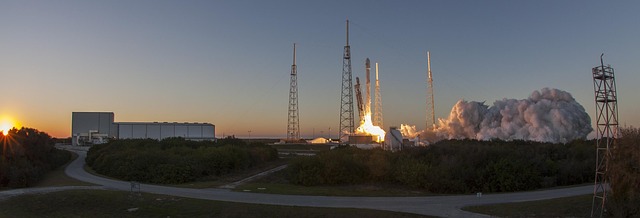
The roar of 33 Raptor engines igniting simultaneously marks more than just another rocket launch—it signals the dawn of a new economic era. SpaceX’s Starship, the most powerful rocket ever built, isn’t just pushing the boundaries of human spaceflight; it’s opening unprecedented investment opportunities for those paying attention to the commercialization of space.
As Starship continues its rapid development cycle, achieving milestone after milestone, savvy investors are positioning themselves to capitalize on what many economists predict will be a multi-trillion dollar industry by 2040. This comprehensive guide explores how you can participate in the space economy revolution and build passive income streams tied to humanity’s greatest adventure.
Understanding Starship’s Revolutionary Impact
The Technical Marvel That Changes Everything
Starship represents a paradigm shift in space access. Standing at 121 meters tall when fully stacked with its Super Heavy booster, this fully reusable launch system is designed to carry over 100 metric tons to low Earth orbit—at a fraction of the cost per kilogram of any existing rocket.
The economic implications are staggering. Traditional rocket launches cost between $50,000 and $200,000 per kilogram to orbit. SpaceX aims to reduce this to under $100 per kilogram with Starship’s full reusability. This cost reduction doesn’t represent incremental improvement—it represents a complete transformation of what’s economically viable in space.
Consider the ripple effects: satellite internet constellations become more profitable, space manufacturing becomes feasible, lunar bases become practical, and Mars colonization transitions from science fiction to business plan.
Recent Launch Milestones and Market Confidence
SpaceX has demonstrated remarkable progress with Starship’s integrated flight tests. Each launch provides valuable data, and the company’s iterative development approach—”test early, test often, learn fast”—has accelerated the timeline dramatically.
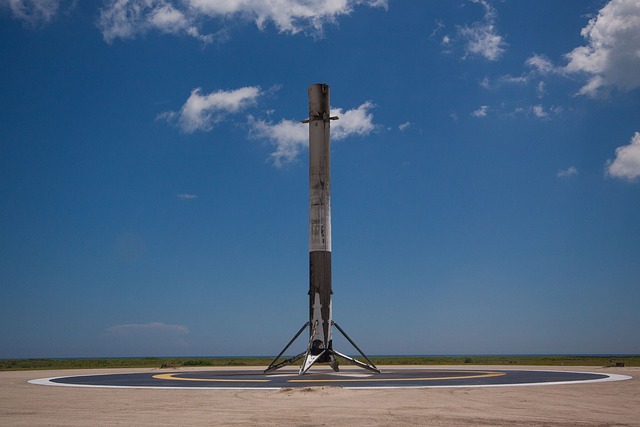
The successful catch of the Super Heavy booster using the launch tower’s mechanical arms, affectionately called “chopsticks,” demonstrated a level of engineering precision that sent confidence signals throughout the aerospace investment community. This capability is essential for the rapid reusability that underpins Starship’s economic model.
NASA’s selection of Starship as the Human Landing System for the Artemis program, with contracts worth billions of dollars, provides both validation and stable revenue streams. The Department of Defense has also shown interest in Starship’s point-to-point cargo delivery capabilities, opening another revenue avenue.
Investment Pathways in the Space Economy

Direct SpaceX Investment Options
Investing directly in SpaceX remains challenging for retail investors since the company is privately held. However, several pathways exist:
**Secondary Market Platforms**: Services like Forge Global, EquityZen, and Hiive occasionally offer SpaceX shares from employees or early investors looking to liquidate. Minimum investments typically start at $25,000-$100,000, and shares trade at substantial premiums. Due diligence is essential, as secondary market transactions carry unique risks.
**Space-Focused Venture Capital Funds**: Several venture capital firms specialize in space technology investments and hold SpaceX positions. While these require accredited investor status and significant capital commitments, they provide diversified exposure to the space sector.
**Potential Future IPO**: While Elon Musk has indicated SpaceX won’t go public until Mars flights are regular, the Starlink division could potentially spin off as a separate public company. Monitoring SEC filings and company announcements helps investors prepare for such opportunities.
Publicly Traded Space Companies
For investors seeking liquid, accessible investments, numerous publicly traded companies benefit from Starship’s success:
**Launch Service Providers and Competitors**
– Rocket Lab USA (RKLB): Specializes in small satellite launches with its Electron rocket and is developing the larger Neutron rocket
– United Launch Alliance: Joint venture between Boeing and Lockheed Martin, though exposure comes through parent companies
– Virgin Galactic (SPCE): Focuses on space tourism, though has faced operational challenges
**Satellite and Communication Companies**
– Iridium Communications (IRDM): Operates a satellite constellation providing voice and data coverage globally
– Viasat (VSAT): Provides satellite broadband services and recently acquired Inmarsat
– AST SpaceMobile (ASTS): Developing space-based cellular broadband network
**Aerospace and Defense Contractors**
– Northrop Grumman (NOC): Builds spacecraft, satellites, and launch vehicles
– Lockheed Martin (LMT): Major contractor for NASA and defense space programs
– L3Harris Technologies (LHX): Provides space-based sensors and communication systems
**Space Infrastructure and Components**
– Redwire Corporation (RDW): Specializes in space infrastructure and manufacturing
– Momentus (MNTS): Provides in-space transportation services
– Terran Orbital (LLAP): Manufactures small satellites for various applications
Space-Focused ETFs for Diversified Exposure
Exchange-traded funds offer diversified space sector exposure with lower risk than individual stock picking:
**ARK Space Exploration & Innovation ETF (ARKX)**: Managed by ARK Invest, this actively managed fund focuses on companies benefiting from space exploration and innovation. Holdings span aerospace, satellite communications, and enabling technologies.
**Procure Space ETF (UFO)**: Tracks the S-Network Space Index, providing exposure to companies deriving revenue from space-related activities including satellite operators, rocket manufacturers, and ground equipment providers.
**SPDR S&P Kensho Final Frontiers ETF (ROKT)**: Combines space and deep-sea exploration investments, offering unique diversification within frontier technology sectors.
Building Passive Income Through Space Investments
Dividend-Paying Space Stocks
Several established aerospace companies offer dividend income while providing space sector exposure:
**Lockheed Martin (LMT)**: Current dividend yield approximately 2.5-3%. The company’s Space segment contributes significantly to revenue through satellite systems, space transportation, and strategic missile programs. Consistent dividend growth history spanning decades.
**Northrop Grumman (NOC)**: Offers dividend yields around 1.5-2%. Involved in spacecraft manufacturing, satellite systems, and launch vehicles. The company has increased dividends for 20 consecutive years.
**General Dynamics (GD)**: While primarily defense-focused, the company’s mission systems division supports space programs. Dividend yield typically 2-2.5% with consistent growth.
**Boeing (BA)**: Though currently not paying dividends due to financial challenges, historically paid substantial dividends. The company’s Space & Launch division builds satellites and is developing the Starliner spacecraft. Worth monitoring for dividend resumption.
Real Estate Investment Trusts (REITs) with Space Exposure
An often-overlooked passive income strategy involves REITs that own properties supporting space infrastructure:
**Data Center REITs**: Companies like Digital Realty (DLR), Equinix (EQIX), and CyrusOne benefit from increased satellite data processing needs. Space-based earth observation, communication, and navigation all require substantial ground-based data infrastructure.
**Industrial REITs**: Prologis (PLD) and Duke Realty own warehouses and manufacturing facilities, some of which support aerospace supply chains. The expansion of space manufacturing will increase demand for specialized industrial properties.
**Tower REITs**: American Tower (AMT), Crown Castle (CCI), and SBA Communications (SBAC) own communications infrastructure that integrates with satellite networks for hybrid connectivity solutions.
Bond Investments in Space Companies
For income-focused investors seeking lower volatility, corporate bonds from aerospace companies provide another avenue:
Investment-grade bonds from companies like Lockheed Martin, Northrop Grumman, and Boeing offer predictable income streams. While yields are modest, these securities provide exposure to companies benefiting from increased space activity with lower principal risk than equity positions.
High-yield bonds from smaller space companies carry more risk but offer higher income potential. Thorough credit analysis is essential, as the space industry includes many companies with unproven business models.
Advanced Strategies for Sophisticated Investors
Options Strategies for Income Generation
Investors comfortable with options can generate income from space-related holdings:
**Covered Calls**: Selling call options against space stock holdings generates premium income while potentially limiting upside. This strategy works well for volatile space stocks where premiums are elevated.
**Cash-Secured Puts**: Selling put options on space stocks you’d like to own at lower prices generates income while potentially acquiring shares at a discount. Requires sufficient capital to purchase shares if assigned.
**Dividend Capture with Options**: Combining options strategies with dividend-paying aerospace stocks can enhance total returns beyond dividends alone.
Private Space Company Investments
Accredited investors can access private space companies through various channels:
**Angel Investing Platforms**: Services like AngelList and SeedInvest occasionally feature space technology startups. Early-stage investments carry high risk but offer substantial upside if companies succeed.
**Space-Focused Accelerators**: Organizations like Techstars Space, Seraphim Space, and Starburst Aerospace nurture space startups and sometimes offer co-investment opportunities to their networks.
**Syndicate Investing**: Joining investment syndicates led by experienced space sector investors provides access to deal flow and due diligence expertise while spreading capital across multiple opportunities.
Practical Tips for Space Sector Investing
Due Diligence Fundamentals
Before investing in any space-related company, consider these factors:
**Revenue Sustainability**: Does the company have existing contracts and revenue, or is it pre-revenue with speculative prospects? NASA and DoD contracts provide stability; speculative technology plays carry higher risk.
**Technology Differentiation**: What competitive advantages does the company possess? Proprietary technology, patents, and demonstrated capabilities matter more than marketing claims.
**Management Experience**: Has the leadership team successfully built space companies before? Track records in aerospace significantly impact execution capability.
**Capital Requirements**: Space companies are capital-intensive. Assess burn rates, funding runway, and ability to raise additional capital without excessive dilution.
**Regulatory Environment**: Understanding FAA licensing, ITAR restrictions, and international competition provides context for company prospects.
Portfolio Allocation Considerations
Space investments should represent an appropriate portion of a diversified portfolio:
**Conservative Approach**: 2-5% allocation to space-themed ETFs and dividend-paying aerospace stocks. Provides sector exposure while limiting concentration risk.
**Moderate Approach**: 5-10% allocation including individual stocks across the space value chain. Requires more research and monitoring but offers higher return potential.
**Aggressive Approach**: 10-20% allocation including private company investments and options strategies. Suitable only for investors with high risk tolerance and ability to absorb potential losses.
Timing and Market Cycles
Space investments follow cyclical patterns influenced by several factors:
**Launch Success/Failure**: Major launch outcomes cause short-term volatility. Starship test results move sentiment across the sector.
**Contract Awards**: NASA, DoD, and commercial contract announcements drive individual stock movements. Following procurement calendars helps anticipate catalysts.
**Technological Milestones**: Achievements like successful landing, orbital refueling, or crew transport demonstrations create sentiment shifts.
**Broader Market Conditions**: Space stocks, particularly speculative names, correlate with growth stock performance generally. Rising interest rates tend to pressure valuations.
The Long-Term Vision: Generational Wealth Building
The Space Economy Trajectory
Conservative estimates project the global space economy reaching $1 trillion by 2040, while optimistic projections suggest $3 trillion or more. Key growth drivers include:
– Satellite internet serving billions of underconnected users
– Space-based solar power addressing terrestrial energy needs
– Asteroid mining for rare earth elements
– Space tourism expanding from suborbital to orbital experiences
– Lunar resource utilization and permanent bases
– Mars colonization enabling interplanetary commerce
Starship serves as the enabling technology for nearly all these developments. Its cost reduction makes economically marginal activities profitable and opens entirely new categories of space business.
Creating Legacy Wealth
For investors thinking generationally, space investments offer unique characteristics:
**Secular Growth Trend**: Unlike cyclical industries, space commercialization represents a fundamental expansion of human economic activity into a new domain. This secular trend may persist for decades.
**Compounding Opportunities**: Reinvesting dividends and capital gains in space-focused investments allows compounding within a high-growth sector.
**Educational Engagement**: Space investments provide opportunities to engage younger family members in financial planning while connecting money management to inspiring technological progress.
Conclusion: Positioning for the Final Frontier
SpaceX’s Starship represents more than engineering achievement—it represents the opening of a new economic frontier. Just as railroads, automobiles, and the internet created immense wealth for early investors, space commercialization offers similar transformative potential.
Building passive income and investment returns from space requires thoughtful strategy. Dividend-paying aerospace stocks provide income today while positioning portfolios for future growth. Space-focused ETFs offer diversified exposure without requiring deep sector expertise. REITs and bonds provide alternative income streams tied to space infrastructure expansion.
For those willing to accept higher risk, direct investments in space companies—public and private—offer asymmetric return potential. Options strategies can enhance income from space holdings, though they require active management and sophistication.
The key is starting now. While Starship continues its development and the space economy matures, patient investors building positions today may find themselves well-rewarded as humanity’s expansion beyond Earth accelerates.
The countdown has begun. Starship’s engines are firing. The question isn’t whether the space economy will boom—it’s whether you’ll be positioned to participate in the wealth creation when it does.
Remember: the best investment strategy combines thorough research, appropriate diversification, patience, and alignment with your personal financial goals and risk tolerance. Consult with financial advisors before making significant investment decisions, and never invest more than you can afford to lose in speculative sectors.
The stars have always inspired humanity’s dreams. Now they’re inspiring investment portfolios too. Welcome to the space economy.