

The Apache Helicopter: A Strategic Investment Perspective on Military Aviation Technology
Introduction to the AH-64 Apache
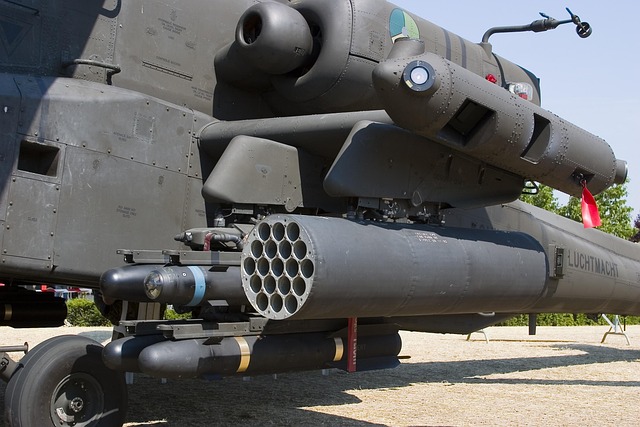
The Boeing AH-64 Apache stands as one of the most formidable attack helicopters ever engineered. Since its introduction in 1986, this twin-turboshaft aircraft has dominated battlefields across the globe, becoming the primary attack helicopter of the United States Army and numerous allied nations. Beyond its military significance, the Apache represents a fascinating case study in defense industry investment, technological innovation, and the economics of military procurement.
For investors seeking to understand the defense sector and its potential for generating returns, the Apache helicopter program offers invaluable insights into how military contracts, technological development, and geopolitical factors create investment opportunities in the aerospace and defense industries.
Understanding the Apache’s Market Position

Historical Development and Production Value
The Apache program began in the 1970s when the U.S. Army sought a replacement for the aging AH-1 Cobra. Hughes Helicopters won the contract in 1976, and the first production Apache rolled off the assembly line in 1984. McDonnell Douglas acquired Hughes Helicopters in 1984, and Boeing subsequently acquired McDonnell Douglas in 1997, making Boeing the current manufacturer.
The total investment in the Apache program exceeds $50 billion when accounting for research and development, production, upgrades, and maintenance contracts. Each individual Apache helicopter costs approximately $35-40 million, depending on the variant and configuration. This substantial price tag reflects the sophisticated technology packed into each airframe.
Global Market Penetration
The Apache has been exported to numerous countries, creating a diverse revenue stream for Boeing and its suppliers. Current operators include:
– United Kingdom
– Israel
– Netherlands
– Singapore
– Japan
– South Korea
– Saudi Arabia
– United Arab Emirates
– Egypt
– India
– Qatar
– Indonesia
– Morocco
This international customer base provides Boeing with recurring revenue through spare parts, maintenance contracts, training programs, and upgrade packages. For investors, this global footprint represents a diversified income stream less susceptible to the budget fluctuations of any single nation.
Investment Opportunities in Defense Aviation
Direct Stock Investment in Boeing
The most straightforward approach to gaining exposure to the Apache program is through Boeing stock (NYSE: BA). As a diversified aerospace and defense company, Boeing generates revenue from commercial aviation, defense contracts, and space systems. The defense segment, which includes the Apache, provides relatively stable revenue compared to the cyclical commercial aviation market.
Key considerations for Boeing investors include:
**Revenue Stability**: Defense contracts often span decades, providing predictable cash flows. The Apache program has generated consistent revenue for over four decades, with ongoing production and upgrade contracts extending well into the 2030s.
**Dividend History**: Boeing has historically paid dividends, though these were suspended during the COVID-19 pandemic. The company’s defense revenue helped maintain operations during the commercial aviation downturn, demonstrating the value of diversification.
**Backlog Visibility**: Boeing’s defense backlog provides visibility into future revenue. Apache-related contracts contribute significantly to this backlog through new production orders and upgrade programs.
Supply Chain Investment Opportunities
The Apache’s complex systems create investment opportunities throughout the aerospace supply chain. Key suppliers include:
**General Electric (NYSE: GE)**: Provides the T700-GE-701D turboshaft engines that power the Apache. Each helicopter requires two engines, and the engine maintenance and replacement market generates substantial recurring revenue.
**Lockheed Martin (NYSE: LMT)**: Supplies the AN/APG-78 Longbow fire control radar and the AGM-114 Hellfire missiles, which are the Apache’s primary armament. These systems require ongoing production and regular replacement.
**Northrop Grumman (NYSE: NOC)**: Provides the AN/AAQ-11 modernized target acquisition and designation sight, along with other avionics systems.
**L3Harris Technologies (NYSE: LHX)**: Supplies communications systems and electronic warfare components.
Investing across the supply chain provides diversification while maintaining exposure to the Apache program’s success. This strategy reduces company-specific risk while capturing the broader defense industry growth.
Defense ETFs and Mutual Funds
For investors seeking diversified exposure to the defense sector without selecting individual stocks, several exchange-traded funds (ETFs) offer convenient options:
**iShares U.S. Aerospace & Defense ETF (ITA)**: This fund tracks the Dow Jones U.S. Select Aerospace & Defense Index, providing exposure to major defense contractors including Boeing and its Apache-related suppliers.
**SPDR S&P Aerospace & Defense ETF (XAR)**: Offers equal-weighted exposure to aerospace and defense companies, reducing concentration risk in any single stock.
**Invesco Aerospace & Defense ETF (PPA)**: Tracks the SPACEQ U.S. Aerospace & Defense Index, providing another option for sector exposure.
These funds generate returns through capital appreciation and dividend income, offering a passive approach to defense sector investment.
Generating Passive Income from Defense Investments
Dividend Strategies
Many defense contractors maintain consistent dividend policies, making them attractive for income-focused investors. Consider the following approaches:
**Dividend Growth Investing**: Companies like Lockheed Martin and Northrop Grumman have established track records of dividend increases. Investing in these companies and reinvesting dividends through a dividend reinvestment plan (DRIP) compounds returns over time.
**High-Yield Defense Stocks**: Some defense contractors offer above-average dividend yields. Screening for companies with sustainable payout ratios and strong free cash flow ensures dividend stability.
**Covered Call Writing**: Investors holding defense stocks can generate additional income by selling covered call options. This strategy works particularly well with less volatile defense stocks, generating premium income while maintaining upside potential.
Bond Investment in Defense Contractors
Defense contractors regularly issue corporate bonds to finance operations and acquisitions. These bonds offer several advantages:
**Credit Quality**: Major defense contractors typically maintain investment-grade credit ratings due to their stable government revenue streams and long-term contracts.
**Predictable Income**: Bond interest payments provide predictable income streams, complementing dividend income from equity investments.
**Diversification**: Adding bonds to a defense-focused portfolio reduces overall volatility while maintaining sector exposure.
Boeing has issued numerous bond series, allowing investors to select maturities and yields matching their investment objectives. However, investors should carefully evaluate credit risk, particularly given Boeing’s challenges in recent years.
Technological Innovation and Future Investment Potential
The Apache’s Evolution
The Apache continues evolving through continuous upgrade programs, creating ongoing investment opportunities. Major upgrade initiatives include:
**AH-64E Guardian**: The latest variant features improved engines, upgraded avionics, joint tactical radio systems, and enhanced digital connectivity. This version represents the current production standard and incorporates lessons learned from decades of combat operations.
**Future Vertical Lift (FVL)**: The U.S. Army is developing next-generation rotorcraft to eventually replace the Apache. Boeing is competing for this program through the Future Attack Reconnaissance Aircraft (FARA) initiative, though this specific competition was cancelled in 2024. The broader Future Vertical Lift program continues, representing significant future investment opportunity.
**Unmanned Teaming**: The Apache is being developed to control unmanned aerial vehicles, extending its capabilities without risking additional crews. This manned-unmanned teaming concept creates new market opportunities and extends the Apache’s operational relevance.
Emerging Technologies
Investment opportunities extend beyond the Apache itself to enabling technologies:
**Artificial Intelligence**: Defense applications of AI for targeting, threat detection, and autonomous systems represent a growing market segment.
**Advanced Materials**: Lightweight composites and advanced armor materials improve helicopter performance and survivability, creating opportunities in specialty materials companies.
**Sensors and Electronics**: The continuous improvement of sensors, night vision systems, and electronic warfare capabilities drives demand for advanced electronics.
Risk Considerations for Defense Investors

Political and Budget Risk
Defense spending depends on political decisions and budget allocations. Changes in administration, shifting national priorities, or budget constraints can impact defense programs. The Apache has survived numerous budget cycles due to its proven effectiveness and continued relevance, but investors must monitor political developments affecting defense spending.
Program Cancellation Risk
Military programs face cancellation risk, particularly during development phases. The Apache’s mature status reduces this risk, but upgrade programs and successor programs face ongoing evaluation. Diversifying across multiple programs and contractors mitigates this risk.
International Relations
Export sales depend on international relations and regulatory approvals. Changes in diplomatic relationships or export restrictions can impact sales to specific countries. The broad international customer base for the Apache reduces dependence on any single export market.
Technological Disruption
Emerging technologies could potentially diminish the Apache’s relevance. Unmanned combat aerial vehicles, precision-guided munitions, and advanced air defense systems pose theoretical threats to attack helicopter operations. However, the Apache’s adaptability and continuous modernization have maintained its operational effectiveness.
Practical Investment Strategies
Building a Defense-Focused Portfolio
Consider the following approach for building exposure to the Apache and related defense investments:
**Core Holdings (50-60%)**: Establish positions in major defense contractors like Boeing, Lockheed Martin, and Northrop Grumman. These companies provide diversified defense exposure with established dividend policies.
**Supply Chain Exposure (20-30%)**: Add positions in key suppliers and technology companies supporting the Apache and other defense programs. This layer captures growth in specialized defense technologies.
**Fixed Income (10-20%)**: Include defense contractor bonds for income stability and reduced volatility.
**International Exposure (5-10%)**: Consider international defense companies that partner with U.S. contractors or produce complementary systems.
Dollar-Cost Averaging
Implementing a regular investment schedule reduces timing risk and builds positions systematically. Monthly or quarterly investments in defense stocks or ETFs smooth out market volatility and take advantage of dollar-cost averaging benefits.
Rebalancing Discipline
Regular portfolio rebalancing maintains target allocations and manages risk. Defense stocks may outperform during periods of geopolitical tension and underperform during peacetime, requiring periodic rebalancing to maintain desired exposure levels.
The Broader Economic Impact
Job Creation and Economic Multipliers
The Apache program supports thousands of jobs across the United States and partner nations. Boeing’s Mesa, Arizona facility serves as the primary Apache production site, employing thousands of workers directly. The broader supply chain extends this economic impact across numerous states and countries.
For investors, this employment base represents both an economic contribution and a political constituency supporting continued program funding. Congressional representatives from areas with significant Apache-related employment have historically supported program funding.
Technology Transfer and Commercial Applications
Defense research and development often produces technologies with commercial applications. Advances in materials science, electronics, and manufacturing techniques developed for the Apache have found applications in commercial aviation, automotive, and other industries. This technology transfer creates additional value beyond direct military applications.
Conclusion
The AH-64 Apache helicopter represents more than a formidable weapons system; it exemplifies the intersection of military necessity, technological innovation, and investment opportunity. For investors seeking exposure to the defense sector, the Apache program and its extensive supply chain offer multiple avenues for building wealth and generating passive income.
The key to successful defense investing lies in understanding the unique characteristics of military procurement: long program lifecycles, political influences on funding, and the continuous evolution of requirements. The Apache’s four-decade history demonstrates how successful military programs can generate sustained returns for investors who understand these dynamics.
Whether through direct stock investment in Boeing and its suppliers, defense-focused ETFs, or corporate bonds issued by defense contractors, investors can position themselves to benefit from continued Apache production, upgrade programs, and the broader defense industry’s growth. By combining dividend income, capital appreciation potential, and fixed income stability, a well-constructed defense portfolio can contribute meaningfully to long-term wealth building and passive income generation.
As geopolitical tensions continue and nations prioritize military modernization, the demand for proven systems like the Apache is likely to persist. For patient investors with a long-term perspective, the defense sector—anchored by iconic programs like the Apache—offers compelling opportunities for building lasting wealth through disciplined investment strategies.