
The Economics of Foreign Exchange
Understanding the Basics
At its core, foreign exchange economics revolves around the concept of relative value. When you exchange US dollars for Japanese yen, for example, you’re essentially making a judgment about the relative economic strength and future prospects of the United States versus Japan. The exchange rate reflects the collective wisdom and expectations of millions of market participants who are constantly evaluating factors such as interest rates, inflation rates, economic growth prospects, political stability, and trade balances.
The participants in the foreign exchange market range from massive multinational corporations hedging their international business risks to central banks implementing monetary policy, from institutional investors seeking returns to individual retail traders speculating on currency movements. Each participant brings their own motivations, time horizons, and strategies to the market, creating a rich ecosystem of supply and demand that determines currency values. Understanding these various participants and their motivations is crucial to comprehending how exchange rates move and why certain currencies strengthen or weaken against others over time.
Key Methods
Step 1: Analyzing Economic Fundamentals

The first step in understanding foreign exchange economics involves mastering the analysis of economic fundamentals that drive currency values. This means developing a deep understanding of macroeconomic indicators such as GDP growth rates, employment figures, inflation statistics, trade balances, and government debt levels. When a country experiences strong economic growth with low inflation and healthy employment, its currency typically appreciates because investors want to invest in that economy, creating demand for the currency.
Interest rates play a particularly crucial role in foreign exchange economics. When a central bank raises interest rates, it typically attracts foreign capital seeking higher returns, which increases demand for that currency and pushes up its value. Conversely, when interest rates are cut, the currency often weakens as investors seek better returns elsewhere. Traders and analysts spend countless hours studying central bank communications, economic data releases, and policy statements to anticipate interest rate changes and position themselves accordingly in the foreign exchange market. Understanding the relationship between monetary policy, interest rates, and currency values forms the foundation of fundamental analysis in forex trading.
Step 2: Technical Analysis and Market Psychology

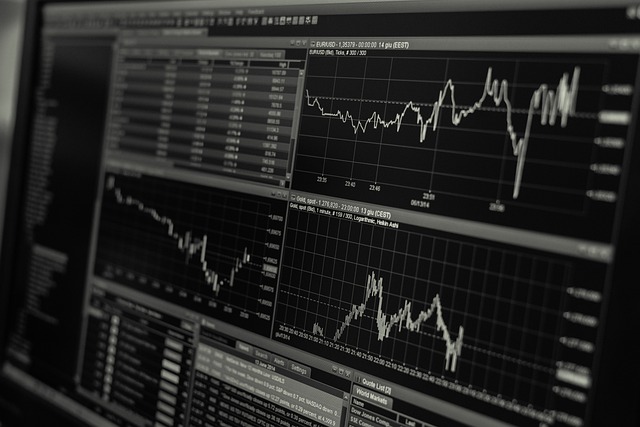
The second essential method involves understanding technical analysis and market psychology. While fundamental analysis looks at the underlying economic factors, technical analysis examines price charts, patterns, and trading volumes to identify trends and potential turning points. Technical analysts believe that all fundamental information is already reflected in the price, and that price movements follow identifiable patterns that repeat over time. Common tools include moving averages, support and resistance levels, trend lines, and various momentum indicators.
Market psychology plays an equally important role in foreign exchange economics. Currency markets are driven not just by rational economic calculations but also by human emotions such as fear, greed, and herd mentality. During times of global uncertainty, for example, investors often flee to safe-haven currencies like the US dollar, Swiss franc, or Japanese yen, regardless of the underlying economic fundamentals. Understanding these behavioral patterns and psychological factors can provide valuable insights into short-term currency movements. Successful forex participants learn to combine fundamental analysis with technical analysis and an understanding of market sentiment to make more informed decisions about currency positions.
Step 3: Risk Management and Position Sizing

The third critical method involves implementing proper risk management and position sizing strategies. Foreign exchange markets are highly leveraged, meaning traders can control large positions with relatively small amounts of capital. While this leverage can amplify profits, it can also magnify losses dramatically. Professional traders and institutions always have clear risk management protocols that limit their exposure on any single trade and protect their capital from catastrophic losses.
Practical Tips
**Tip 1: Stay Informed About Global Economic Events**

Successful navigation of foreign exchange economics requires staying constantly informed about global economic events, policy decisions, and geopolitical developments. Subscribe to reliable financial news sources, follow central bank announcements, and understand the economic calendar of major releases. Important data releases like non-farm payrolls in the United States, GDP figures, inflation reports, and central bank policy meetings can cause significant currency volatility. Set up alerts for major economic announcements and develop the habit of reading analysis from multiple perspectives. Don’t rely on a single source of information; instead, cultivate a diverse information diet that includes different viewpoints and analytical approaches to build a more complete understanding of currency market dynamics.
**Tip 2: Start With Major Currency Pairs**
When beginning to engage with foreign exchange markets, focus on the major currency pairs like EUR/USD, USD/JPY, GBP/USD, and USD/CHF. These pairs have the highest trading volumes, tightest spreads, and most readily available information and analysis. They’re less prone to manipulation and sudden unexpected moves compared to exotic currency pairs. As you develop experience and understanding, you can gradually expand to other currency pairs. The major pairs also tend to have more predictable relationships with economic fundamentals and technical patterns, making them better learning vehicles. Building expertise in one or two major pairs before diversifying is a time-tested approach that many successful forex professionals recommend.
**Tip 3: Understand Correlation Between Currency Pairs**
**Tip 4: Practice With Demo Accounts Before Risking Real Money**
Before committing real capital to foreign exchange trading, spend significant time practicing with demo accounts that simulate real market conditions without financial risk. Use this practice time not just to test strategies but to understand your own psychological reactions to winning and losing trades. Many traders who perform well with demo accounts struggle when real money is on the line because emotions take over. The practice period should teach you about market mechanics, platform functionality, order types, and most importantly, about yourself as a trader. Treat the demo account seriously, keeping a trading journal and analyzing your performance as if real money were at stake. Only transition to real money trading once you’ve demonstrated consistent profitability and emotional discipline over several months of simulated trading.
**Tip 5: Develop and Follow a Trading Plan**
Important Considerations
When engaging with foreign exchange economics, several critical considerations and precautions must be kept in mind. First and foremost, understand that the forex market is highly risky and not suitable for everyone. The leverage available in forex trading can lead to rapid and substantial losses that exceed your initial investment. Many retail forex traders lose money, particularly in their first year of trading. Never invest money you cannot afford to lose, and never use borrowed funds or money needed for essential expenses to trade forex.
Regulatory considerations are also crucial. Ensure you work with properly regulated brokers who are supervised by reputable financial authorities. Different jurisdictions have different levels of protection and regulatory oversight. In the United States, for example, forex brokers must be registered with the Commodity Futures Trading Commission (CFTC) and be members of the National Futures Association (NFA). Research your broker thoroughly, read reviews, understand their fee structure, and verify their regulatory status before opening an account.
Be wary of get-rich-quick schemes and unrealistic promises in the forex space. No legitimate professional can guarantee profits or promise consistent returns with low risk. The foreign exchange market is competitive and efficient, and extraordinary returns require extraordinary skill and often come with extraordinary risk. Be particularly skeptical of automated trading systems, signal services, or courses that promise easy money. While quality education and tools exist, anything that sounds too good to be true usually is. Continuous education, realistic expectations, and patient capital growth represent the sustainable approach to forex markets.
Conclusion
For those interested in actively participating in foreign exchange markets, success requires dedication to continuous learning, disciplined risk management, emotional control, and realistic expectations. The path to proficiency in forex trading is long and challenging, but those who approach it with patience, humility, and systematic methodology can develop valuable skills and potentially achieve their financial goals. Remember that the vast majority of successful forex professionals emphasize risk management, continuous education, and long-term thinking over quick profits and aggressive speculation.